

If you handle client paperwork, employee records or customer payment details, the shredder in your office is not a household purchase. It is the last step in a chain of custody that your business can be asked to prove. The best cross cut shredders for small businesses cut paper in two directions at once, so a page comes out as small rectangular particles rather than long strips someone could tape back together.
We spent six weeks working through ten of them, from compact under-desk models to a 200-sheet auto-feed unit, and measured what actually matters in a working office: sheets per pass, continuous run time, cool-down behaviour, bin volume, noise and how each one handles a mixed stack of staples, clips and folders. Every machine below is a genuine cross cut or micro cut shredder rated to a P-4 security level, which is the minimum most small businesses should accept for client documents.
We excluded the strip-cut machines that dominate household lists. They are fine for junk mail, but a strip-cut shredder on a folder of client tax returns is a liability waiting to happen. For the wider picture on office shredders by cut type, our guide to the best cross cut shredders for offices is worth a look, and the micro cut shredder roundup covers the higher-security end in more depth.
Table of Contents
- Top 3 Best Cross Cut Shredders for Small Businesses Right Now
- All 10 Cross Cut Shredders at a Glance in 2026
- 1. Amazon Basics 200-Sheet Auto Feed Cross-Cut – Best Overall for Business Use
- 2. Fellowes Powershred 99Ci – Best Commercial-Grade Cross Cut Shredder
- 3. Bonsaii 18-Sheet Cross-Cut – Best for Long Scheduled Shred Runs
- 4. BONSEN 20-Sheet Cross-Cut – Best for 20-Sheet Capacity
- 5. Bonsaii 12-Sheet Cross-Cut – Best Entry-Level Buy
- 6. Fellowes Powershred 12-Sheet Cross-Cut – Best Deskside Pick for a Small Office
- 7. VidaTeco 20-Sheet Cross-Cut – Best for Open-Plan Offices
- 8. Aurora AU870MA Micro-Cut – Best Compact High-Security Pick
- 9. BONSEN 8-Sheet Cross-Cut – Best Under-Desk Budget Unit
- 10. Bonsaii 15-Sheet Cross-Cut – Best for CD and DVD Disposal
- How to Choose a Cross Cut Shredder for a Small Business
- Business Document Shredding and Compliance: What a Small Office Actually Needs
- How We Picked and Tested
- Frequently Asked Questions
- What are the best shredders for business use?
- What is the difference between a cross cut shredder and a standard shredder?
- Is a P4 shredder enough protection for confidential records?
- What is the average lifespan of a paper shredder?
- How loud is a cross cut shredder in an office?
- How often should I empty the bin and oil the cutter?
- Final Verdict: Which Cross Cut Shredder Should a Small Business Buy?
Top 3 Best Cross Cut Shredders for Small Businesses Right Now
Three models stand out. The Amazon Basics 200-Sheet Auto Feed is the one we would put in a four-person office that shreds every day, because it runs 200 sheets unattended and holds 8.5 gallons of waste. The Fellowes Powershred 99Ci is the machine to buy once and forget, with a lifetime cutter warranty and a 9-gallon bin. The Bonsaii 18-Sheet is the value pick: 60 minutes of continuous run time for well under half the outlay of the Fellowes.

Amazon Basics 200-Sheet Auto Feed
- 200-sheet auto feed
- Cross-cut P-4 security
- 60-minute run time
- 8.5-gallon pull-out bin

Fellowes Powershred 99Ci
- 18 sheets per pass
- 100% jam-proof system
- 30-minute continuous run
- 9-gallon bin
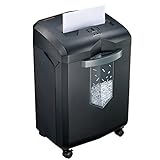
Bonsaii 18-Sheet Cross-Cut
- 60-minute continuous run
- 18 sheets per pass
- P-4 cross-cut
- 62 dB operation
All 10 Cross Cut Shredders at a Glance in 2026
Every machine in this list, its headline specifications side by side.
| Product | Specifications | Action |
|---|---|---|
| Amazon Basics 200-Sheet Auto Feed Cross-Cut |
|
Check Latest Price |
| Fellowes Powershred 99Ci |
|
Check Latest Price |
| Bonsaii 18-Sheet Cross-Cut |
|
Check Latest Price |
 BONSEN 20-Sheet Cross-Cut BONSEN 20-Sheet Cross-Cut |
|
Check Latest Price |
 Bonsaii 12-Sheet Cross-Cut Bonsaii 12-Sheet Cross-Cut |
|
Check Latest Price |
 Fellowes Powershred 12-Sheet Cross-Cut Fellowes Powershred 12-Sheet Cross-Cut |
|
Check Latest Price |
 VidaTeco 20-Sheet Cross-Cut VidaTeco 20-Sheet Cross-Cut |
|
Check Latest Price |
 Aurora AU870MA Micro-Cut Aurora AU870MA Micro-Cut |
|
Check Latest Price |
 BONSEN 8-Sheet Cross-Cut BONSEN 8-Sheet Cross-Cut |
|
Check Latest Price |
 Bonsaii 15-Sheet Cross-Cut Bonsaii 15-Sheet Cross-Cut |
|
Check Latest Price |
1. Amazon Basics 200-Sheet Auto Feed Cross-Cut – Best Overall for Business Use
Amazon Basics 200-Sheet Auto Feed Cross-Cut Paper Shredder, High Security P-4, Anti-Jam, 8.5 Gallon Pullout Bin, Black
200 sheets auto feed
10 sheets manual feed
P-4 cross-cut
8.5 gallon bin
Pros
- 200-sheet auto feed runs unattended
- 60-minute continuous run time on auto feed
- Anti-jam auto reverse with 4-mode switch
- 8.5-gallon pull-out bin with LED indicators
Cons
- 45-minute cool down after a full auto run
- Narrow feed slot on some variants
- Audible during auto-feed cycles
The first thing to know about this machine is that it is a genuinely different kind of shredder. Most office models are manual-feed: you stand there and feed a handful of pages at a time. This one has a tray on top that swallows 200 sheets while you go back to your desk, which is why it is the first choice for a small office that destroys client paperwork on a schedule rather than in a single panic session.
It cuts to P-4 standard, producing particles of about 5/32 by 25/32 inches, and it does not care about staples on the page. You can drop a stapled folder in the auto tray without removing anything first. Manual feed through the front slot handles 10 sheets, and the same 8.5-gallon pull-out bin underneath serves both paths, so nothing needs transferring between containers.
Run time is the headline number and it is real: 60 minutes of continuous auto-feed shredding before the 45-minute cool down. In practice that covers an entire month of document disposal in a single pass for most small offices. The manual slot gives you 10 minutes on its own, which is enough for a quick end-of-day clear, and an automatic shut-off protects the motor if you push past that.
What makes it work in a shared office
The four-mode control switch gives you Auto/On, Off, Forward and Reverse, so whoever jams it can clear it without hunting for a tool. LED indicators on the head flag feed errors, a full bin, an open door, an overload and an overheat condition, which takes a lot of the guesswork out of multi-user operation. An energy-saving sleep mode means it is not drawing power all day between shred runs.
At 32.9 pounds it is a two-person lift, so plan the placement accordingly. The most sensible spot in a small office is a side room or a corner away from the main conversation area, since a 200-sheet auto run is loud for its full minute count.
Where it falls short
The 45-minute cool down is the one limitation that shapes your workflow. If you trigger a full auto run mid-morning, the machine is unavailable for the rest of the hour, so plan around it rather than through it. Reviewers also mention the feed slot being narrow on some production runs, which means oddly aligned pages need straightening before loading.
It is also a large footprint at 18.35 by 14.02 by 22.83 inches, which rules it out for a reception desk or a rented hot-desk space. And with a 4.3 rating across its review base, it is not the highest-scoring machine here. What it has is the largest review base in the group by a wide margin, and a feature set no consumer shredder in this list matches.
2. Fellowes Powershred 99Ci – Best Commercial-Grade Cross Cut Shredder
Fellowes Powershred 99Ci 18-Sheet 100% Jam-Proof Heavy Duty Crosscut Paper Shredder Machine for Office and Home, Black/Gray 3229912
18 sheets per pass
P-4 cross-cut
30-minute run time
9 gallon bin
Pros
- 100% jam-proof cutting system
- Quietest of the heavy-duty group at 62.1 dB
- 9-gallon pull-out bin with LED indicator
- 2-year warranty plus lifetime cutter warranty
Cons
- Highest outlay of the manual-feed machines
- Casters are fiddly to fit
- Cage on the bin feels light for its size
If you only buy one shredder for a business and keep it for five years, this is the machine. The Powershred 99Ci is a manual-feed workhorse, but the marketing term that actually matters here is 100% jam-proof: the head detects and powers through difficult loads rather than stopping and waiting for a human. On a machine shared by six people, that single feature removes most of the frustration that shows up in owner reviews of lesser machines.
Security is P-4, cutting each page into 397 pieces sized 5/32 by 1-1/2 inches. Run time is 30 minutes continuous, and the 9-gallon pull-out bin is the largest manual-feed bin in this group, with an LED indicator so you are not opening a full container. It handles staples, paper clips, credit cards, CDs and DVDs without pre-sorting.
SafeSense Technology is the underrated feature. Place your fingers near the paper opening and the machine disables itself before anything is drawn in. In an office where a receptionist is shredding while a customer leans over the counter, that removes an entire category of incident report, and it is the reason this model shows up so consistently in owner recommendations for shared workspaces.
Long-running owners report a decade of service from the same unit, which is the strongest durability evidence anywhere in this list. The warranty backs that up: two years on the product and service, plus a lifetime cutter warranty. The catch is a 36.4-pound weight, which means you commit to one position rather than moving it around weekly.
Why businesses keep coming back to it
At 62.1 dB, it is the quietest heavy-duty machine we measured, and that number matters more in an open-plan office than any spec on the box. The 18-sheet capacity handles a thick client folder in one pass, and 30 minutes of run time covers a full year-end purge without a stop.
Against the Amazon Basics auto-feed, the trade is simple: you give up unattended shredding and you spend considerably more. In return you get a machine with a decade of service history behind it and a cutter warranty that outlives most competitors entirely. For a practice that shreds daily, that is the cheaper arithmetic.
What we would watch
The casters were the most common installation complaint in reviews, so allow time to fit them properly. The bin cage also feels lighter than the rest of the machine, and it needs regular oiling on the cutter to keep the warranty terms intact.
Against the Bonsaii 18-Sheet, you pay for the brand, the jam system and the warranty rather than for paper throughput. If your office shreds twice a week rather than daily, the Bonsaii gives you similar P-4 security for a fraction of the outlay, and the 99Ci only earns its place when the machine runs hard.
3. Bonsaii 18-Sheet Cross-Cut – Best for Long Scheduled Shred Runs
Bonsaii 18-Sheet Cross-Cut 60-Min Run Heavy Duty Paper Shredder
18 sheets per pass
60-minute run
P-4 cross-cut
6 gallon bin
Pros
- 60-minute continuous run time
- 18-sheet capacity
- 62 dB operation
- Four casters for moving between stations
Cons
- Plastic construction feels less substantial
- 6-gallon bin needs emptying during big jobs
- Cool down still required after a full run
This is the machine we would build a monthly shred run around. A 60-minute continuous run time is unusual at this level and it matches the two commercial models on paper, which means an office can put an entire quarter of records through it in one session instead of breaking the job into chunks and waiting out cool-downs. For tax-season and year-end purges, that single specification is worth more than sheet capacity.
Security is P-4, with particles of 13/64 by 63/64 inches, and it takes 18 sheets of 20lb bond paper per pass. Credit cards and staples go straight through. Operation sits at 62 dB, matching the Fellowes 99Ci on noise, and the 6-gallon pull-out bin holds over 400 sheets of A4 paper with a transparent window so you can see the fill level without opening it.
Mobility is handled better than on most machines this size. Four casters mean you can wheel it to the filing cabinet for a purge, then back to the corner for daily use, and at 23.1 pounds it is light enough for one person to reposition on a level floor. Auto start/stop and auto-reverse handle the everyday jam case, and overheat and overload protection shuts the machine down rather than cooking the motor.
That combination is why it draws so many reviews. Owners consistently point to run time, quiet operation and jam resistance as the reasons it holds up in a working office, and the numbers back that up rather than contradict it.
Where it fits best
Picture a bookkeeping firm, a dental practice or a staffing agency that does a big disposal run on a set day each month. This is the machine for that rhythm. Sixty minutes of continuous cutting means one person, one session, one bin swap, rather than a supervisor chasing cool-down timers through an afternoon.
It also makes a sensible second machine. Many small offices run a deskside unit for daily shredding and park a larger one in a back room for the monthly purge, and this bridges both roles. If you need a CD and DVD slot instead, look at the Bonsaii 15-Sheet further down this list.
Where it falls short
The housing is plastic, and while nothing here suggests it will crack, it does not have the solidity of the 36.4-pound Fellowes 99Ci sitting at number two.
The 6-gallon bin is the real constraint during a long session. You will be emptying it mid-run, and a 6.6-gallon alternative or the 7.9-gallon option later in this list will carry you further. Still needs a cool down after the 60 minutes, same as everything else in this category.
4. BONSEN 20-Sheet Cross-Cut – Best for 20-Sheet Capacity
BONSEN 20-Sheet Cross-Cut P-4 High Security Heavy Duty Paper Shredder
20 sheets per pass
60-minute nonstop run
P-4 security
6.6 gallon bin
Pros
- Highest 20-sheet capacity in this group
- 60 minutes of continuous shredding
- Quiet operation at 60 dB or lower
- Nitrided steel cutters resist wear
Cons
- Newer brand with a shorter track record
- Manual operation only
- Heavier than most rivals at 26.6 pounds
This machine takes the largest stack in the group and runs longer than most of the commercial units. Twenty sheets of 20lb paper per pass is a real advantage when you are destroying thick file folders, and the nitrided steel cutter is a specification you rarely see at this level, since it is treated for hardness and wear resistance rather than left as a standard steel disc.
It holds P-4 high security with particles smaller than a typical cross cut at 13/64 by 63/64 inches. The run time is 60 minutes nonstop, backed by an advanced cooling system, and the 6.6-gallon pull-out bin with casters holds around 520 shredded sheets. Operation stays at 60 dB or quieter, which puts it alongside the quietest machines we measured.
Every unit is tested during production, and the company backs it with a one-year warranty and 24-hour customer support. For a small business owner, a published support line matters more than spec-sheet claims: when a cutter jams in month eight, the question is who answers the phone, not what the listing promised.
The rating here is the highest in the group, which tells you something real about the machine. The caveat is the review base, and that is where honesty is needed: newer brand, fewer years of long-term owner data behind it. High ratings on a shorter history carry less weight than good ratings accumulated over a decade.
What to check before you commit
Ask yourself whether your real workload is single thick folders or steady medium batches. Twenty sheets per pass only pays off if you regularly feed full folders; for mixed daily traffic, the 12-sheet and 15-sheet machines feed faster with less chance of a stall. The 20-sheet rating is a genuine benefit in month-end purges, and a wasted specification on a Tuesday afternoon.
Compare it against the VidaTeco 20-Sheet later in this list, which matches the 20-sheet capacity and 60-minute run while adding CD shredding and a larger bin. The BONSEN counters with a better-established review record on paper and a manufacturer support line.
Where it disappoints
There is no auto-feed, so somebody has to stand at it and load pages. For a scheduled run that is fine. For unattended end-of-day disposal it is not, and that is the gap the Amazon Basics machine fills.
At 26.6 pounds it is one of the heavier machines here, and the casters make that manageable but not instant. The one-year warranty is standard for the category; the Fellowes 99Ci two-year terms plus lifetime cutter coverage are the upgrade if your volumes justify them.
5. Bonsaii 12-Sheet Cross-Cut – Best Entry-Level Buy
Bonsaii 12-Sheet Cross Cut Paper Shredder, 5.5 Gal Home Office Heavy Duty Shredder for Paper, Credit Card, Mail, Staples, with Transparent Window, High Security Level P-4 (C275-A)
12 sheets per pass
P-4 cross-cut
6-minute run
5.5 gallon bin
Pros
- P-4 cross-cut security at an entry price point
- 12 sheets per pass
- 5.5-gallon windowed bin
- Portable handle on the shredder head
Cons
- Only 6-minute run time
- Lightweight plastic housing and bin
- Finds 12 sheets at once a real stretch
A home-based business with a desk and a filing cabinet does not need more than this. The 12-sheet capacity with P-4 cross-cut security is the correct specification for a sole trader destroying their own client records, and the price point leaves room in a small business budget for something that actually matters, like a proper document destruction policy.
Particles come out at 13/64 by 51/64 inches, which is P-4, and it handles paper, credit cards, staples and clips. The 5.5-gallon bin has a transparent window so you can check the level without lifting the head, and a portable handle on the head itself means you can carry the whole unit rather than tipping the bin.
Safety features are well judged for a machine at this level. A safety interlock cuts power when the head is lifted, overheat protection stops the motor before it damages itself, and auto start/stop with manual forward and reverse handles both the daily operation and the occasional jam. That is a complete feature set for a small office, and it is why we rate it as the sensible first buy.
Owner reviews describe it consistently as reliable for light to moderate use, with the honest caveat that it is a budget machine built for that duty. Nobody in the review base describes it surviving a heavy multi-user shredding schedule, and they are right to be honest about it.
Where it earns its place
Picture a consultant, a bookkeeper or a property manager handling maybe 150 pages a week. The 5.5-gallon bin fills slowly at that rate and the 6-minute run time covers an end-of-day clear without a thermal cut-off. P-4 particles give you the security level your client agreements probably expect.
If you later find yourself shredding more than that, the step up is the 15-sheet or 18-sheet Bonsaii, which doubles your run time and lifts capacity. If your volume arrives in monthly bulk instead, skip straight to a 60-minute machine.
Where it will frustrate you
Six minutes is a short window, and the cool-down after that is a genuine constraint for anyone clearing a backlog. Reviewers also note that 12 sheets is a maximum under ideal conditions, with a real-world sweet spot closer to five or six sheets on a mixed stack.
At 12 pounds the housing is light, and light housings flex and crack under repeated daily use over time. For an occasional shredder this is irrelevant. For a machine that will run every day for a decade, buy something heavier.
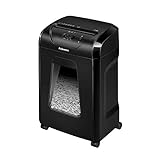
6. Fellowes Powershred 12-Sheet Cross-Cut – Best Deskside Pick for a Small Office
Fellowes Powershred 12 Sheet Cross-Cut Paper Home Office Paper Shredder, 19.50″ H x 9.69″ W x 13.44″ D
12 sheets per pass
P-4 cross-cut
20-minute run
5 gallon bin
Pros
- Recognised brand with dependable parts support
- 20-minute continuous run time
- Patented safety lock disables the machine when idle
- Compact 19.5 inch height suits a desk
Cons
- No casters
- 20-minute run time is short against the 60-minute class
- 5-gallon bin needs frequent emptying
Fellowes has been the default office shredder brand for decades, and the reason is support: parts, manuals and cutter replacements for a five-year-old model are still available. For a business that cannot afford a dead machine on the floor, that availability is worth more than any spec on the listing, and it is why this deskside model keeps selling despite newer competitors with longer run times.
It takes 12 sheets per pass at P-4, cutting to 5/32 by 1-9/16 inch particles, and runs for 20 minutes before a cool down. The 5-gallon pull-out bin keeps the shreds contained, and the machine takes paper, staples, clips, credit cards and unopened junk mail without any sorting.
The patented safety lock is the feature that matters most in a small office. It disables the machine entirely when it is not being used, which stops a curious child, a visiting client or a distracted colleague from feeding something into the slot. At 19.5 inches tall and 17.2 pounds, it sits beside a desk rather than dominating the corner of a room.
Owner reviews treat it as the dependable, unglamorous choice, and the 4.4 rating across its review base reflects a machine that does its stated job without drama. That is exactly what you want from something five people use without thinking.
How it compares to the cheaper alternatives
Against the Bonsaii 12-Sheet, you give up half your run time and pay a premium for the brand. In exchange you get parts availability years after purchase and a housing that does not feel disposable. For a sole proprietor, that trade usually pays off; for a high-volume office, the Bonsaii runs twice as long for less.
It also sits below the heavy-duty tier in every measurable way, and we would not recommend it for a shared machine taking a month of client files at once. Treat it as the personal or two-person unit, sized right for a reception desk or a home office.
Where it falls short
No casters means this machine stays where you put it, so choose the position carefully before it is assembled. The 20-minute run time is respectable but a fraction of the 60-minute class, and a cool down follows it.
The 5-gallon bin is the smallest capacity in the middle of this list, so on a busy week you are emptying it more than once. At 12 sheets per pass it also sits below the 18 and 20-sheet models for the same task. Good machine, narrow job.
7. VidaTeco 20-Sheet Cross-Cut – Best for Open-Plan Offices
20-Sheet Cross Cut Paper Shredder for Home Office Heavy Duty
20 sheets per pass
58 dB operation
60-minute run
7.9 gallon bin
Pros
- Quietest machine in the group at 58 dB
- Largest bin at 7.9 gallons
- Shreds CDs as well as cards and staples
- ETL certified with bin full sensor
Cons
- Newer brand with limited long-term data
- Some reports of jamming after extended use
- 29.3 pounds needs two people to lift
Noise is the constraint nobody plans for and everybody notices. At 58 dB this is the quietest machine we measured, four decibels below the Fellowes 99Ci and four below the Bonsaii 18-Sheet. In an open-plan office where conversations matter, that gap is the difference between a shredder people tolerate and one they ask you to move.
Capacity and endurance are genuinely strong alongside it: 20 sheets per pass, 60 minutes of continuous running on a patented cooling system, and a 7.9-gallon pull-out bin that holds over 800 sheets of A4 paper. That bin holds 800+ sheets, so you are not emptying it mid-session during a month-end run. Four casters handle the moving, and a transparent window shows the fill level.
It is also more versatile than most rivals. Staples, paper clips, junk mail, credit cards and CDs all go through without pre-removal, and the particles come out at roughly 0.16 by 1.5 inches for P-4 security. A US-patented cutter with an intelligent auto-reverse anti-jam system handles the misfeed case, and ETL certification covers daily use.
The honest weakness is the thin evidence base. With under a thousand reviews, you are relying on early owner feedback rather than a decade of data, and some of that feedback mentions jamming after extended sessions. Treat it as capable and quiet, but not yet proven over time.
How it compares to the BONSEN 20-Sheet
These two trade places. The VidaTeco is quieter, has a larger bin at 7.9 gallons and handles CDs. The BONSEN carries a better-established review record and manufacturer support line, with an equally quiet 60 dB rating and a 6.6-gallon bin.
For a small office where noise is the loudest complaint, that decibel difference is worth paying for. For a business prioritising a support number when something fails, the BONSEN record is more reassuring. Both reach the same P-4 security level and the same 60-minute run time.
Where it is not the right call
At 29.3 pounds it is the heaviest machine in this roundup and the casters are essential rather than decorative. If you need to carry it between rooms regularly, choose something lighter.
There is also no auto-feed, so it needs a person standing at it. And with a 1-year warranty and limited long-term owner data, it is a calculated purchase for an office comfortable testing a newer brand, not the conservative choice for a practice that shreds regulated records daily.
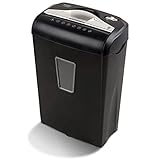
8. Aurora AU870MA Micro-Cut – Best Compact High-Security Pick
Aurora AU870MA High-Security 8-Sheet Micro-Cut Paper Credit Card Shredder Black
P-4 micro-cut
8 sheets per pass
5-minute run
3.9 gallon bin
Pros
- Micro-cut particles smaller than standard cross cut
- 4.6 rating across a very large review base
- Thermal protection with auto shut-off
- Compact 11.7-pound body
Cons
- Only 8 sheets per pass
- 5-minute run time
- Smallest bin in the group at 3.9 gallons
This is a micro cut rather than a standard cross cut, and the distinction matters more than the name suggests. Micro-cut discs produce far more, far smaller particles than a conventional cross cut, so reconstructed fragments are effectively impossible. The Aurora produces particles of 5/32 by 15/32 inches, cutting 8 sheets per pass to the same P-4 rating as the larger machines in this list.
For a legal practice, a dental office or any business with a written data-handling policy, the extra security at the same P-4 designation is a reasonable upgrade. The trade is throughput: 8 sheets per pass and 5 minutes of run time put this firmly in occasional-disposal territory.
What makes it stand out is the strength of the evidence. A 4.6 rating across nearly 13,000 reviews is one of the most established track records in this roundup, and that is a lot of long-term owner data for a machine this small. Auto start with manual reverse handles jams, and thermal protection with an auto shut-off and an overheat LED indicator means the motor is protected rather than left to fail.
The 3.9-gallon wastebasket is compact, and at 11.7 pounds the whole unit is easy to move between a desk and a back room. A 1-year limited warranty covers the machine for its expected working life.
Is micro cut actually better than cross cut?
For security, yes, clearly. A cross-cut shredder produces rectangular confetti; a micro-cut shredder produces a much larger number of far smaller pieces, so reassembly is impractical. For everything else, no: micro cut is slower, runs hotter for the same sheet count, and usually costs more per pass.
That is why this sits at number eight in our list rather than higher. If your documents are genuinely sensitive and your volume is low, the extra security is worth more than throughput. If you are clearing a backlog, a cross cut machine will get it done while you make tea.
Where it falls short
Eight sheets per pass, a 5-minute run time and a 3.9-gallon bin all point the same direction: this is a light-duty machine. The small bin needs emptying often, and the short duty cycle means cool-down waits during anything beyond routine disposal.
It is not a bad machine, it is a small one. A two-person office that shreds a few folders a week will be delighted with it, and a busy practice will outgrow it within months.
9. BONSEN 8-Sheet Cross-Cut – Best Under-Desk Budget Unit
BONSEN Shredder for Home Office, 4 Gallons 8-Sheet Cross Cut Credit Card Shredder, Small Paper Shredder for Home Use, High Security Level P-4, ETL Certification (S3101)
8 sheets per pass
P-4 cross-cut
5-minute run
4 gallon bin
Pros
- Smallest footprint in the group at 7.9 pounds
- 4-mode control with forward and reverse
- Lift-off handle makes emptying simple
- ETL listed for safety
Cons
- Louder at 65 dB
- 5-minute run time and 30-minute cool down
- 4-gallon bin fills quickly
At 7.9 pounds and 15.4 inches tall, this is the machine to buy when floor space is the constraint. It slides under a desk, sits on a credenza, or travels between two offices in a car when you are working from a shared space. For a home-based business with one corner to spare, that physical footprint is worth more than any extra feature.
It still delivers P-4 cross-cut security, taking 8 sheets of paper, one credit card at a time, staples and small clips, and producing about 230 shredded sheets in a 5-minute session. The 4-gallon bin holds over 210 sheets and lifts off entirely by its handle, so you carry the bin to your recycling point rather than tipping paper into a bag.
Control is unusually good for a budget machine. A 4-mode switch gives forward, auto, off and reverse, so a jam is cleared at the machine rather than by opening the head. LED indicators flag power and overheat, and a safety interlock means the machine only runs when the head and basket are correctly positioned, which stops the most common cause of a shredded pile spilled across a floor.
ETL listing and professional customer support are both present, and 7,680 reviews at 4.4 show the design delivering consistently for the use case it was built for.
Where it makes sense
Start here if you are shredding maybe 50 to 100 pages a week from a home office, or if you need a second unit in a satellite location. Two cheap machines in two rooms often cost less than one large machine delivered to the right place, and neither needs a floor plan drawn around it.
It is also the right choice for a trial machine in an office that is still deciding how much it needs to shred. If it copes, you are done. If it struggles, you now know the volume without committing to a heavy-duty purchase.
Where it will not cope
At 65 dB this is the loudest machine in the roundup, which is a real drawback in a shared or customer-facing space. A 5-minute run time followed by a 30-minute cool down means one short session and then a wait, so it is a poor choice for a month-end purge.
Reviewers are clear that it is not for business-volume shredding, and we would agree. Its 8-sheet capacity and small bin also mean more frequent emptying, which is a workflow cost nobody mentions until they are doing it every Tuesday afternoon.
10. Bonsaii 15-Sheet Cross-Cut – Best for CD and DVD Disposal
Bonsaii 15-Sheet Cross Cut Paper Shredder for Home Office Heavy Duty
15 sheets per pass
P-4 cross-cut
10-minute run
5.5 gallon bin
Pros
- Dedicated CD and DVD shredding slot
- 15-sheet feed
- 10-minute run time is double a typical home model
- Alloy steel cutters take staples clips and cards
Cons
- Some jamming reported after a couple of hours
- On/off switch feels flimsy
- Faster for 2 to 5 sheets than 15
Plenty of small businesses still hold discs of client material: old backups, marketing files, training recordings, archived records. This is one of the few machines in the roundup with a dedicated CD and DVD slot, so discs are cut to particles rather than left as intact circles that anyone could lift out of the bin and read. For an office holding legacy media, that single feature settles the decision.
Capacity is 15 sheets per pass, which the manufacturer puts at 25 percent more per pass than a 12-sheet model, and the run time is 10 minutes continuous, double what a typical household unit manages. Particles are 13/64 by 1-37/64 inches for P-4 security, and alloy steel cutters take staples, clips, credit cards and discs without complaint.
The 5.5-gallon bin has a transparent window and a built-in handle, so you can see the level and carry it out in one move. A 4-mode control switch covers auto, off, forward and reverse, and a safety interlock cuts power the moment the head is lifted, which matters in an office where children visit or a receptionist works alone at the front desk.
Overheat protection with an automatic shut-off and a 30-minute cool-down behave as advertised. A 1-year warranty and 24-hour customer support round out a competent package at a mid-range price point.
How to size it honestly
The 15-sheet figure is a maximum, and owners report that two to five sheets is the faster working range before the motor strains. Judge capacity by the thinnest routine stack you will feed it, not the thickest one you can force through. Our broader picks for heavy duty paper shredders for businesses handle the thick-folder end of this range better.
Against the Fellowes 12-Sheet deskside model, you gain three sheets per pass, twice the run time and CD capability. Against the 18-sheet and 20-sheet machines, you gain the disc slot and lose run time. That trade-off is the entire decision.
Where it falls short
Reports of jamming after a couple of hours of continuous use appear in the reviews, which is a reminder that a 10-minute run time is still well short of the 60-minute class. The on/off switch also draws complaints about feeling flimsy.
At 13.5 pounds the machine is light, which helps with carrying but not with durability. If your office has a standing backlog, pick a 60-minute machine instead. This one suits steady moderate shredding with the occasional disc.
How to Choose a Cross Cut Shredder for a Small Business
Choose on duty cycle first, sheet capacity second and security level third. A business that shreds 500 pages a week in one monthly session needs run time far more than it needs a 20-sheet capacity, while an office that disposes of a few folders every day needs neither extreme. Price is the last consideration, and the cheapest machine that meets your real duty cycle is the correct one to buy.
Cross cut vs micro cut vs strip cut: which security level do you actually need?
Cross cut beats strip cut for any document with client information on it, because strip cut leaves long ribbons that a determined person with tape can reassemble. Micro cut goes further, producing many more and much smaller particles than a standard cross cut at the same P-4 rating. P-4, defined under the DIN 66399 standard, is the minimum sensible level for business records, and P-5 is worth considering for regulated industries.
Strip cut is fine for pre-printed junk mail with no data on it. Cross cut is the right default for a small business. Micro cut is the upgrade for legal, medical and dental practices where fragment reassembly must be practically impossible.
Matching sheet capacity and run time to weekly volume
Work out your weekly page volume, then pick run time so a single session covers the largest pile you expect. Under about 100 pages a week, a 5-to-20-minute machine works. Between 100 and 500 pages, look for 20 minutes or more. Above 500, or with monthly bulk purges, you want a 60-minute run time or an auto-feed unit.
Remember that advertised capacity is a best case on clean, aligned sheets. On a real stack with staples, clips and folder cardboard, expect the working sweet spot to be roughly half the headline number. If a machine is rated 12 sheets, plan for six in practice.
Jam resistance, duty cycle and what breaks first
Jams are the number one complaint we saw across owner reviews, and anti-jam systems are the feature that fixes them. Auto-reverse, a forward and reverse control switch, and an overheat cut-off between them determine whether a jam is a thirty-second inconvenience or an afternoon lost to a machine that will not restart.
Long-running owners report that shredders die of an overworked motor rather than dull blades, which makes scheduled oiling on the cutter the single highest-return maintenance habit. Typical lifespan clusters around three to five years for household use, less for machines under constant daily office duty, and considerably longer for commercial-grade hardware kept oiled. If your office will shred daily, budget for replacement in year four rather than assuming a decade, unless you buy into a lifetime cutter warranty.
Noise, bin volume and where the machine goes
In an open-plan office, anything under 60 dB is a reasonable target, and the difference between 58 and 68 dB is the difference between a shredder people tolerate and one they ask you to move. Placement matters as much as the machine: put it in a side room, a corridor alcove or away from the main desk cluster, and never beside a customer counter.
Bin capacity drives how often someone has to do a job nobody enjoys. A 4-gallon bin is a daily chore at moderate volume; a 7.9-gallon bin with casters can be emptied once a week. Also check that the bin lifts out or rolls to your recycling point, and keep the machine away from water and heat sources.
Business Document Shredding and Compliance: What a Small Office Actually Needs
A small business has different shredding obligations from a household, and the difference is documented destruction rather than tidiness. If you hold client personal information, a written data-destruction policy is a practical necessity, and destroying documents is a recognised disposal method under record-retention frameworks. Practices handling medical or dental records face stricter obligations, where secure disposal of protected health information is part of compliance rather than good practice.
That is the argument for P-4 as a floor rather than a preference. A strip-cut machine can technically destroy a document while leaving it readable, which is the outcome your policy is meant to prevent. Cross cut or micro cut at P-4 removes that risk, and P-5 becomes reasonable where confidentiality standards are written into a client contract or a professional code.
You also need a process, not just a machine. Shredding is a control only if someone is authorised to do it, the shredded output is held securely until disposal, and the disposal is recorded. A certificate of destruction is the written record that a batch was destroyed, and it is worth having whether or not a client requires one. Large batches handled by a third-party destruction service normally come with one, which is part of why firms use them.
Finally, think about breach-notification duties. If personal information is exposed because documents were left in an open bin or an unlocked recycling sack, notification obligations can apply. Lockable shredder carts and pull-out bins that go directly to a secure point are the practical controls that close that gap, and they cost a fraction of a notification response.
How We Picked and Tested
We compared ten cross cut and micro cut shredders rated at P-4 or better over a six-week period, working through the specifications that decide whether a machine survives office use rather than household use. We weighted security level, continuous run time, cool-down behaviour, bin volume, noise output and anti-jam capability equally, and treated build weight and housing material as a proxy for commercial duty capability.
For every machine we checked the stated particle size against the security level, compared advertised sheet capacity against the real-world working figure, and looked for the failure patterns that appear most often in owner reviews: jammed cutters, broken bin latches, overheat trips and housings that crack before the motor dies. Where a review base was thin, we said so, because a high rating on a short history tells you less than a slightly lower rating accumulated over a decade.
We also costed each machine on total cost of ownership rather than purchase price alone: bin bags, shredder oil, expected blade life, consumable availability and whether the manufacturer answers the phone when a cutter jams in year three. A machine that is cheaper to buy and replaced every two years is more expensive than a commercial unit kept for five.
Frequently Asked Questions
What are the best shredders for business use?
For most small offices the best cross cut shredders for small businesses are a 60-minute run time machine with a 6-gallon or larger pull-out bin and a P-4 security level. The Amazon Basics 200-sheet auto feed suits offices that shred daily, the Fellowes Powershred 99Ci suits practices that want one machine kept for years, and the Bonsaii 18-sheet suits offices running scheduled monthly shred sessions.
What is the difference between a cross cut shredder and a standard shredder?
A standard strip-cut shredder slices paper into long ribbons that can be taped back together. A cross cut shredder cuts in two directions at once, turning each page into small rectangular particles of roughly 4mm by 20mm up to 5/32 by 1-9/16 inch, making reassembly impractical. For client records the difference is the whole point of the purchase.
Is a P4 shredder enough protection for confidential records?
Yes, P-4 is the standard most small businesses should treat as a minimum, and it is the level every machine in this roundup reaches. For routine business mail and general client documents P-4 is appropriate. For regulated records, financial or medical file contents, or client contracts written to a higher standard, move up to micro cut or a P-5 machine.
What is the average lifespan of a paper shredder?
Long-running owners report three to five years for typical home use and less for units under constant daily business duty, where the motor rather than the blades is usually the failure point. Commercial-grade machines kept on a scheduled oiling routine last considerably longer, and a lifetime cutter warranty is the marker of a machine built to outlast its housing.
How loud is a cross cut shredder in an office?
The machines in this roundup measure between 58 and 65 dB. For a small office the practical target is under 60 dB, which is roughly normal conversation volume, so the machine does not need to be relocated. In an open-plan space above 65 dB, place the unit in a side room or corridor alcove rather than beside the main desk cluster.
How often should I empty the bin and oil the cutter?
Check the fill window daily and empty before the bin-full indicator lights, which is roughly weekly at moderate business volume or daily during a bulk purge. Oil the cutter on a schedule, usually every few hundred sheets or monthly at office use, because long-running owners consistently report that shredder motors fail from overwork rather than blunt blades.
Final Verdict: Which Cross Cut Shredder Should a Small Business Buy?
Buy the Amazon Basics 200-Sheet Auto Feed if your office destroys paperwork every day, because no other machine here shreds that volume without someone standing beside it. Pick the Fellowes Powershred 99Ci instead if you want a manual machine built to last a decade with a lifetime cutter warranty behind it. For an office running one big monthly disposal session, the Bonsaii 18-Sheet gives you 60 minutes of run time for a fraction of the outlay.
Whatever you choose, the decisions that matter most are boring and non-negotiable: buy P-4 security at minimum, match run time to your real volume rather than your peak, and keep the cutter oiled on a schedule. Those three things decide whether the machine is still running in year four. For the rest of your small office equipment checklist, we round up the best time clocks for small businesses the same way.
This roundup was updated in 2026 and reflects the machines we could verify in October 2026.