

A siphon coffee maker looks like laboratory glassware that escaped onto a breakfast counter, and that impression is doing a lot of work. Underneath the borosilicate and the flame is one of the most hands-on ways to brew coffee at home, and after spending weeks with eight of the best siphon coffee makers for home brewing, we can tell you which ones earn their counter space and which ones are mostly theater.
The choice you are really making is about heat. Electric siphons heat and brew themselves, stovetop models wait for your gas or electric range, and tabletop models run on an alcohol or butane burner. A burner means no stove at all, which is the only route to brewing on a patio table or over a camp stove, but it also means watching a flame for twenty minutes. Induction cooktops rule out almost every model in this roundup, because glass does not respond to induction.
If you want a fast, hands-off morning cup, our best drip coffee makers will serve you better. If you already own a gooseneck kettle and a grinder and want maximum control, our pour over coffee maker picks are the more precise route. A siphon sits between the two: immersion brewing with a clock, a flame, and a very good cup at the end of it.
Table of Contents
- Top 3 Siphon Coffee Makers for Home Brewing
- The Best Siphon Coffee Makers at a Glance in 2026
- 1. Hario Technica Coffee Syphon – Best Overall
- 2. Hario Next Coffee Syphon – Best Premium Tabletop Upgrade
- 3. Hario 3-Cup Moca Siphon – Best for Small Batches
- 4. Yama Glass 8-Cup Stovetop Siphon – Best Value
- 5. Yama Glass 5-Cup Tabletop Siphon – Best for Beginners
- 6. Diguo Belgian Balance Siphon – Best Looking Gift
- 7. Bodum PEBO Vacuum Coffee Maker – Best for Large Batches
- 8. YUCHENGTECH 600ml Siphon – Budget Pick
- Are Siphon Coffee Makers Safe? Glass, Flames and Induction
- How to Brew Your First Siphon, Step by Step
- Cloth vs Metal vs Paper Filters
- How to Choose a Siphon Coffee Maker for Your Kitchen
- Frequently Asked Questions
- The Best Siphon Coffee Maker for 2026
Top 3 Siphon Coffee Makers for Home Brewing

Hario Technica Coffee Syphon
- Borosilicate glass chambers
- Stainless steel stand and filter
- 5-cup 600ml
- Alcohol burner included
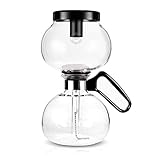
Yama Glass 8-Cup Stovetop Siphon
- Hand-blown borosilicate glass
- Gas and electric stovetop ready
- Cloth filter and spoon included
- 24oz nominal capacity
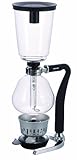
Hario Next Coffee Syphon
- Silicone-covered stand handle
- Japanese borosilicate glass
- 5-cup 600ml
- Imported from Japan
The Best Siphon Coffee Makers at a Glance in 2026
We rated all eight brewers on the same three questions: does it make a good cup, can a beginner run it without frustration, and how much of the counter does it demand. Here is the short version before we go into detail on each one.
| Product | Specifications | Action |
|---|---|---|
| Hario Technica Coffee Syphon |
|
Check Latest Price |
| Hario Next Coffee Syphon |
|
Check Latest Price |
 Hario 3-Cup Moca Siphon Hario 3-Cup Moca Siphon |
|
Check Latest Price |
| Yama Glass 8-Cup Stovetop Siphon |
|
Check Latest Price |
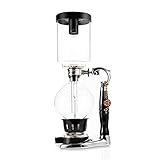 Yama Glass 5-Cup Tabletop Siphon Yama Glass 5-Cup Tabletop Siphon |
|
Check Latest Price |
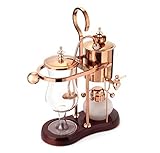 Diguo Belgian Balance Siphon Diguo Belgian Balance Siphon |
|
Check Latest Price |
 Bodum PEBO Vacuum Coffee Maker Bodum PEBO Vacuum Coffee Maker |
|
Check Latest Price |
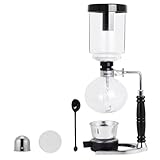 YUCHENGTECH 600ml Siphon YUCHENGTECH 600ml Siphon |
|
Check Latest Price |
Where siphons genuinely lose is speed and volume. A burner model from cold water can take fifteen to twenty minutes, and a five-cup siphon typically yields two real mugs. If your morning needs coffee in ninety seconds, this is the wrong tool. If you want a slow weekend ritual that doubles as a conversation piece, it is exactly the right one, and our home brewing starter kit guide covers the grinder and scale that make it worthwhile.
1. Hario Technica Coffee Syphon – Best Overall
Hario “Technica” Coffee Syphon, 600ml
600ml 5-cup capacity
Borosilicate glass, stainless steel, brass fasteners
1.5 lb, 4.3D x 6.2W x 14H inches
Pros
- Exceptionally clean sediment-free cup
- Borosilicate upper bowl
- lower bowl and burner
- Stainless steel stand
- burner cover and filter
- Compact enough to store under a cabinet
- Made in Japan
Cons
- Upper bowl glass is thin and fragile
- Included alcohol burner is slow from cold
- Takes about 10 minutes to first cup
This is the model we kept coming back to during testing. The Technica is a 600ml tabletop brewer with heat-resistant borosilicate glass chambers, a stainless steel stand and burner cover, and brass fasteners at the joints. Every glass piece is made by Hario in Japan.
What separates it from cheaper two-chamber siphons is the stand itself. The upper chamber clamps into a metal collar rather than resting on a plastic ring, and that collar carries the weight when you lift a full brewer off the burner. On a burner setup you will do that lift every single time, and a flimsy handle is where most siphon accidents happen.
The cup quality is the reason it leads our list. Reviewers consistently describe clean, sediment-free coffee with a smooth, mellow body and no grit, and the same reviewers who own four or five other vacuum brewers tend to keep this one on the shelf. Owners who pre-boil their water, swap the alcohol burner for a butane torch, and use a permanent metal filter report an eight-minute routine instead of a fifteen-minute one.
On the technical side, the 5-cup rating describes water volume, not mugs. Expect two proper cups per brew, sometimes three if you brew shallow. The included fabric filter needs soaking and careful handling, and the knurled knob that secures the upper bowl is genuinely hard to grip with wet fingers, so dry your hands before you turn it.
It stands 14 inches tall and weighs 1.5 pounds, which makes it the easiest of the tabletop brewers to store. The one real caution is the thin upper bowl. Lift it by the collar, not by the glass, and set it on a dry surface rather than a cold, wet one.
Who the Hario Technica suits
Buy this one if you want the reference version of a siphon: Japanese glass, a metal collar that holds weight, and a coffee result that is easy to repeat. It is a good first siphon and a good last siphon, which is not something we can say about most brewers in any category.
It is also the right choice for anyone moving up from a plastic-frame marketplace siphon and finding that the plastic ring cracked or slipped. The difference in stability is immediate.
Who should skip it
Skip it if you plan to brew for more than two people, because the capacity ceiling is hard. It is also a poor match for anyone who wants to skip the flame entirely, since no electric element is involved and the alcohol burner is the only heat source in the box.
If you are sensitive to glass breakage, the metal-heavy balance siphon later in this list avoids the two-flame-topped glass format entirely. The Technica is superb, but it is still glass sitting over a flame.
2. Hario Next Coffee Syphon – Best Premium Tabletop Upgrade
Hario “Next” Coffee Syphon, 600ml
600ml 5-cup capacity
Silicone and stainless steel stand handle
3.1 lb, 16.34D x 7.28W x 5.15H inches
Pros
- Silicone-covered handle gives a safe grip on hot glass
- Same Japanese borosilicate glass as the Technica
- Stand
- burner cover and reusable filter included
- Classic styling made for display
- 4.7 average rating with 83 percent five star
Cons
- Heaviest tabletop unit at 3.1 pounds
- Manual process takes real practice
- Most expensive of the Hario tabletop models
The Next is the Technica with one problem solved. The glass bodies are the same Japanese borosilicate, the capacity is the same 600ml, and the hardware is stainless steel and brass as before. The difference is the stand handle, which carries a silicone cover so you can reposition the brewer without touching hot glass.
That sounds minor until you run the brewer a dozen times. Every brew involves a moment where the flame is off, the chamber is full, and you need both hands. The bare steel handle on the Technica gets hot enough to be unpleasant; the covered handle here does not.
The flavor profile lands in the same place as the Technica, with reviewers describing a clean and smooth cup once the technique clicks. Ratings sit at 4.7 with 83 percent five star, which puts it alongside the Technica in the top tier of this roundup even though fewer people have owned it long enough to leave a review.
Trade-offs are mostly physical. At 3.1 pounds this is the heaviest tabletop brewer here, and at just over 16 inches deep it needs real counter or cabinet space. It is a manual flame brewer, so plan on the same burner routine as the Technica.
The other limitation is straightforward: you are paying more for a better handle and updated styling, not for a different cup. If the Technica and the Next are both within reach, decide by hand safety and storage space rather than by taste.
Where the Hario Next earns its price
It wins for households that brew often, brew with guests, or have children around a counter where glass and flame are a questionable combination. The silicone handle removes the most common scald risk in the category.
It also suits anyone who wants the brewer on display. The classic styling reads as intentional kitchenware rather than a laboratory experiment, which matters more than it sounds if you are leaving it out rather than hiding it in a cupboard.
Where it does not
It is not a step up in brewing precision, and it is not a larger brewer. Anyone who wanted more than two mugs per batch, or wanted fewer minutes between the flame and the cup, will find the same limits as the Technica.
Reviewers also note that the manual process takes practice regardless of model. The Next makes that practice safer; it does not make it shorter.
3. Hario 3-Cup Moca Siphon – Best for Small Batches
Hario 3-Cup Coffee Siphon (Moca)
360ml 12.2oz practical capacity
Heat resistant glass, stainless steel, brass
Ships with alcohol lamp and 50 paper filters
Pros
- Smallest footprint in the roundup
- Made in Japan with heat-resistant glass chambers
- Paper filters simplify cleanup
- Great theatrical process
- Fruity clean cup with specialty coffee and a fine grind
Cons
- Instructions are in Japanese
- Small yield suits one or two drinkers
- Needs technique and about a minute of water contact time
The Moca is the compact entry into Japanese siphon brewing, and it is the smallest brewer we tested. At 360ml of practical capacity, it is roughly half the size of the 600ml models, which makes it the natural fit for a single-cup-per-person morning or a small apartment counter.
The included accessories matter more here than on the bigger models. The box ships with an alcohol lamp, a lightweight spoon, and 50 paper filters, and that paper filter is the practical difference. Cloth filters need soaking, scrubbing, and periodic replacement; paper filters get rinsed and thrown away, which is why this is the model we recommend to a first-time owner who is not ready to commit to filter maintenance.
The other materials are familiar: heat-resistant glass chambers, a stainless steel filter set with an aluminum windbreak, and an iron, zinc alloy, and polypropylene stand with brass screws. Made in Japan.
Reviewers like the visual process as much as the cup, and they report a fruity, clean result when used with specialty coffee and a fine grind. That last detail matters, because the small chamber means contact time moves the flavor fast. Too long and it turns bitter.
Why the Moca works for one or two people
It solves the capacity mismatch better than any other model here. Where a 5-cup siphon leaves you with coffee for two and a commitment you cannot finish, the Moca makes a realistic amount for a couple or a solo drinker with a second cup.
It also stores easily, at under 12 inches tall, and it is the least intimidating brewer to leave out on a counter. For a gift, it is the one most likely to get used rather than shelved.
What to know before buying
The instructions are in Japanese. That is a real friction point for a lot of buyers, though the process is simple enough to learn from a short video once you have seen it done.
Expect about a minute of water contact time before the cup tastes right, and expect the alcohol lamp to be the slowest part of the brew. Most owners who care about speed pre-heat their water in a kettle first, which is a good habit to build with any burner siphon.
4. Yama Glass 8-Cup Stovetop Siphon – Best Value
Yama Glass 8-Cup Stovetop Siphon Coffee Maker, 24 Oz Vacuum Brew, Heat-Resistant Borosilicate Glass
24oz nominal 8-cup capacity
Hand-blown borosilicate glass
2.4 lb, 7D x 7W x 12H inches
Pros
- Bold buttery full-flavored cup
- Works on gas and electric stovetops
- Cloth filter and screen assembly included
- Seals and glass have held up for long-term owners
- Manufacturer replaces units received broken
Cons
- Real yield is closer to five 8oz cups
- All-glass build needs a light touch
- Slower than a drip machine
- Watch the lower chamber so it does not boil dry
The Yama 8-Cup is the brewer we recommend to anyone with a working stovetop. It is hand-blown borosilicate glass, it works on gas and electric rangetops, and the reusable cloth filter, screen assembly, lid, and measuring spoon all come in the box. No burner to fill, no fuel to carry.
Stovetop heat changes the rhythm of a brew in a good way. A gas burner reaches temperature in seconds, so the time that burner models lose to a slow flame disappears entirely. It is the fastest path from cold water to a cup among the manual brewers here, and it removes the flame-watching problem that makes people give up on tabletop siphons.
The cup is where this one earns its place. Reviewers describe bold, buttery, full-flavored coffee that beats both drip and percolator results, and long-term owners report that the seals have stayed tight and the glass has not cracked. The manufacturer also replaces units that arrive broken, which is a small reassurance in a category made of glass.
Two things catch people out. First, the 8-cup label describes the marked capacity of the carafe, and real yield lands nearer five 8-ounce cups once the water absorbed by the bed and retained by the grounds is accounted for. Second, the construction is all glass, so the stem and globe need a light touch, and the lower chamber must never boil dry. Run the water out and the glass can crack.
Cleaning the upper chamber around the stem tube is also fiddly, and the dishwasher-safe claim applies to components rather than to the assembled unit.
Worth knowing: the brew is sensitive to contact time, which ranges from about 45 seconds to three minutes depending on grind and burner level. That range is wide, and it is where the learning curve lives. Reviews also point to a real cup yield gap between the label and the glass, and to the constant vigilance needed to keep the lower chamber wet.
When the Yama 8-Cup is the right buy
It suits a household of two or three who want the fastest manual siphon and the richest possible cup. It also fits anyone who already owns a kettle, since pre-boiled water plus a gas burner is a very fast system.
It is the only stovetop-first choice in this roundup that does not ask you to keep a second fuel supply on the counter, and the 2.4-pound weight makes it stable rather than tippy on a gas grate.
When it is not
Do not buy it if you have only an induction cooktop. Borosilicate glass does not couple with induction, and this model will simply never heat.
It is also a poor fit for anyone who does not want to stand near a flame, or for households where a full liter of hot glass being moved across a counter sounds like a risk. In both cases the tabletop models lower in this list are calmer, even though they are slower.
5. Yama Glass 5-Cup Tabletop Siphon – Best for Beginners
Yama Glass 5 Cup Tabletop Siphon (Syphon) (Alcohol Burner), 20-Ounce, Clear
20oz 5-cup nominal capacity
Hand-blown borosilicate glass
0.99 kg, burner and filter cloths included
Pros
- No stove needed
- so it works on a patio table or camp stove
- Elegant retro laboratory styling
- Rich clean cup with low bitterness
- Filter cloths
- chain and scoop included
Cons
- Ball-shaped lower bowl runs dry quickly
- Included wick burner is slow to boil
- Grounds trap in the upper chamber
- Real yield about 2.5 cups
- Fragile in use and in the wash
This is the pure tabletop siphon: hand-blown borosilicate glass, a base stand, a burner, a filter chain, filter cloths, a lid, and a scoop, with no stove anywhere in the process. Denatured alcohol is recommended over isopropyl because it heats faster and gives a better cup.
For a beginner, the appeal is obvious. There is nothing to install, nothing to plug in, and nothing to learn about your range. Set it on a table, light the burner, and start. That same property is why reviewers treat it as a weekend ritual piece rather than an everyday brewer, because the wick burner is slow and the brew is a process you plan for rather than a task you knock out before work.
The style is a genuine draw. The retro laboratory look is closer to a piece of furniture than a kitchen gadget, and most owners describe a rich, low-bitterness cup from the included cloth filters.
Owners who want faster results almost all do one of two things: they swap the wick burner for a butane burner, or they boil water in a kettle first and start from hot water. Both cut the ritual down considerably.
The technical weak point is the spherical lower vessel. It holds little water relative to the flame beneath it, so it can run dry quickly, and running dry over a flame is the fastest way to crack a siphon. Stay close to it, and lower the heat once you see the first bubbles in the neck.
Cleanup is the other honest drawback. Loose grounds collect in the upper chamber where the filter chain sits, and reaching into the curve of that glass to rinse it is where breakage tends to happen. Expect about 2.5 real cups from the 5-cup label, and plan on buying spare cloth filters rather than trying to make one last indefinitely.
Why beginners like this one
It has the fewest failure points of anything in this roundup. No stove, no controls, no scale to weigh down a shelf, and the parts list is short enough to understand from the box.
It is also the only model here that genuinely travels. A tabletop burner setup works on a patio table, a balcony, or beside a camp stove, which makes it the pick for anyone who does not want brewing tied to a kitchen counter.
What to watch out for
The included wick burner is the weak link. Several owners replace it outright with a butane burner and report a completely different brew time, and the manufacturer guidance to use denatured alcohol helps as well.
Also factor in the time. From cold with the supplied burner this is a slow process, and the ball-shaped lower bowl demands attention that a busy morning does not allow. If speed matters more than portability, the stovetop Yama is the better first siphon.
6. Diguo Belgian Balance Siphon – Best Looking Gift
Diguo Belgian/Belgium Luxury Royal Family Balance Syphon Coffee Maker, Siphon Brewer, Elegant Design Retro-Style (Polished Rose Gold)
500ml about 17oz
304 stainless steel with borosilicate flask
1.1 lb, 12.4D x 19W x 17.25H inches
Pros
- Rose gold plated balance design on a wooden base
- Metal components instead of all-glass
- Clean aromatic cup with no bitterness
- Cloth filter
- scoop and measuring cup included
- No stove required
Cons
- Manual balance mechanism takes practice
- 500ml suits 3 to 5 espresso cups
- Tallest and widest footprint in the roundup
This one works differently from every other brewer here. Instead of a top chamber that fills with water, it uses a balance-beam mechanism: a vacuum flask sits on one side, a counterweight on the other, and as the brewed coffee transfers, the beam tips and stops the pour on its own.
The construction is the other differentiator. You get a 304 stainless steel vacuum flask, a siphon pipette, a filter head, a borosilicate brewing flask with a medical grade silicone seal, and a rose gold plated shaft on a wooden base. Metal rather than all-glass is a real safety advantage over a flame-topped vacuum pot, and the sealed silicone joint is less likely to leak than a bare glass rim.
Cup quality holds up. Reviewers describe it as clean, aromatic, and free of bitterness, with a reusable natural cloth filter rated to last many months. Ratings sit at 4.6 with 83 percent five star, and the design is offered in rose gold, classic gold, and silver.
What you give up for the looks is capacity and simplicity. At 500ml, this is sized for three to five espresso cups rather than a full mug each, and the balance mechanism needs practice before you can pour on timing rather than by instinct.
It is also the largest footprint here at 12.4 by 19 by 17.25 inches and weighs 1.1 pounds, so it is a display object that occupies real space. That is fine if you want it out where guests can see it, and a problem in a small kitchen.
The included parts are generous for a gift: cloth filter, coffee scoop, water measuring cup, alcohol burner, handle, and a glass tumbler. Nothing about the box looks like an afterthought, which is exactly the point.
Why this is the gift to buy
It solves the objection that stops most people buying a siphon, which is that a vacuum pot looks like a science project. A rose gold balance brewer on a wooden base looks like an object you would leave out deliberately.
It is also the safest entry in the roundup. No all-glass globe sits over a flame, and the metal flask and silicone seal are forgiving of the small mistakes beginners make.
Who should pass on it
Anyone brewing for more than two people will find 500ml limiting, and anyone who wants a fast, high-volume pot should look at the larger manual brewers instead. The mechanism also rewards a patient hand, so a first-time brewer who wants instant results will be frustrated.
There is no burner technology advantage to buying it, either. It heats the same way a tabletop siphon does, with a manual alcohol burner, so you are choosing aesthetics and materials over speed.
7. Bodum PEBO Vacuum Coffee Maker – Best for Large Batches
Bodum 34 oz Pebo Vacuum Coffee Maker, High Heat Borosilicate Glass, Black
1000ml 34oz, 8 cups at 4oz
High heat borosilicate glass dual bowl
0.74 kg, 10.5D x 10.3W x 10.3H inches
Pros
- Cleanest sludge-free cup users have compared across brew methods
- Flatter larger bottom bowl holds water for extended boiling
- Works on electric and gas stovetops
- Retro styling owners leave on display
- Fast when water is pre-boiled
Cons
- Lowest average rating here at 4.1
- Upper funnel has cracked for some owners
- Glass is not covered by warranty
- Liter of coffee goes cold after the first cup
- Plastic filter is weaker than cloth or metal
The PEBO is the volume play in this roundup. At 1000ml it makes eight 4-ounce cups, which is roughly double what the 600ml models deliver in a real brew, and the two firmly attached glass bowls seal the vacuum chamber so aroma does not escape on the way up.
Its design also has one practical advantage over the round-bottom brewers. The lower bowl is flatter and larger, so it holds enough water for an extended boil without the frantic topping-up that a spherical chamber demands. Reviewers call out that difference, along with the fact that it brews fast when you start with pre-boiled water.
On flavor, when it works, this is the cleanest cup in our line-up. Owners compare it favorably against French press, Chemex, and cone pour over, describing sludge-free, pure coffee. That is not a small claim from a group of people who own all four methods.
It is also the most heavily reviewed product here, with 1439 reviews, and the most polarizing at 4.1, with 12 percent one-star ratings. We include it because the flavor ceiling is real and because the failure modes are worth knowing about before you buy.
The durability complaints are consistent. Several owners report the upper funnel or the lower carafe cracking after only a few months of careful use, and Bodum does not cover the glass under warranty, which leaves you with a broken brewer and no recourse. Forum discussion attributes many of these failures to high heat or to setting hot glass on a cold, wet surface, both of which are avoidable.
The other trade-off is temperature. A liter of brewed coffee loses heat fast, and owners report it going lukewarm or cold after the first cup, which is a real problem for anyone who does not drink immediately. The included plastic filter, held in place by a spring, is also the weakest filter in this roundup and is widely considered inferior to cloth or metal.
Brew time runs 5 to 11 minutes depending on the water volume, so larger batches are not proportionally faster.
Who the PEBO works for
It is the pick for a household that wants one pot to serve several people, and for anyone who has written off siphons as a small-batch only method. The flat bottom bowl also makes it the most forgiving of the stovetop brewers on heat management.
For anyone comparing against other manual methods, the cleanliness of the cup is the reason to try it. If you have been disappointed by silty French press sediment or by fines in a metal filter, the sealed vacuum chamber is a different experience.
Who should avoid it
If you are rough with equipment, or you have a busy kitchen counter, the unwarranted glass is a genuine risk. Owners with several vacuum brewers in the house report the PEBO breaking more often than the stovetop Yama, which has the benefit of a manufacturer replacement policy.
It is also the wrong choice if you plan to serve coffee over a long period, since a large batch cools faster than you can drink it. For a liter that stays warm, you want an electric machine instead.
8. YUCHENGTECH 600ml Siphon – Budget Pick
YUCHENGTECH Siphon Syphon Coffee Maker Tabletop Glass Siphon Pot Glass Technica Siphon Vacuum Coffee Maker(5 Cups(600ml))
600ml nominal 5-cup capacity
Borosilicate glass rated to 180C
304 stainless steel large-angle base
Pros
- Lowest cost in the roundup
- Borosilicate glass rated -30C to 180C
- Adjustable buffer clamp adds real stability
- Works with alcohol lamp
- halogen heater or gas stove
- Full-flavored cup for the money
Cons
- Real yield closer to two 8oz cups
- Included alcohol burner is weak
- One report of the bottom carafe bursting
- Cloth filter dirties quickly
- About 15 minutes for 16oz
At roughly half the cost of the Japanese-made models, the YUCHENGTECH is the reason siphon brewing is no longer an expensive hobby. You get borosilicate upper and lower pots rated from -30C to 180C, a large-angle 304 stainless steel base, and a buffer clamp that cushions the connecting joint with adjustable tightness.
That clamp is the smart part. It is a simple piece of engineering that stops the upper pot slipping or cracking against the lower one as the joint tightens and loosens, and it is the feature most likely to keep a beginner from breaking a brewer on their first attempt.
Reviewers treat the cup fairly for the price, describing a robust-bodied coffee and a genuinely entertaining process. It is a real brewer, not a toy, and it accepts an alcohol lamp, a halogen heater, or a gas stove, so you are not locked into the burner that ships in the box.
Capacity is the honest catch. Real yield lands closer to two 8-ounce cups than the stated five, so treat the 5-cup label as water volume. The included alcohol burner is also weak, and several owners replace it with a butane burner or start from pre-boiled water.
There is one outlier durability report of the bottom carafe bursting after three uses, which sits in a review base of 383. The manufacturer guidance to wipe the lower pot dry before heating and to hold the lower handle when lifting the upper pot is worth following exactly, since thermal shock from a wet base is the likely cause in most glass failures.
Budget extra for replacement cloth filters, which reviewers say discolor and clog quickly, and expect about 15 minutes to brew 16 ounces including preheating.
Why this is a sensible first siphon
It removes the main reason people hesitate, which is cost, without giving up the parts that actually matter. The glass is real borosilicate, the base is stainless steel rather than plastic, and the clamp design is more considered than most of what you find at this tier.
It is also the most flexible on heat source, since it will run on a halogen beam heater or a gas stove as readily as an alcohol lamp. If you already own a camping stove, that is enough to start brewing.
Where it falls short
The burner is the weak point, and the yield is well under the label. Anyone who needs more than two mugs per batch should step up in size rather than brew twice, and anyone who wants a cup ready in a few minutes will be waiting.
There is also no replacement policy to fall back on if the glass arrives damaged, which is one of the real advantages the stovetop Yama and the Hario models carry.
Are Siphon Coffee Makers Safe? Glass, Flames and Induction
No siphon coffee maker in this roundup works on an induction cooktop. Borosilicate glass has no metal in it to couple with the magnetic field, so a glass-bottomed brewer placed on induction simply never heats. If induction is your only cooking surface, a siphon is not a realistic option and you should look at an electric brewer instead.
Gas and non-induction electric rangetops are fine, which is why every stovetop model here works on both. The real hazards are thermal shock and dry boiling, and both are avoidable.
Never boil the lower chamber dry. This is the single most common cause of cracked siphon glass. The lower chamber has no water left to absorb heat, so the temperature spikes and the borosilicate fails.
Start with warm, not cold, water. Filling hot glass with cold water is the other half of the thermal shock problem. Warm water in a warm brewer also cuts your brew time dramatically.
Never set hot glass on a cold, wet surface. A cold tile counter is enough. Put a dry towel down first.
Move the brewer by the collar or handle, not the glass. A full upper chamber weighs more than it looks like it does, and the stem is the weak point.
Watch for stalling. If the vacuum does not reverse, the coffee sits in the upper chamber getting bitter. Lift and reseat the joint, and confirm the seal is clean and dry.
Keep burners off wood and curtains. Alcohol burners are the least dangerous, butane burns hotter, and all of them will stain an untreated wooden table over time.
On burners specifically: alcohol is the slowest and least controllable, butane is hotter and more responsive, and a halogen beam heater sits between them and is the most stable. Users report consistently better results with butane than with alcohol, largely because the heat control is finer. If a brewer is slow to boil, a better burner fixes more than a better brewer does.
How to Brew Your First Siphon, Step by Step
Rinse the reusable filter and soak it, so the cloth does not pull water out of the chamber on first contact. Warm the lower chamber with hot tap water, empty it, then add your brewing water. This one habit removes most of the learning curve and cuts five minutes off the brew.
Grind medium-fine, roughly sand-like. Coarse grounds underextract and taste thin in immersion brewing.
Use 45 to 55 grams of coffee for 600ml of water as a starting ratio, and adjust from there.
Seat the filter in the funnel, dry and clean. A wet or greasy filter ruins the seal and the vacuum will fail.
Fill the lower chamber about two-thirds full. Never more.
Heat to just below a boil, aiming for water around 200F or 93C. Bubbles in the neck, not a rolling boil.
Let it rise and steep for 2 to 4 minutes. Under 45 seconds is thin, over 3 minutes turns bitter. Taste with a spoon and adjust by 30 seconds each brew.
Remove the heat and wait for the vacuum pull. Do not add heat to speed it up, and do not shake the brewer.
Pour as soon as the upper chamber empties. Coffee left sitting in the upper chamber over-extracts.
Write down what you did. Two variables, contact time and grind, account for most of what changes between a thin cup and a great one, and you cannot improve what you do not track.
Cloth vs Metal vs Paper Filters
The filter decides more about your cup than the brewer does, and this is where siphon owners spend the most time. Cloth gives the cleanest, most sediment-free result. Metal is faster and durable but lets fines through, which produces a silty cup that can taste bitter. Paper sits in between, with good clarity and the easiest cleanup, at the cost of a recurring purchase and slightly less body.
Cloth: the cleanest cup, no silty fines, reusable for months. Needs soaking, scrubbing, and periodic replacement once it goes rough or discolors.
Metal: the most durable and the fastest flow. Fines pass through, so the cup is silkier and can taste harsher. Great with a slightly coarser grind.
Paper: the easiest to live with. Consistent clarity, no maintenance, and a new sheet each brew. Less body than cloth and a running cost.
On replacement cadence, the honest answer from experienced users is that a cloth filter lasts until it stops performing, not until it looks bad. Expect a few months of regular use, and buy a spare when you notice the cup developing silt or the cloth feeling stiff. The paper-filter option is the reason the compact Hario Moca is the easiest first brewer, and it is worth the recurring cost if you do not want to maintain cloth.
How to Choose a Siphon Coffee Maker for Your Kitchen
Start with your heat source. Gas or non-induction electric stovetop points you to the Yama 8-Cup or the Bodum PEBO. No stove at all points you to a tabletop model, which needs a burner and a clear table. Electric only works if you buy a heated model, and none of the highest-rated brewers in this roundup are electric.
Be honest about volume. A 5-cup rating describes water, not coffee. After the bed absorbs water and the grounds retain some, expect one to three real mugs from a 600ml brewer and about two and a half from the Yama tabletop model. The 1000ml Bodum is the only model here that reliably serves more than two people.
Decide how much glass risk you will accept. All-glass vacuum pots are the traditional format and the best flavor path, but they are also the ones that crack. The balance siphon uses metal and silicone and is a calmer first purchase for a kitchen with a lot of traffic.
Plan the accessory budget. A siphon exposes bad grind and bad water, so a burr grinder and a kettle with a temperature reading do more for your cup than a more expensive brewer will. If you are still shopping for that gear, our starter kit picks cover the essentials. For a slower, no-caffeine-until-tonight option while you learn, a cold brew maker is a good companion.
Factor in the flame honestly. Alcohol burners are cheap and slow, butane is faster and better controlled, and halogen beam heaters are the most consistent. A halogen heater also removes the fuel and staining problem from a wooden table.
Frequently Asked Questions
Are siphon coffee makers good?
Yes, when the technique is right. A siphon immerses every ground in hot water and pulls the finished coffee down through a filter with a partial vacuum, so the water never reaches a full boil at the coffee bed. That combination produces a clean, sediment-free, low-bitterness cup. The trade-off is time and volume: expect 10 to 20 minutes per brew and one to three real mugs from a 5-cup model.
Is Japanese siphon coffee good?
Japanese models such as the Hario Technica and Hario Moca use heat-resistant borosilicate glass with stainless steel and brass hardware, and they are generally the best-built brewers in the category. They are also the slowest from cold because they pair with alcohol burners. Buyers who pre-boil water and switch to a butane burner report the same clean, mellow cup in roughly eight minutes.
Is siphon coffee better than pour over?
It depends on the coffee. A pour over gives you precise control over temperature and flow and is harder to beat with light roasts. A siphon gives you full immersion and a vacuum pull, which extracts more oils and produces a fuller, rounder, sediment-free cup that many people prefer on medium and dark roasts. In practice the siphon is a different flavor profile rather than an upgrade, and heavy pour over investment is hard to argue with on value alone.
How many cups does a 5-cup siphon really make?
Usually two real mugs, sometimes three if you brew shallow. The stated capacity describes water volume in the lower chamber. After the coffee bed absorbs water and the spent grounds hold some back, a 600ml brewer yields roughly 16 to 20 ounces of brewed coffee, and a model labeled 8 cups typically delivers nearer five 8-ounce cups.
Can you use a siphon coffee maker on an induction stove?
No. Borosilicate glass contains no metal to couple with an induction field, so a glass siphon placed on an induction cooktop will not heat at all. Induction users need a heated electric brewer or a different brewing method. Gas and non-induction electric stovetops work normally with every stovetop siphon.
Why do my siphon coffee filters keep breaking or clogging?
Two different problems have similar symptoms. Clogged filters mean the cloth has gone rough, has collected oils, or your grind is too fine, and the fix is a longer soak, a coarser grind, or a new cloth. Cracking is almost always thermal shock, from cold water in hot glass, hot glass on a cold or wet surface, or from boiling the lower chamber dry. Wipe the base dry before heating and never let the lower chamber run out of water.
The Best Siphon Coffee Maker for 2026
The Hario Technica Coffee Syphon is our best siphon coffee maker because it does the three things that matter: it makes a genuinely clean cup, it survives being handled by someone who is still learning, and it stores away when you are done with it. The stainless steel collar that carries the upper chamber is the detail other tabletop brewers skip, and it is the difference between a siphon you keep and a siphon you break in the first month.
Buy the Yama Glass 8-Cup if you have a gas or non-induction electric stovetop and want the fastest manual brew with the richest coffee. Buy the Hario 3-Cup Moca if you brew alone and want the smallest footprint and the easiest cleanup. Buy the Diguo balance siphon as a gift, because it solves the objection that a vacuum pot looks like a science project. Buy the YUCHENGTECH if cost is the deciding factor, and accept the weaker burner and the smaller real yield.
Two warnings before you start. No siphon on this list works on an induction cooktop. And whatever you buy, pre-heat your water in a kettle, fill the lower chamber only two-thirds, and never let it boil dry. Those three habits fix more bad brews than any brewer choice will.
Whichever one you pick, the process rewards patience. Start with a good medium grind, keep the first three brews on a 2-minute contact time, and adjust from there. The cup gets better every time, which is exactly what makes a siphon worth the counter space.