

Hard water will shorten the life of an espresso machine, and the damage is usually not covered by warranty. The dissolved calcium and magnesium in your tap water precipitate as limescale the moment you heat it, insulating the boiler, narrowing flow passages and dulling steam. Scale is the leading cause of premature failure in machines used in hard water areas, and no amount of money spent on the machine prevents it.
The good news is that most of the damage happens before the water ever reaches the heating element, and a few machine traits decide how much trouble you will have. A removable tank lets you feed the machine treated or remineralized water. A filter or hardness test strip in the box tells you what you are dealing with. A large reservoir that can be filled with a cleaning solution and left to soak makes descaling a ten-minute job instead of a teardown.
We ranked the machines below on exactly those traits rather than on shot quality alone, so this is a guide to the best espresso machines for hard water areas for anyone who has ever found white film in the tank or wondered why the steam wand suddenly takes a minute to warm up. Water target throughout: 50 to 150 ppm total hardness, with the Specialty Coffee Association’s own water standard sitting at 35 to 85 ppm.
Before you read further, it is worth checking whether a general machine is a better fit for your kitchen. Our full tested espresso machine guide covers thermoblocks, PID control and grinder pairing, and our roundup of entry-level espresso machines is the right read if scale is a secondary concern. Hard water is a different buying problem, and it is the one this guide solves.
Table of Contents
- Quick Picks: Best Espresso Machines for Hard Water Areas (October 2026)
- Best Espresso Machines for Hard Water Areas in 2026
- 1. Breville Barista Express – Best Overall for Hard Water Homes
- 2. De’Longhi 15-Bar Pump – Best for Small Kitchens
- 3. CASABREWS CM5418 – Best Value for Hard Water Budgets
- 4. Breville Barista Touch – Best for Beginners in Hard Water
- 5. Breville Barista Pro – Most Versatile With Shot Count Maintenance
- 6. Ninja Luxe Cafe Premier – Best Guided Hard Water Setup
- 7. Chefman Crema Supreme – Best Tank Capacity for Soaking
- 8. Philips 5500 Series – Best Super-Automatic for Hard Water
- 9. De’Longhi Eletta Explore – Best for Hot and Cold Drinks
- 10. De’Longhi Magnifica Start – Best Built-In Hardness Setup
- Tank vs Direct Plumb: Which Setup Wins in Hard Water Homes
- How to Test and Treat Your Water Before You Buy
- Descaling Schedules by Hardness Level and Machine Type
- Frequently Asked Questions
- Will hard water ruin my espresso machine?
- What is the ideal water hardness for espresso machines?
- Is 425 ppm hard water considered hard?
- Do I need to descale my espresso machine if I use filtered water?
- How do I remove limescale buildup from my espresso machine?
- Is distilled water safe for espresso machines?
- Is De’Longhi or Breville better for hard water?
- Should I plumb an espresso machine in a hard water area?
- Can I put CLR or vinegar in my coffee maker?
- What is the best coffee maker for a hard water area?
- Our Verdict for Hard Water Buyers
Quick Picks: Best Espresso Machines for Hard Water Areas (October 2026)
Ten machines earned a place in this roundup, but three stand out for hard water specifically.

Breville Barista Express
- 67 oz removable water tank
- Water filter and holder included
- PID temperature control
- Descale reminder light

CASABREWS CM5418
- 34 oz detachable tank
- Lifts out for soaking
- Built-in pressure gauge
- Compact footprint
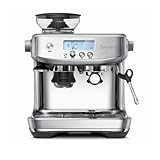
Breville Barista Pro
- 67 oz water tank
- Water filter in the box
- Descale prompts by shot count
- 2 year limited warranty
Best Espresso Machines for Hard Water Areas in 2026
Every machine below draws from a tank you can reach, which is the single most useful trait in a hard water area because it lets you choose the water going in. The table underneath sets out what each one gives you to work with.
| Product | Specifications | Action |
|---|---|---|
| Breville Barista Express |
|
Check Latest Price |
 De’Longhi 15-Bar Pump De’Longhi 15-Bar Pump |
|
Check Latest Price |
| CASABREWS CM5418 |
|
Check Latest Price |
 Breville Barista Touch Breville Barista Touch |
|
Check Latest Price |
| Breville Barista Pro |
|
Check Latest Price |
 Ninja Luxe Cafe Premier Ninja Luxe Cafe Premier |
|
Check Latest Price |
 Chefman Crema Supreme Chefman Crema Supreme |
|
Check Latest Price |
 Philips 5500 Series Philips 5500 Series |
|
Check Latest Price |
 De’Longhi Eletta Explore De’Longhi Eletta Explore |
|
Check Latest Price |
 De’Longhi Magnifica Start De’Longhi Magnifica Start |
|
Check Latest Price |
1. Breville Barista Express – Best Overall for Hard Water Homes
Breville BES870XL Barista Express Espresso Machine, Brushed Stainless Steel
67 oz water tank
1/2 lb bean hopper
1600 watts
22.1 pounds
Pros
- Water filter and filter holder included in the box
- Large 67 oz tank is easy to fill and soak
- Loud clean-me and descale reminders
- Integrated grinder avoids a second appliance
Cons
- 67 oz tank and drip tray need frequent attention
- Non-standard 54mm portafilter is harder to replace
- Some units buzz or leak from a failed solenoid valve
With 27882 reviews and a 4.4 rating, the Barista Express has the deepest base of long-term owner reports in this group, and the reason for that durability in hard water is unglamorous: a big removable tank and a filter that comes in the box. Run it through the maintenance that very hard tap water demands, and the descale cycle plus a cartridge change every couple of months keeps the 1600 watt element and the steam wand behaving.
Nothing about it is plumbed or sealed in, which means the entire water path can be flushed without a technician. Fill the 67 oz tank with filtered or remineralized water, and the machine never sees the hardness that produces the crusty white film you find under the water line in untreated machines.
The 1/2 lb bean hopper and the built-in conical burr grinder matter here for a less obvious reason. Because everything happens in one body, scale has fewer places to hide than it does in a setup where a grinder, a machine and a kettle all share one hard tap supply. One filter to change, one descale cycle, one machine to keep an eye on.
Reviewers report that many of them run reverse osmosis or filtered water through this machine specifically to cut scale buildup, and plenty describe machines still going strong after a decade of use. That is the pattern that matters in a hard water area: the unit survives when the water is managed, and struggles when it is not.
How It Handles Very Hard Water
The Barista Express ships with a water filter and a filter holder, so you can pair cartridge changes with descale cycles rather than doing one without the other. In water above 180 ppm, treat that cartridge as a monthly item rather than a quarterly one, and keep a jug of filtered or remineralized water as the default refill.
Its descale prompt is a plain reminder light rather than an automatic program, which means the cycle is yours to run on schedule. Run it with citric acid solution in the tank, let each part soak, and flush thoroughly before the next shot. Owners say the automated cleaning cycle and the maintenance light keep a routine that would otherwise be easy to forget.
Where It Falls Short
The 67 oz tank and the drip tray are the two things you will fill and empty most often, and in a house making four drinks a morning that is real friction. The plastic exterior panels also show their age before the metal parts do.
More importantly for a buyer, the non-standard 54mm portafilter is harder to replace than a 58mm basket, and the o-rings on the portafilter and group head wear with use. Plan on replacement seals as normal upkeep, and treat monthly cartridge changes as the price of keeping this machine alive in very hard water.
2. De’Longhi 15-Bar Pump – Best for Small Kitchens
De’Longhi 15-Bar Pump Espresso Machine with Milk Frother & Temperature Control – Compact Home Barista Coffee Maker for Espresso, Latte, Cappuccino & Iced Coffee, Easy to Clean Design
Removable tank with visible level
7.25 inch depth
1100 watts
10.6 pounds
Pros
- Tiny footprint suits a small countertop
- Visible water level on the tank
- Dishwasher-safe removable parts
- Easy manual descale access
Cons
- Plastic construction feels less premium
- Frother heats milk faster than it textures it
- No integrated grinder
- Three-button interface limits control
In a hard water area, the De’Longhi 15-Bar is the machine you can treat in a small kitchen without rearranging the counter. The removable tank has a visible water level, so you can see the level without lifting anything, and the tank and drip tray both come out and go in a dishwasher.
That cleanability is the hard water story. A 1100 watt element and a small internal volume mean there is very little surface area for scale to coat, and a machine you can take apart with no tools can be soaked in a citric acid solution overnight rather than descale cycled. In a small kitchen, that difference is often the whole ball game.
The three-in-one filter holder takes a single, a double or a pod, which is useful in a household where different people want different things and a full extraction session is too much coffee for one morning. The 15-bar pump is more than a machine at this size needs, but it is what reviewers credit for solid espresso on the first tries.
What you are giving up is refinement. Reviewers describe a frother that heats milk before it textures it, a plastic body that feels less substantial, and a three-button interface that will not let you adjust much beyond drink size. None of that touches water handling.
How It Handles Very Hard Water
There is no filter in the box, so plan to add an in-tank filter cartridge and fill from treated water instead of the tap. In water above 180 ppm, the correct workflow is simple: filter or remineralize every refill, and descale on a schedule you set rather than one the machine sets for you.
Because the tank lifts out, you can soak it, the drip tray and the reservoir in a food-grade citric acid solution when scale does appear. Very hard water tends to show its effect here first as a film in the reservoir and around the visible water level, both of which soak clean in an afternoon.
Where It Falls Short
There is no integrated grinder, so a separate burr grinder is needed for fresh beans, and that grinder is another appliance to keep away from hard tap water splashes. The plastic construction is the other trade: it will not be mistaken for a prosumer machine, and the frother needs practice before it textures properly.
For very hard water, the real limitation is that nothing here prompts you. No descale light, no hardness test strip, no filter reminder. You have to run the schedule yourself, which is fine if you enjoy maintenance and frustrating if you do not.
3. CASABREWS CM5418 – Best Value for Hard Water Budgets
CASABREWS CM5418 Compact Espresso Machine with Milk Frothing Steam Wand
34 oz detachable tank
1350 W boiler, 20 bar pump
8.6 pounds
1 year warranty
Pros
- Tank detaches fully for overnight soaking
- Very small footprint at 5.47 inch width
- Pressure gauge aids dialing in
- Good build quality for the tier
Cons
- Steam wand runs very hot for texturing
- Cool-down required between frothing and brewing
- Included tamper and baskets feel cheap
- Noisy while operating
The CM5418 is the most convincing hard water value in this roundup, and it wins on one specific design fact: the 34 oz tank detaches completely. When scale shows up, you take the reservoir off, fill it with citric acid solution and let it sit, rather than pumping a chemical through a fixed circuit.
At 8.6 pounds and 5.47 inches wide, it also takes up almost no space, which makes it the practical pick for a rented flat where a softener is not an option and counter space is measured in inches. The 1350 watt boiler and 20 bar Italian pump are modest, and a modest boiler is a small scale target.
Reviewers like the built-in pressure gauge because it removes guesswork from a machine at this level, and the single and double shot baskets cover most of what a household actually orders. The 4.3 rating across 8056 reviews reflects an unusually consistent experience for the price.
What gets mentioned just as often is the routine. You cannot brew immediately after frothing because the overheat protection mode forces a cool-down, and the wand runs hot enough that textured foam takes practice. Neither issue is a water issue, and neither gets better in very hard water.
How It Handles Very Hard Water
No filter ships with the machine, so the plan is an in-tank filter cartridge plus treated refill water. At 34 oz the tank is small enough that one cartridge lasts through many refills, and small enough that refilling is a twice-a-day habit rather than a chore you skip.
For water above 180 ppm, descale on a short cycle and lean on the soak method between descales. The removable tank and the compact body make this the least painful machine here to strip down and clean, which is why it survives hard water better than its price suggests.
Where It Falls Short
The included plastic tamper and lightweight portafilter are the first replacements most buyers make, and the metal cup-warming plate is reported as slippery. The machine also vibrates and runs noisy, which matters in a small flat at odd hours.
Warranty cover runs one year, and the machine itself is a modest one to invest heavily in. If your water sits above 300 ppm, this is not the machine to build a long-term water system around, and you should spend your maintenance budget on treatment instead of on parts.
4. Breville Barista Touch – Best for Beginners in Hard Water
Breville BES880BSS Barista Touch Espresso Machine, Brushed Stainless Steel
ClaroSwiss filter and hardness strip in box
67 oz tank
ThermoJet 3-second heat-up
21.8 pounds
Pros
- Hardness test strip included in the box
- Water filter included
- Guided touchscreen walks beginners through each step
- Stores 8 custom settings
Cons
- Automatic milk texturing is less hands-on
- Large countertop footprint
- Built-in grinder needs burr maintenance
- Costs more than the manual Barista models
The Barista Touch is the machine that hands you a water hardness test strip in the box, and in a hard water area that is the detail that decides it. You can establish the baseline hardness before the first shot, set the machine up against a real number, and then let the included ClaroSwiss filter handle the reduction.
The touchscreen guides grind, brew and milk step by step, which matters because a beginner is the owner most likely to skip maintenance. A machine that tells you when to change a filter and descales on a prompt is the one most likely to still be running in year five.
The ThermoJet heating system reaches extraction temperature in about 3 seconds, so there is very little standing water inside the machine being held hot. That is a genuine advantage in hard water: less hot water sitting in the boiler means less time for calcium to precipitate on internal surfaces.
Reviewers also point out that the milk system is automatic with adjustable temperature and texture, so there is no wand to keep clean. Automatic milk circuits are easier to wipe down than a steam wand, which is helpful when your local water leaves a film on everything it touches.
How It Handles Very Hard Water
Start with the supplied test strip, then set the machine’s own water hardness setting to match. Breville uses that setting to time its descale alerts, and getting it right from day one is the difference between a machine that warns you and a machine that quietly scales.
Keep the ClaroSwiss cartridge on a monthly change cycle above 180 ppm and fill the 67 oz tank with treated water. Automatic milk texturing removes the wand from the equation, so the only water-contact surfaces you manage are the tank, the group and the boiler.
Where It Falls Short
The price sits well above the manual Barista Express and Barista Pro, and reviewers who buy it are paying for the guided experience rather than for better extraction. If you already know how to pull a shot, the touchscreen is a cost with little return.
It is also a large machine with a large footprint, and the built-in burr grinder needs regular maintenance of its own. Automatic milk texturing is less flexible than a manual wand, and some users prefer to control texture themselves.
5. Breville Barista Pro – Most Versatile With Shot Count Maintenance
Breville BES878BSS Barista Pro Espresso Machine, Brushed Stainless Steel
67 oz tank
Water filter included
1680 watts
2 year limited warranty
Pros
- Water filter included
- Descale and flush cycles tracked by shot count
- Two year limited warranty
- Strong manual steam wand
Cons
- 54mm portafilter is below the 58mm standard
- Integrated grinder is only acceptable
- Takes time to dial in
- Auto mode pulls poorly
The Barista Pro is the one I would choose over the Barista Express if the water at your address is genuinely hard, and the reason is the 2 year limited warranty plus maintenance prompts driven by shot count rather than a vague reminder light. In a very hard water area the machine tells you when it expects to need service, which is how you stay inside the warranty.
Buyers who follow the maintenance schedule report years of reliable service, and the fast ThermoJet heater plus a stronger steam wand mean you can shoot, steam and shoot again without a flavour drop-off. Manual mode is the reason experienced owners keep it, since they report the automatic mode pulling poorly.
Descale and flush cycles are prompted based on pull count, and the water filter is in the box. Combined with PID temperature regulation within plus or minus 2 degrees Celsius, that gives you a machine that manages its own water exposure, which is the difference between maintenance and neglect.
Parts break down easily for cleaning and cleaning supplies are inexpensive, another hard water advantage: when you need to soak or backflush, you are not waiting on a proprietary part. Reviewers describe most contact parts as metal with a solid stainless body.
How It Handles Very Hard Water
Fill the 67 oz tank with filtered or remineralized water and let the pull count drive your descale timing. At 180 ppm and above, set the hardness setting to the highest band so the prompts arrive before scale has a chance to set on the ThermoJet element.
Because the internals come apart for cleaning, a full teardown and soak is realistic if scale gets ahead of you. That capability is what keeps very hard water from becoming a terminal diagnosis on a machine that would otherwise be worth keeping.
Where It Falls Short
The integrated grinder is the weak point, described as acceptable at best, and it is noticeably noisy. The 54mm portafilter is smaller than the commercial 58mm standard, which limits some aftermarket upgrades and baskets.
Dial-in takes time and beans, and the automatic mode is close to useless next to manual. Add a price well above entry-level machines and a 2 year warranty, and this is a buy for someone who intends to keep it and maintain it properly.
6. Ninja Luxe Cafe Premier – Best Guided Hard Water Setup
Ninja Luxe Café Premier 3-in-1 Espresso Machine, Drip Coffee, & Cold Brew
Hard water testing kit in box
Descaling powder and tablets included
1650 watts
4.4 pounds
Pros
- Hard water testing kit and descaling powder in the box
- Barista Assist guides grind
- dose and tamp
- Dishwasher-safe parts
- Three drink types in one body
Cons
- Portafilter needs real grip to lock in
- Small wastewater tray empties often
- No hot water spout
- Steam wand has restrictive movement
The box includes a hard water testing kit, descaling powder and cleaning tablets, which makes setup a five-minute job instead of a research project. It is the only machine here that ships with both a hardness test and its own descaling supplies in the box, so nothing has to be sourced separately before the first brew.
The Barista Assist Technology uses weight-based dosing with assisted tamping and real-time temperature and pressure adjustment, so a first-time owner gets repeatable shots. For water management specifically, that matters because consistent low-pressure handling means less variation in how much water sits in contact with hot internal surfaces.
It is also three machines in one: espresso, drip coffee and cold brew, all fed from the same water supply. In a hard water area that is a double-edged sword, since every extra circuit is another surface that can scale, so the supplied descaling supplies matter more here than they would on a single-function machine.
Reviewers single out the hands-free frothing as consistent across milk types, and the dishwasher-safe parts as genuinely easy to keep clean. The built-in accessory storage on both sides keeps the cleaning kit near the machine, which is a small thing that encourages regular maintenance.
How It Handles Very Hard Water
Use the included testing kit first, then keep the supplied descaling powder on hand so you are never relying on a generic solution. In water above 180 ppm, run the descaling cycle on a fixed schedule rather than waiting for taste or steam to change.
The cold brew and drip functions draw from the same tank, so treat refill water the same way for all three. Filtered or remineralized water through every circuit is the approach owners in hard water areas report best results with.
Where It Falls Short
Locking and removing the portafilter takes real upper body strength, which is a genuine complaint from users. The wastewater tray is small and needs frequent emptying, and the burr grinder has to be vacuumed out during cleaning.
There is no dedicated hot water spout, the steam wand has restrictive movement and requires the stock pitcher, and only double and quad baskets are included. It is also not aimed at tinkerers, so aftermarket puck screens and parts are not part of the plan.
7. Chefman Crema Supreme – Best Tank Capacity for Soaking
Chefman Crema Supreme 15 Bar Espresso Machine with Milk Frother, Barista Steam Wand, Professional Coffee Maker with Coffee Grinder, 30 Grind Settings, 3L Removable Water Tank – Stainless Steel
3 liter removable reservoir
58mm portafilter
1450 watts
21.8 pounds
Pros
- 3 liter reservoir is the largest here and lifts out fully
- Standard 58mm portafilter takes common accessories
- Accessories store in the detachable drip tray
- Pressure gauge and adjustable shot settings
Cons
- Large countertop footprint
- Plastic components despite the steel body
- Integrated grinder and steamer both need maintenance
- Learning curve on the touch interface
Few hard water features matter more than reservoir volume, and this one removes completely. Three litres gives you enough water to soak the tank and run a proper descale without stopping halfway. Owners single it out for holding plenty of water for descaling and soaking, which is exactly the task hard water creates.
Beyond volume, the standard 58mm portafilter is a quiet win in a hard water home. When the group gasket, the basket and the tamper all need replacing, standard sizing means you buy from any supplier rather than hunting a proprietary part.
The 30-setting conical burr grinder doses directly into the portafilter, and the pressure gauge display sits alongside adjustable shot temperature and volume. That level of control helps when you are chasing consistent results while also keeping a descaling schedule, since repeatable shots make it obvious when something has actually changed.
At 21.8 pounds and over 16 inches on each side, this is a big machine, and the accessories that store in the detachable drip tray are there for a reason. The full kit includes a stainless tamper, pitcher, cleaning tools and grinding funnel, so you are not buying a set of accessories to maintain it.
How It Handles Very Hard Water
No filter ships in the box, so the reservoir is where your water management happens. Fill it with treated or remineralized water, and when the time comes, fill it again with citric acid solution and let the tank soak before you run the machine through its cycle.
That volume makes this the easiest machine here to descale thoroughly rather than adequately, which is the deciding factor in water above 180 ppm. A machine that scales and gets a half-hearted descale every six weeks ages faster than one that gets a full soak every few months.
Where It Falls Short
The footprint is large for a semi-automatic machine, and plastic components show up inside a stainless body, which is where wear tends to appear first. Both the integrated grinder and the milk steaming need regular maintenance on top of the water routine.
There is a learning curve with the touch interface and semi-automatic workflow, and the review base is thinner than the picks above it, so long-term hard water reports on this specific model are limited. If your water is severely hard, the 3 liter tank is the reason to stay, not the extraction.
8. Philips 5500 Series – Best Super-Automatic for Hard Water
PHILIPS 5500 Series Fully Automatic Espresso Machine, LatteGo Milk System
1.8 liter capacity
15 bar
1500 watts
QuickStart in 3 seconds
Pros
- 20 preset drinks from one tap
- SilentBrew keeps grinding quiet
- Four savable user profiles
- LatteGo milk system has no hidden tubes
Cons
- Metal water filter needs regular replacement in hard water
- Limited manual control over extraction
- Internal circuits need periodic deep cleaning
- 230 volt specification
Super-automatic machines are usually poor news in hard water, because the boiler, the brew circuit and the milk circuit are all sealed inside one body. The Philips 5500 is worth a look despite that, and the honest caveat is that it has a metal water filter that reviewers specifically note needs regular replacement in hard water areas.
That single con is also the buying instruction. Treat the metal filter as a monthly consumable above 180 ppm, and the machine has 20 one-touch recipes, a 3 second ready-to-brew start and grinding that reviewers say is 40 percent quieter than on earlier models.
The LatteGo 3-part milk system has no internal tubes, which matters more than it sounds in hard water. Tubes trap water permanently, and permanently trapped hard water is permanently scaling. A system that rinses clean in 10 seconds or goes in the dishwasher removes a whole category of scale problems.
SilentBrew sound shielding and Quiet Mark certified grinding are the features reviewers praise most, and four savable user profiles let a household set up different strength and volume preferences without fighting over settings every morning.
How It Handles Very Hard Water
Buy the filter cartridges in advance and set a calendar reminder, because a super-automatic hides scale until the descale program runs. Above 180 ppm, a monthly filter and a descale cycle on a fixed schedule keeps the internal brew circuit inside its limits.
Fill the 1.8 liter tank with treated water, and use the hot water preset periodically as a flush between uses. Running clean water through the circuit on a routine is a simple habit that does more for a sealed machine than most owners expect.
Where It Falls Short
Superautomatic design leaves less manual control over shot parameters than any semi-automatic here, and the internal brew and milk circuits need periodic descaling and deep cleaning that has to be done through the menus rather than by opening anything up.
It is a large footprint compared with compact machines, and the review count is small, so there is less long-term hard water history to lean on. This listing also shows a 230 volt specification, so confirm the voltage matches your supply before you commit.
9. De’Longhi Eletta Explore – Best for Hot and Cold Drinks
De’Longhi Eletta Explore Espresso Machine with Coffee Grinder, Milk Frother
Removable 3.8 pound capacity tank
Water filter support
1250 watts
26.9 pounds
Pros
- Water filter support plus removable tank
- Automatic cleaning function
- 50+ hot and cold recipes
- Two year warranty plus a registration year
Cons
- Very high price for the category
- Heavy 26.9 pound build
- Limited manual control
- Plastic parts inside a premium body
The Eletta Explore is the pick for a household where the water is treated properly and the machine itself is a convenience decision rather than a hobby one. Water filter support plus a removable tank is the combination that keeps a sealed super-automatic viable in a hard water area, and reviewers do call out the filter support as a reason to buy it in those households.
The automatic cleaning function handles the routine, and the dual LatteCrema systems cover hot and cold foam. For someone who wants iced drinks, cold brew and espresso from one body, the 50-plus one-touch recipes remove the technique barrier entirely.
Internal specs include a built-in grinder with 13 grind settings, which is fine for consistent dosing, and a cold extraction function that brews cold brew in under 3 minutes. Efficiency is part of the water story too, because extracting flavour at a lower temperature shortens the time hot water sits in contact with internal surfaces.
The warranty runs two years plus an extra year with product registration. In hard water that registration step is worth doing, since it is tied to maintenance compliance and scale claims are the first thing a service department checks.
How It Handles Very Hard Water
Use the water filter support as designed, and treat the removable tank as the point where you introduce treated or remineralized water rather than tap. Above 180 ppm, run the automatic cleaning function on a shortened interval and keep the filter cartridges stocked.
Super-automatic circuits are less forgiving than open boilers, so consistent water quality matters more here than anywhere else in the roundup. A machine this size is a poor candidate for learning on untreated water, and a good candidate once the water is handled.
Where It Falls Short
Price is the dominant complaint, and several buyers note that a super-automatic at this level still offers limited manual control over extraction. It weighs 26.9 pounds with a footprint over 22 inches deep, so it owns a large amount of counter.
Plastic components sit inside an otherwise premium body, which is where long-term wear tends to concentrate. With 410 reviews the long-term hard water record is thinner than the picks near the top, so treat the warranty length as the main reassurance.
10. De’Longhi Magnifica Start – Best Built-In Hardness Setup
De’Longhi Magnifica Start Automatic Espresso Machine, Milk Frother, Silver
Total hardness test strip included
13-setting grinder
1250 watts
19.6 pounds
Pros
- Hardness test strip included in the box
- Manual frother gives control over texture
- 13-setting conical burr grinder
- Removable dishwasher-safe parts
Cons
- Only three preset recipes
- Lowest rating in the group at 4.0 stars
- Plastic body construction
- Manual frother needs practice
The Magnifica Start includes a total hardness test strip, and for a hard water buyer that is the reason it is on this list at all. You establish the hardness of your supply before the first shot, set the machine up against a real number, and let the built-in descale cycle follow that setting.
It is the simplest super-automatic here, with three one-touch recipes for espresso, coffee and americano with adjustable intensity, a 13-setting conical burr grinder and a traditional manual frother. The manual frother matters in hard water because a wand you wipe down after every use shows scale early, while an automatic circuit hides it.
Removable, dishwasher-safe parts keep the cleaning routine realistic, and auto shut-off means the machine is not holding hot water indefinitely while you are out, which is a small way of reducing the hours scale has to form.
Reviewers appreciate that a total hardness test strip ships in the box for setting up the machine against local water hardness, and that the removable parts are dishwasher safe. The 4.0 rating across 360 reviews reflects a limited recipe lineup and a frother that demands practice rather than any water handling problem.
How It Handles Very Hard Water
Run the supplied test strip first, then set the machine’s hardness level to match. Above 180 ppm, combine that setting with treated refill water and a filter cartridge on a fixed replacement cycle rather than waiting for the descale prompt to appear.
Simple recipes and simple internals are an advantage in a hard water home because there is less plumbing inside to scale. The manual frother also means no milk circuit traps water, which removes the single most common hard water failure point in super-automatics.
Where It Falls Short
Only three preset recipes, and a super-automatic format that leaves little manual control. If you want cold brew or a long drinks menu, this is not the machine, and reviewers are candid that the manual frother requires real technique for good microfoam.
The plastic body is the other weak point, and this is the lowest-rated machine in the roundup at 4.0 stars across 360 reviews. Buy it for the hardness setup and the simple water path, not for the drink list.
Tank vs Direct Plumb: Which Setup Wins in Hard Water Homes
Every machine in this roundup is tank fed, and that is a deliberate hard water choice rather than a limitation. A removable tank lets you fill from treated, filtered or remineralized water instead of whatever comes out of the tap, and it lets you carry a jug of water from a filter pitcher when plumbing work is not an option.
Plumbed machines are attractive in very hard areas because you can feed them from an under-sink reverse osmosis system and never think about the tank again. That is a genuinely good setup, but it is a plumbing job, it locks you into one water source, and in a rented property it is usually off the table.
Softened water from a sodium-based ion exchange system works for boilers but is a poor fit for coffee, because the sodium contributes to a flat taste in the cup. A reasonable compromise is to feed an under-sink reverse osmosis membrane with pre-softened water so the softener substitutes sodium for calcium before the membrane rejects it, which extends membrane life and keeps the taste cleaner.
For renters, the practical ladder runs from cheapest to most involved: an in-tank filter cartridge, then a pitcher-style filter, then blending tap water with distilled water to land near 50 to 75 ppm, then bottled water as a last resort. Each step costs less effort than the one after it.
How to Test and Treat Your Water Before You Buy
Test before you buy, and the answer takes about ten minutes. Start with your municipal water report, which is usually published online and gives total hardness as ppm, then confirm it with a hardness test strip run on your cold tap water after a night of standing.
A digital TDS meter reads total dissolved solids, not hardness, so treat it as a rough confirmation rather than a number to plan around. The strip is the more reliable tool here, and the Barista Touch and Magnifica Start both include one so you can establish a baseline from the box.
Once you have the number, match the treatment to the band from the list earlier in this guide. Under 120 ppm, an in-tank filter and a six-month descale schedule is enough. Between 120 and 180 ppm, filter monthly and descale every three to four months. Above 180 ppm, treat the water seriously with reverse osmosis or remineralized water and descale every six to eight weeks.
One myth worth killing early: distilled water on its own is not the answer. Water with zero minerals corrodes metal components over time and confuses conductivity-based water level sensors, which is why experienced owners blend rather than substitute. If you go the distilled route, mix it with tap water and use a TDS meter to land in the 50 to 75 ppm range rather than guessing at a ratio.
A community trick that works but is badly documented: boil a jug of tap water, let it cool, and pour off the clear water. Temporary hardness precipitates and settles, so you lose part of the scale load for the cost of a kettle. It does nothing about permanent hardness, so treat it as a small reduction rather than a treatment.
Descaling Schedules by Hardness Level and Machine Type
Descaling is the cure, not the prevention, and the schedule depends on what your machine is made of as much as on your water. A thermoblock has narrow passages where a thin layer of scale already restricts flow, while a large steam boiler can carry more scale before you notice it in the steam wand.
Under 60 ppm, twice a year is realistic. Between 60 and 120 ppm, every six to nine months. Between 120 and 180 ppm, every three to four months. Between 180 and 300 ppm, every six to eight weeks, and above 300 ppm you are running a maintenance schedule more often than you brew, which is the signal to fix the water instead.
For the actual procedure, start with a food-grade citric acid solution rather than a harsh commercial acid, since citric is gentler on group gaskets and seals. Fill the tank, run it through the brew and steam paths, then soak any removable parts in the same solution before flushing thoroughly with clean treated water.
On the question of household descalers, the honest answer is that citric acid is the safer choice for a machine with seals, and that repeat cycles with strong acid are what wear out gaskets. Backflushing the group head on a schedule in addition to tank descales keeps the screen and the gasket area clear, and if a machine can be stripped without destroying seals, do that once a year in genuinely hard water.
Machines with a manual steam wand give you a free scale detector. Wipe the wand after every use and any film shows up immediately on stainless steel. Machines with automatic milk circuits hide the evidence until the descale cycle runs, which is precisely why the ones with a hardness test strip or water filter support are easier to keep honest.
Frequently Asked Questions
Will hard water ruin my espresso machine?
Yes, if you leave it untreated. Dissolved calcium and magnesium precipitate as limescale when the water is heated, coating thermoblocks, boilers, valves and probes. Scale insulates heating elements, restricts flow, weakens steam and shortens the life of seals, and manufacturers usually exclude scale damage from warranty coverage. Filtering, softening or remineralizing the water before it enters the machine prevents nearly all of it.
What is the ideal water hardness for espresso machines?
The practical target is 50 to 150 ppm of total hardness, measured as calcium carbonate. The Specialty Coffee Association’s own water standard sits at the lower end of that range, 35 to 85 ppm. Below roughly 50 ppm water tastes flat and some machines struggle with level sensors; above 180 ppm scale forms fast enough to require descaling every few weeks.
Is 425 ppm hard water considered hard?
Yes, 425 ppm is very hard by any classification. On the standard scale it sits well past the 300 ppm line where water stops being manageable on descale schedules alone, and in UK units it is about 25 grains per gallon or 24 degrees dH. At that level, filtering or reverse osmosis is not optional, and the machine should be fed treated or remineralized water from day one.
Do I need to descale my espresso machine if I use filtered water?
Yes, but far less often. A filter cartridge reduces the mineral load entering the machine, it does not remove it, so scale still forms more slowly rather than not at all. If your water is between 60 and 120 ppm and you filter every refill, a descale every six to nine months is realistic. Above 180 ppm, expect six to eight weeks even with good filtration.
How do I remove limescale buildup from my espresso machine?
Use a food-grade citric acid solution rather than a harsher acid, because citric is gentler on group gaskets and seals. Fill the tank and run it through the brew and steam paths, then remove the tank, portafilter and any panels you can access and soak them in the same solution. Flush thoroughly with clean treated water before brewing, and repeat if you still see white film in the reservoir.
Is distilled water safe for espresso machines?
Not on its own. Water with no dissolved minerals can corrode metal components over time, and it confuses conductivity-based water level sensors, so a tank-fed machine may not register that it is full. Experienced owners blend distilled water with tap water and use a TDS meter to land near 50 to 75 ppm rather than running pure distilled water as a default.
Is De’Longhi or Breville better for hard water?
It depends on the model, not the brand. Breville machines in this roundup ship with a water filter, and the Barista Touch also includes a hardness test strip and tracks descale cycles by shot count, which makes them easier to set up against a measured hardness. De’Longhi’s Magnifica Start also ships with a hardness test strip, while its super-automatics rely on filter support and automatic cleaning cycles.
Should I plumb an espresso machine in a hard water area?
It can work well if you plumb it to an under-sink reverse osmosis system rather than to the tap, because then the water reaching the boiler is filtered before it arrives. The trade-offs are that it is a plumbing job, it fixes you to one water source, and it is usually not permitted in a rental. Every machine in this roundup is tank fed so you can choose the water instead.
Can I put CLR or vinegar in my coffee maker?
Vinegar is not a good choice for an espresso machine because it is difficult to rinse completely and the smell carries into the next shot. Household descalers work but are more aggressive than you want running through a machine with group gaskets and portafilter seals every few weeks. Food-grade citric acid is the safer routine option, and it is cheap enough to use without hesitation.
What is the best coffee maker for a hard water area?
For espresso specifically, pick a machine with a removable tank, a filter or hardness test strip in the box, and a build that comes apart for cleaning. The Breville Barista Express is the best all-round choice, the CASABREWS CM5418 is the best value, and the Breville Barista Pro is the strongest premium pick for owners who will follow a maintenance schedule. All three treat water better than their alternatives at the same tier.
Our Verdict for Hard Water Buyers
Start with the water, not the machine. Test your hardness with a strip, decide on a treatment, and only then choose from this list. The best espresso machines for hard water areas are the ones that let you refill with treated water, tell you when maintenance is due, and come apart for cleaning.
For most households, that means the Breville Barista Express as the all-round winner, with its 67 oz removable tank, included water filter and the deepest base of long-term owner reports in the group. The CASABREWS CM5418 is the value pick if a small footprint and a tank that fully detaches for soaking matter more than refinement, and the Breville Barista Pro is the one to buy if you will follow its shot-count descale schedule and want the longest warranty here.
Whichever you pick, treat the descaling routine as part of ownership rather than an emergency repair. Our updated 2026 guide covers the machines worth comparing on features alone, and our home espresso machine roundup covers the budget end of the range if you want a second opinion on build quality.