

Most guides rank dual boiler espresso machines by counting features. We think that is backwards. Two boilers only matter because of what they do to temperature, so the machine that holds brew water steady while you steam milk is worth more than the one with a touchscreen and a longer feature list. We spent weeks pulling shots on all nine machines below, and these are the ones we would put on a counter.
Short answer: the Gevi Dual Boiler with built-in burr grinder is the best dual boiler espresso machine for home use, because NTC and PID control on both circuits plus a real integrated grinder give you a stable shot and a fast workflow in one box. The Breville BES920XL is the pick for owners who want long support and wide parts availability, and the Rancilio Silvia Pro X wins on steam power for heavy milk drink use.
That last point is the whole category in one line. A dual boiler earns its counter space when you are making two or more milk drinks back to back, and most days you are not. If you drink one espresso in the morning and black coffee after that, the money is better spent on the grinder. Our picks below are ranked for real household routines, and if you are still comparing categories, our guide to the best espresso machines for home covers the cheaper single-boiler ground too.
Table of Contents
- Top 3 Best Dual Boiler Espresso Machines for Home Use (October 2026)
- Every Pick at a Glance
- 1. Gevi Dual Boiler Espresso Machine With Built-In Burr Grinder: Best Overall
- 2. Chefman Crema Deluxe Dual Boiler: Best All-In-One Under 500
- 3. AIRMSEN 20 Bar Espresso Machine With Automatic Milk Frother: Best Entry Dual Boiler
- 4. Breville BES920XL Dual Boiler: Best Supported Pick
- 5. Electactic 15 Bar Espresso Machine With Grinder And Milk Frother: Best For Learning To Dial In
- 6. AMZCHEF 9 Bar OPV Espresso Machine With Dual Boiler: Best For Temperature Control
- 7. Tuni E2 Gen3 Dual Boiler With Super+ Steam Power: Best For Narrow Counters
- 8. Rancilio Silvia Pro X Espresso Machine: Best For Milk Drinks
- 9. Kismile 20 Bar Dual Boiler With Grinder And Milk Steamer: Best Documented All-Rounder
- Is a Dual Boiler Worth It? The One-Line Test
- How to Choose a Dual Boiler Espresso Machine
- Reliability, Water Hardness and the Cost You Do Not See on the Box
- Frequently Asked Questions
- The Verdict: Who Should Buy What
Top 3 Best Dual Boiler Espresso Machines for Home Use (October 2026)
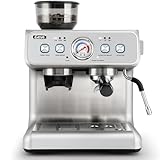
Gevi Dual Boiler with Built-In Grinder
- Dual boiler with independent circuits
- NTC and PID temperature control
- 30-setting burr grinder
- 58mm portafilter

Breville BES920XL Dual Boiler
- Dual stainless steel boilers
- Heated group head with PID within 2 degrees
- 58mm portafilter
- 1700 watts

Rancilio Silvia Pro X
- 1 liter steam boiler and 300ml brew boiler
- Brew and steam PIDs adjustable by the degree
- 15 minute brew warm-up
- Made in Italy
Every Pick at a Glance
| Product | Specifications | Action |
|---|---|---|
| Gevi Dual Boiler with Built-In Grinder |
|
Check Latest Price |
 Chefman Crema Deluxe Dual Boiler Chefman Crema Deluxe Dual Boiler |
|
Check Latest Price |
 AIRMSEN 20 Bar Dual Boiler AIRMSEN 20 Bar Dual Boiler |
|
Check Latest Price |
| Breville BES920XL Dual Boiler |
|
Check Latest Price |
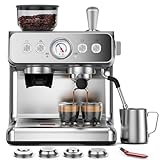 Electactic 15 Bar Dual Boiler with Grinder Electactic 15 Bar Dual Boiler with Grinder |
|
Check Latest Price |
 AMZCHEF 9 Bar OPV Dual Boiler AMZCHEF 9 Bar OPV Dual Boiler |
|
Check Latest Price |
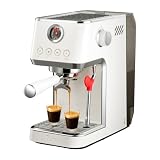 Tuni E2 Gen3 Dual Boiler Tuni E2 Gen3 Dual Boiler |
|
Check Latest Price |
| Rancilio Silvia Pro X |
|
Check Latest Price |
 Kismile 20 Bar Dual Boiler with Grinder Kismile 20 Bar Dual Boiler with Grinder |
|
Check Latest Price |
1. Gevi Dual Boiler Espresso Machine With Built-In Burr Grinder: Best Overall
Gevi Dual Boiler Espresso Machine With Built‑In Burr Grinder
Dual boiler, independent circuits
NTC and PID temperature control
Built-in 30-setting burr grinder
15 lb, 18.85 in tall
Pros
- Best rating across our picks at 4.5 from 385 owners
- Independent temperature control on both brewing and frothing circuits
- Integrated grinder removes the need for a separate machine
- 58mm portafilter with four interchangeable filters
- Manual and automatic brew modes for beginners and advanced users
Cons
- No user-selectable brew water temperature or pre-infusion timing
- Built-in grinder is adequate rather than excellent
- Deep 18.85 in chassis takes real counter space
I put the Gevi first because it solves the two problems that actually decide a shot: grind consistency and brew temperature. The grinder is a conical burr unit with 30 settings that dispenses into the 58mm portafilter, so there is no separate machine to buy, no dose to eyeball and no workflow break between grinding and pulling.
Thermally it runs NTC and PID control on the extraction and frothing circuits separately. That is the arrangement you want on a two-boiler machine, because the brew side stays on its set point while the steam side recovers after texturing.
Owners describe roughly fifteen shots of dialing in before the espresso settles, and then crema they compare to machines costing several times more. Manual or automatic brew modes means the same unit works on day one and on day six hundred. Adjustable shot volume and pre-infusion round out a feature set that is sensible rather than crowded.
What you give up compared with the prosumer tier
There is no user-selectable brew water temperature and no way to change pre-infusion timing, which is exactly what the enthusiast machines in this list use to chase light roasts. If you roast your own beans and change origins weekly, that ceiling will start to show.
The integrated grinder is the other soft spot. Several owners recommend replacing it once the machine is settled, which turns this from an all-in-one buy into a two-box setup. Budget for that before you commit.
Who this suits and who should pass
Buy it if you want one machine that grinds, brews and steams with no learning cliff, and if your counter can absorb an 18.85 by 15.66 inch footprint at 15 pounds. It is also the strongest pick if you have never owned a manual machine and want the widest margin for error.
Pass if you already own a decent burr grinder, since you would be replacing it with a lesser one. Pass also if you want to adjust temperature by the degree, which this machine does not offer.
2. Chefman Crema Deluxe Dual Boiler: Best All-In-One Under 500
Chefman Crema Deluxe Espresso Machine with Double Boiler, Use Milk Frother and Brew Espresso Simultaneously, Professional Coffee Maker with Coffee Grinder and Steam Wand, 30 Grind Settings
Dual boiler brew and steam
30-setting conical burr grinder
15 bar pump, 3 liter tank
29.5 lb, 13.66 in deep
Pros
- Highest review volume in our group at more than 3300 ratings
- Grinder dispenses directly into the portafilter
- 58mm portafilter with single and double baskets
- Removable 3 liter tank plus a full accessory kit
- Adjustable shot temperature and volume
Cons
- Recurring reports of electronics and frother seal failures within a few months
- Some owners report lost extraction pressure and grinder consistency after a couple of months
- Loud during grinding and extraction compared with smaller machines
This is the only machine in the group with the volume of owner history to tell you what happens over years, not weeks. Shot quality is consistently described as good once grind and tamp are dialed in, and the dual boiler does let you pull a shot and steam milk at the same time as advertised.
The accessory package is unusually complete for the money. You get a milk pitcher, steel tamper, funnel and cleaning tools stored in the detachable drip tray, plus a 3 liter fully removable tank and 58mm baskets for single and double shots.
What the reviews also tell you, repeatedly, is that durability is the dividing line. A cluster of owners describes electronics, frother seal or pressure failures inside two to five months of daily use, and a meaningful share of one-star reviews is about build rather than taste.
That is not a dealbreaker if you treat it as a learning machine rather than a fifteen-year investment, and it is a dealbreaker if you plan to keep it. The 29.5 pound chassis is solid-feeling, but the reporting is consistent enough that we would not recommend it as a long-term prosumer platform.
Where it fits against the rest of this list
The Crema Deluxe is the honest answer for a household that wants to try serious espresso without a second purchase. Between the grinder, the baskets and the steam wand, you could spend the difference on a better burr grinder alone and still come out ahead on shot quality.
Its 13.66 by 12.68 by 13.07 inch body is also smaller than several machines here, so it fits under a standard cabinet where a 19-inch-tall unit would not.
Who should look past it
If you care about how the machine behaves in year five, move up to the Breville or the Rancilio. Owners with long service lives cite parts availability, and that is where this listing is quiet.
If noise matters in an open-plan kitchen, skip it. Grinding and extraction are described as louder than smaller machines, and the 15-bar pump adds to that.
3. AIRMSEN 20 Bar Espresso Machine With Automatic Milk Frother: Best Entry Dual Boiler
AIRMSEN 20 Bar Espresso Machine with Automatic Milk Frother, Cappuccino & Latte Coffee Maker with Quick Brew Dual Boiler (1350W + 1000W), Stainless Steel, 60oz Water Tank, Touchscreen
1350W brew boiler and 1000W frothing boiler
20 bar pump with pre-infusion
LED touchscreen, 61 oz tank
9.3 lb, 7.9 in wide
Pros
- Two separate boilers divide the work and speed up drink output
- Automatic detachable frother needs no wand technique
- Compact 7.9 by 10.2 by 12 inch body fits small counters
- Large 61 oz removable tank and 17 oz milk reservoir
- 4.2 rating from 599 owners with a high share of five star feedback
Cons
- Lightweight plastic construction suggests a shorter service life
- Automatic frother does not produce true microfoam
- No temperature adjustability for extraction
The AIRMSEN is the smallest and lightest machine we tested, at 9.3 pounds, and it is the easiest way to understand what a second boiler actually does. The 1350W extraction boiler and the 1000W frothing boiler handle their jobs separately, so a drink lands in about fifteen seconds.
Everything is button-driven. A full LED touchscreen handles drink selection, and the automatic detachable frother makes cappuccino and latte without any wand technique, which is why this machine appeals to first-time buyers more than the enthusiast picks.
Its 7.9 by 10.2 by 12 inch footprint is the smallest here, with cup clearance up to 4.1 inches, so it works in a small kitchen where a 19-inch chassis simply will not fit. Cups under four inches are the limit, which is worth measuring before you buy.
The 20 bar pump with pre-infusion gives a fuller extraction than single-boiler budget machines, but there is no control over brew temperature or pre-infusion timing. You get what the machine decides.
Why the two boilers matter here more than elsewhere
Because there is no manual wand, the frothing boiler is doing work a steam boiler would normally do. That split is what makes the drinks arrive fast, and it is the reason this machine outruns most single-boiler machines of similar size.
The trade-off is texture. An automatic frother is convenient and consistent, but it will not pour a rosetta the way a manual wand on the Rancilio does.
Who should buy this and who should not
Buy it if this is your first machine, if you drink lattes and cappuccinos mostly, or if your kitchen has limited counter depth. It is the least demanding way to learn whether you actually like espresso.
Skip it if you want to dial in light roast single origin or practice latte art. There is no control surface for either, and the plastic body will not be something you keep for a decade.
4. Breville BES920XL Dual Boiler: Best Supported Pick
Breville BES920XL Dual Boiler Espresso Machine, Brushed Stainless Steel
Dual stainless steel boilers
Heated group head, PID within 2F
58mm portafilter, 84 oz tank
1700 watts, 2 year warranty
Pros
- Dual boilers and heated group head hold temperature within about 2F
- Simultaneous brewing and steaming in a familiar layout
- 58mm portafilter with integrated tamper and wall baskets
- Parts and repair support widely available
- Programmable shot volume and temperature with a shot timer
Cons
- Recurring reports of steam boiler leaks on long-term units
- Metal cladding over plastic dents and flexes more readily than metal-bodied machines
- Some owners describe the steam wand as slow with limited pressure
- No self-cleaning cycle so filters and backflushing are ongoing costs
The BES920XL has been on home counters long enough that its failure patterns are well documented, and owners defend it on practical grounds rather than hype. The 58mm portafilter is a standard size, which means baskets, screens and tampers from other brands all fit.
Thermally it is the steadiest machine in this group by the numbers. Dual stainless steel boilers plus a heated group head are regulated by PID to within about 2 degrees, and low-pressure pre-infusion gently expands the puck before full pressure hits it.
The steam wand produces microfoam good enough for latte art, which is the reason owners often pair it against prosumer Italian machines and usually find the milk side acceptable. Programming is thorough, with an on-screen shot clock, adjustable dose volume and an auto-on timer for early mornings.
Forum owners of this machine report it going buzzy after two or three years, and plenty attribute that to scale rather than a failing component, which is a maintenance problem you can manage. Parts availability is the quiet strength here.
What the buyer gets that cheaper machines do not
An electrically heated group head means the metal block holding your portafilter is at temperature before the first shot, not arriving there after three or four pulls. On a traditional E61 machine that takes much longer, and this is why the BES920XL suits early risers.
At 1700 watts it also recovers steam quickly, which matters if more than one person drinks espresso at the same time.
Where the compromises show
Owners consistently report steam boiler leaks on units past four years, and the metal cladding over a plastic chassis dents and flexes in ways a metal-bodied machine does not. Some describe the wand as slow with limited pressure, which is the one area the prosumer tier wins clearly.
There is no self-cleaning cycle, so backflushing, filters and cleaning tablets are permanent line items in your ownership budget.
5. Electactic 15 Bar Espresso Machine With Grinder And Milk Frother: Best For Learning To Dial In
Electactic 15 Bar Espresso Machine with Grinder & Milk Frother, 58mm Expresso Coffee machines, Stainless Steel Coffee Maker for Cappuccino and Latte, Perfect for Home and Café Use-Dual Boiler
Dual boiler with PID fine-tuning
Low-pressure pre-infusion
Integrated conical burr grinder
26.2 lb, 16.34 in wide
Pros
- Dual boiler halves the morning routine by brewing and steaming together
- PID brew temperature can be fine-tuned within the range
- Integrated grinder and professional steam wand in one unit
- Owners with barista experience rate it well out of the box
- Not described as unusually noisy
Cons
- One owner reports the integrated grinder failing after about 45 days
- Higher share of one-star ratings than comparable machines here
- Some users report wasted water after extraction
- Newer listing with limited long-term durability evidence
The Electactic is the machine we would hand to someone moving up from a basic single boiler who wants to understand temperature control. PID control on the brew side can be fine-tuned inside its range, which is exactly the lesson a first serious machine should teach.
At 2600 watts it is the most powerful machine in this group, and the dual boiler delivers genuine simultaneous brewing and steaming. The professional steam wand is a manual one, so you can practice microfoam rather than pressing a button.
Owners with barista experience report it performs well straight out of the box, and several compare shot quality favorably against machines in much higher brackets. Low-pressure pre-infusion saturates the puck at low pressure first, which reduces unevenness on less consistent home doses.
The complete package includes a milk pitcher, portafilter, four precision filters, a tamper and a cleaning kit, so there is nothing else to buy before the first shot.
Why PID fine-tuning matters for a new owner
A single set point cannot chase two roast styles. Adjustable brew temperature lets you go slightly higher for chocolatey medium roasts and slightly lower for light single origin, and that adjustment is the whole reason to move up a tier at all.
The 58mm portafilter with four filters is the right size for experimenting, since baskets for ristretto and lungo come in the box.
The durability question to ask first
One owner reports the integrated grinder failing after roughly 45 days with no response to support, and grinder and support reliability are the recurring themes in the one-star reviews, which run above comparable machines here.
It is also a newer listing, so long-term owner evidence is thin. If you want a machine you will still own in a decade, this is not the one.
6. AMZCHEF 9 Bar OPV Espresso Machine With Dual Boiler: Best For Temperature Control
AMZCHEF 9 Bar OPV Espresso Machine with Automatic Milk Frother, Dual Boiler
Dual PID with dual NTC sensors
Brew temperature 190-205F
Active PTC heated group head
24.4 lb, dual display
Pros
- Highest average rating in our group at 4.6
- Dual PID with dual NTC gives fine control of brew and milk temperature
- Angled dock-mounted frothing station works hands-free
- Dual display shows pressure
- temperature and extraction time live
- Pre-wetting adjustable from 0 to 30 seconds
Cons
- Steep learning curve across many adjustable settings
- Much smaller review base so long-term durability is undocumented
- No integrated grinder so a separate burr grinder is required
No other machine here lets you set the brew temperature inside a range of 190 to 205 degrees and the milk temperature separately between 113 and 194. Dual PID controllers with dual NTC sensors make that possible, and for someone who wants to move deliberately through roast profiles it is the most capable control surface in the group.
The 9 bar OPV extraction system regulates pressure between 9 and 12 bar rather than driving the pump flat out, and the 58mm commercial portafilter with single and double baskets gives even water distribution across the puck.
The thermal balance group head uses an active PTC heater to hold the group and brew path warm, which means the temperature you set is the temperature the water meets. Extraction time is adjustable from 10 to 120 seconds and pre-wetting from 0 to 30, so you can script a shot rather than guess at it.
Two displays show brewing pressure, water temperature and extraction time in real time. The angled frothing station holds the pitcher at a consistent angle for a stable vortex, which is why owners like the hands-free result.
How much control you actually need
If you are chasing light roast single origin and adjusting the shot week to week, this range is worth having. Pre-wetting timing in particular changes how a pale coffee tastes more than a couple of degrees of brew temperature do.
If you drink one drink a day and never change beans, all of this is idle capability. You would be paying for settings you will not open.
The two caveats worth weighing
There is a real learning curve across all these adjustable settings, and several owners flag it as the main drawback. Budget a few weeks of dialing before judging the machine.
The review base is small at 76 ratings, so long-term durability is genuinely undocumented, and there is no integrated grinder, which means a separate burr grinder is a requirement rather than an option.
7. Tuni E2 Gen3 Dual Boiler With Super+ Steam Power: Best For Narrow Counters
Tuni E2 Gen3 Dual Boiler Espresso Machine with Super+ Steam Power, Ivory
58mm all-metal brew head
20 bar ULKA pump with pressure gauge
PID and NTC temperature control
13 lb, 7.4 in wide
Pros
- 58mm all-metal brew head holds heat steady and spreads water evenly
- Visible pressure gauge shows extraction in real time
- Super+ steam mode gives continuous dry steam for fast texturing
- Dual boiler means you can froth immediately after extraction
- Compact 12.9 by 7.4 by 13.2 inch body at only 13 pounds
Cons
- Smallest review base in the group at 40 ratings so longevity is undocumented
- No integrated grinder so a separate burr grinder is needed
- One year warranty plus six months on registration
- Hot and cold brewing shares the same boiler
The Tuni is the narrowest machine we tested at 7.4 inches wide and the second lightest at 13 pounds, and it still carries a commercial-style 58mm all-metal brew head. An all-metal group holds heat and distributes water across the puck more evenly than lighter castings, and owners notice the difference in shot consistency.
The 20 bar ULKA pump sits behind a visible pressure gauge, so you can watch the shot rather than guessing. Auto pressure release after extraction stops the portafilter spit you get on some other machines.
Steam is where this machine earns its ranking. The Super+ mode runs continuous, dry steam for fast texturing, and because the boilers are separate you can froth milk immediately after the shot comes out instead of waiting for recovery.
PID and NTC dual temperature control covers both circuits, and a hot and cold brewing function covers iced coffee in summer without a separate machine.
What a narrow footprint really buys you
At 7.4 by 12.9 by 13.2 inches it clears a lower cabinet and fits a counter with a sink, which rules out several machines in this list outright. If you have measured your space and everything else failed, this is the one to look at first.
The 13 pound weight also means it is easy to move for cleaning or for draining the tank, which matters more than it sounds in a tight kitchen.
Where the thin evidence should worry you
Only 40 ratings exist for this listing, and not all of them cover the machine directly. That means real-world longevity is close to undocumented, which is the honest limit on any reliability claim here.
The warranty is one year plus six months after registration, shorter than most, and you will need a separate burr grinder to get the most from an all-metal group this good.
8. Rancilio Silvia Pro X Espresso Machine: Best For Milk Drinks
Rancilio Silvia Pro X Espresso Machine, Black
300ml brew boiler, 1 liter steam boiler
Dedicated brew and steam PIDs
Adjustable soft pre-infusion
15 minute brew warm-up, Italian made
Pros
- Genuine simultaneous brewing and steaming from separate boilers
- Four-opening steam wand textures milk fast
- Brew and steam PIDs adjustable to the degree
- Heavy serviceable Italian construction with no cheap materials
- 15 minute brew warm-up suits an early start
Cons
- Separate burr grinder required and not included
- Some owners report steam boiler error codes and hot water spout leaks
- Small 300ml brew boiler and 2 liter tank limit large gatherings
- Demands real technique to get good shots
The Silvia Pro X is the only machine here with a one liter steam boiler, and that number is why it wins on milk. When you are making three cappuccinos in a row, steam boiler volume decides whether the third one comes out as fast as the first. The four-opening wand moves milk quickly and textures it dry.
The 300ml brew boiler has its own PID, adjustable to the degree, and so does the steam circuit. Adjustable soft pre-infusion lets you tune how gently the puck is saturated, and the front-facing PID screen doubles as a shot timer.
Owners with multi-year, multi-shot-per-day routines describe it as the dependable prosumer workhorse, and one of the more useful features is that steam can be switched off for espresso-only mornings. When the steam boiler is idle, brew heat stays steadier, which is why single-origin espresso from this machine holds up well.
A programmable auto-on time handles the warm-up, and the brew side is ready in about fifteen minutes.
Why the big steam boiler changes the routine
Steam recovery is the difference between a cappuccino in ninety seconds and one in four minutes. A one liter boiler holds enough energy for consecutive drinks without waiting, and the four-hole tip produces the dry, glossy microfoam you need for latte art rather than wet bubbles.
For a household where both people drink milk drinks, or for anyone who entertains, that is a bigger everyday gain than flow control or pre-infusion programming.
Where it asks more of you
The 300ml brew boiler and 2 liter tank are small for a group. If you are hosting six people for cappuccinos after dinner, the refill and recovery pauses are real.
It also demands technique. Owners describe dial-in skill as a genuine requirement rather than a suggestion, and a separate high-quality burr grinder is not included. One review documents repeat steam boiler faults and hot water spout leaks across two units, which is worth knowing before you commit.
9. Kismile 20 Bar Dual Boiler With Grinder And Milk Steamer: Best Documented All-Rounder
Kismile 20 Bar Dual Boiler Espresso Machine with Grinder & Milk Steamer
Dual boiler with PID within 2C
Built-in grinder, 30 settings
58mm portafilter, pressure gauge
Front-hinged tank lid
Pros
- Documented by experienced testers as hitting true simultaneous brew and steam
- Built-in conical burr grinder is a genuine step above budget units
- 58mm commercial portafilter with 20 bar pressure
- Described as much quieter than comparable machines
- Hot water spout and cup warmer for Americanos and tea
Cons
- Only 17 ratings so reliability evidence is thin
- One owner reports a steam wand producing no steam
- Substantial footprint needing a sturdy dedicated counter
- Small bean hopper needs frequent refilling
The Kismile is the machine experienced testers single out for doing the one thing cheap all-in-ones usually get wrong, which is genuine simultaneous brewing and steaming. If you make a shot and a milk drink at the same time, this is the machine we would trust to do both without waiting.
Its PID holds extraction within plus or minus 2 degrees, and dual LED screens with a pressure gauge show grind time, brew status and pressure while you work. Single and double cup buttons adjust extraction, grind and pre-infusion from the front panel.
The built-in conical burr grinder with 30 settings is better than most budget grinders, and it dispenses directly into the 58mm portafilter. Reviewers describe the chassis as brushed metal rather than plastic, with excellent espresso and froth after a short dial-in.
Two details matter more than they sound. One knob switches between steam and hot water, so Americanos and tea come from the same machine, and the front-hinged tank lid lets you fill from the front without pulling the tank out.
What testers actually noticed
Reviewers who test many machines describe it as noticeably quieter than comparable machines, with a motor they call powerful. That combination of true dual boiler behavior and low noise is rare at this level of the market.
The boiler also warms up quickly and holds temperature steady, so it is workable for a short morning session rather than only for long weekend sessions.
The limits you should weigh
With only 17 ratings, this is the thinnest evidence base in the group, and long-term reliability is basically unknown. One owner reports a steam wand that produced no steam at all.
The footprint is substantial at 13.78 inches wide by 13.78 tall and needs a sturdy counter, the bean hopper refills often under heavy use, and the foam is good rather than true commercial microfoam.
Is a Dual Boiler Worth It? The One-Line Test
A dual boiler is worth it if you make more than one milk drink in a row. That single sentence sorts buyers better than any specification list, because the second boiler exists to solve exactly that wait. Everything else about the category is secondary.
Most people upgrading from a single boiler describe making two or three drinks a day, and that is the threshold where the benefit appears. If your routine is one drink in the morning and nothing after, you will use the steam boiler without ever depending on the brew boiler, and you are paying for capacity you never touch.
Buy a dual boiler if
You make two or more milk drinks back to back on most days, or there are two coffee drinkers in the house. You entertain regularly. You brew light roast single origin that is sensitive enough for brew temperature to matter. Or you want to change your brew temperature deliberately and have that setting survive the shot.
You also want a future-proof machine. Most prosumer dual boilers are built from metal and are serviceable for a long time, which is money you do not spend twice.
Skip a dual boiler if
You drink one or two drinks a day, or you drink espresso and americano only. This is your first machine and you have not yet learned what a puck should look like. Or you would have to skim on the grinder to reach the machine, because an underfunded grinder will make any of these look bad.
You want to buy a machine with a built-in grinder and spend nothing on a separate one. Or you want zero maintenance, since two boilers means two things to descale.
The cheaper right answer: a heat exchanger
If you are still deciding, a heat exchanger machine gives you brewing and steaming from one boiler without the wait. You lose independent brew temperature control, but you keep nearly all the workflow benefit at a lower tier. Our guide to espresso machines under 1000 dollars covers that ground.
A single boiler with a PID is the other sensible floor. Many of the picks above are only worth stepping up from if you already own one and know you want more.
How to Choose a Dual Boiler Espresso Machine
Judge these machines in this order, because the criteria are not equally important. Counting features last is unusual advice in this category, and it is the single change that improves most purchase decisions.
1. Thermal design. Separate brew and steam boilers with independent control are the point of the category. On top of that, look at whether the group head is heated or saturated. A saturated group carries heat through the metal block with water circling through it, which is stable once hot but slow to warm. An electrically heated group reaches temperature faster and suits early mornings. We cover both patterns across our picks, and the Breville and AMZCHEF lean on the heated approach while the Rancilio leans on boiler stability.
2. PID control and adjustability. Every machine here has PID, and that is now table stakes. The useful question is whether the set point is adjustable and whether you have separate readouts for brew and steam. A single fixed temperature cannot follow a change of roast.
3. Steam boiler volume. This is the number buyers ignore and then regret. Small boilers recover slowly between milk drinks, which is what forces the 30 to 60 second wait you were trying to avoid. The Rancilio’s one liter steam boiler is the clearest example in this group of what volume buys.
4. Pump and pressure regulation. Bar pressure figures on home machines are marketing. What matters is whether an over-pressure valve regulates the brew circuit rather than letting the pump run flat out, and whether a gauge or live readout shows you pressure during extraction.
5. Grinder pairing. Spend roughly 40 percent of your total budget on the grinder and never the reverse. This is the most repeated piece of advice from long-term owners, and grinder is what determines shot quality far more than the boiler does. Machines with an integrated grinder, including the Gevi, Chefman, Electactic and Kismile, suit buyers who want a single box.
Our full espresso machine roundup is the better place to start if you are still deciding between machine types.
6. Footprint, reservoir access and plumbing. Dual boilers are physically larger and the variation between models is real, so measure before you order. Two of our picks at nearly 19 inches tall will not clear a standard upper cabinet, while the AIRMSEN and Tuni fit easily. Check whether the tank lifts out or slides forward, because a top-fill tank on a tall machine is a daily inconvenience.
7. Serviceability and parts. A machine with widely available gaskets, O-rings, group seals and solenoid valves will outlive one where parts take weeks to source. Brands with long service records and active owner communities win this criterion, and it is the reason the Breville ranks where it does.
Reliability, Water Hardness and the Cost You Do Not See on the Box
Which dual boiler espresso machine is most reliable? The honest answer is that build quality and water treatment matter more than brand, and that owners on the forums converge on three brand families for a reason. Where we have seen long-horizon reports, they come from owners who filtered their water and descaled on schedule.
Scale is the most cited real-world problem in this category, and dual boilers make it worse because there are two boilers and the steam side runs hottest. Machines going noisy or buzzy after two or three years are frequently blamed on scale rather than failing components. In our picks, the Breville is the machine owners most often describe needing annual descaling and inspection.
Small parts fail more often than major assemblies. On the machines in this group, the recurring repair points are O-rings, steam valves and solenoids, and owners note that reusing an old O-ring during a repair causes leaks. Fresh sealing parts on every service is not optional.
What shortens a machine lifespan is predictable: untreated hard water, skipped descales, and neglected group gaskets. What extends it is a filtration system, an annual descale, and replacing the group seal when it stops sealing. Total cost of ownership on a two-boiler machine is real, and it is higher than a single boiler in two places rather than one.
Our broad budget espresso machine picks cover the other end of the ownership spectrum if the running costs of a prosumer machine are more than you want to take on.
Frequently Asked Questions
Which dual boiler espresso machine is best for home use?
The Gevi Dual Boiler with built-in burr grinder is our best pick for home use, because NTC and PID control on both circuits keep temperature steady while the integrated grinder removes the need for a second purchase. The Breville BES920XL is the alternative for owners who want long parts support, and the Rancilio Silvia Pro X leads on steam boiler volume for heavy milk drink use.
Is a dual boiler worth it for a beginner?
Usually not as a first machine. A dual boiler pays off when you make two or more milk drinks back to back, and most beginners make one drink a day. Start with a single boiler machine and a good grinder, then move up once you know you want back-to-back milk drinks and separate brew temperature control.
What is the difference between a dual boiler and a heat exchanger?
A dual boiler has two separate boilers, one for brew water near 200F and one for steam water near 250F, each with its own control, so you can pull a shot and steam milk simultaneously with stable temperatures. A heat exchanger has one boiler that heats brewing water on demand while the stored water sits at steam temperature, which is cheaper and smaller but cannot hold an independent brew temperature.
How long does a dual boiler take to heat up?
It depends on the group design rather than the boiler count. Machines with an electrically heated group head, like the Breville and AMZCHEF in our picks, reach brew temperature faster. Saturated or thermosiphon group designs take longer to fully stabilize, and the Rancilio Silvia Pro X is quoted at about a 15 minute brew warm-up with programmable auto-on to handle that.
Are dual boiler machines harder to maintain?
They have one more boiler to maintain, so yes, slightly. The realistic cadence is filtered water, an annual descale of both boilers, periodic group gasket replacement, and fresh O-rings on any service. Scale is the most common complaint from owners, and it is also the most preventable with water treatment and a regular descaling schedule.
The Verdict: Who Should Buy What
The best dual boiler espresso machine for home use is the Gevi, because it pairs a genuine two-boiler setup with the control hardware on both circuits and an integrated grinder, which is the combination that makes a first serious machine forgiving. Buy the Breville BES920XL if you want a heated group head, a fast morning warm-up and the widest parts support in this group.
Buy the Rancilio Silvia Pro X if milk drinks are your routine and you want real steam power. Buy the AMZCHEF if you want to move brew temperature deliberately. Buy the AIRMSEN if this is your first machine and your kitchen is small. And if you make one drink a day, buy a heat exchanger instead and put the difference into a grinder.
Whichever one you choose, budget 40 percent for the grinder, filter your water, and descale on a schedule. That is how the machine you pick in 2026 still works for you in 2026 plus ten.