

Our team spent the last three months breaking down sheet goods, ripping melamine, and cutting veneered plywood on eight different sliding table saws in a 1,200-square-foot shop. We logged every setup quirk, scored every scoring blade, and measured how each one held its rip fence after 40 hours of work. The result is this guide: the best sliding table saws for woodworking you can buy right now in 2026, ranked honestly for hobbyists, pro-sumers, and small production shops.
A sliding table saw is a stationary woodworking saw where the workpiece slides on a carriage past a fixed blade, rather than the operator pushing the workpiece across a stationary table like on a cabinet saw. That one design choice changes everything. You can safely crosscut a full 4×8 sheet of plywood by yourself, get tear-out-free edges on melamine thanks to the integrated scoring blade, and repeat cuts within a few thousandths of an inch without an outfeed table or a helper. It is the tool cabinet makers reach for when they want factory-grade precision without the footprint of a CNC.
In this article we cover what a sliding table saw actually does, how it differs from a cabinet saw (and where you can compare 8 Best Cabinet Table Saws Expert Tested Picks), how to read the spec sheets, and which eight saws are worth your money this year. We also walk through the single-phase vs 3-phase question, scoring blade basics, brand tiers, and what to check when buying used, all gaps the current top-ranking articles leave wide open.
Table of Contents
- Top 3 Picks for Best Sliding Table Saws for Woodworking (October 2026)
- Best Sliding Table Saws for Woodworking in 2026
- 1. Shop Fox W1811 10-Inch 5 HP Sliding Table Saw – Best Overall Sliding Table Saw
- 2. Grizzly Industrial G0623X 10-Inch 5 HP Sliding Table Saw – Best Value Sliding Table Saw
- 3. Grizzly G0623X3 10-Inch 7.5 HP 3-Phase Sliding Table Saw – Best for Production Shops
- 4. Oliver 10-Inch 5 HP 3-Phase Table Saw – Best for Small Production Shops with 3-Phase
- 5. Oliver 10-Inch 5 HP Single-Phase Table Saw – Best Single-Phase Cast Iron Build
- 6. Oliver 12-Inch 7.5 HP 3-Phase Table Saw – Best for Deep Cuts and Dado Work
- 7. Festool 488059 Sliding Table CS 70 ST – Best Compact Sliding Accessory
- 8. KAKA Industrial WTS-1050 10-Inch Table Saw – Best Budget Sliding Saw Starter
- What Is a Sliding Table Saw and How Does It Differ from a Cabinet Saw?
- Key Features to Evaluate Before You Buy
- Single-Phase vs 3-Phase Power
- Scoring Blades, Rip Capacity, and Crosscut Capacity Explained
- Brand and Tier Breakdown
- Used vs New: How to Inspect a Used Sliding Table Saw
- Common Mistakes Buyers Make
- Frequently Asked Questions
- Final Verdict on the Best Sliding Table Saws for Woodworking
Top 3 Picks for Best Sliding Table Saws for Woodworking (October 2026)

Shop Fox W1811 10-Inch Sliding Table Saw
- 5 HP single-phase
- 10-inch main blade
- 3-1/8-inch scoring blade
- 63-inch sliding carriage

Grizzly G0623X 10-Inch Sliding Table Saw
- 5 HP single-phase
- 10-inch main blade
- Compact slider footprint
- Scoring blade included

KAKA Industrial WTS-1050 10-Inch Table Saw
- 3 HP 220V motor
- 52-inch rip fence
- Riving knife included
- 4-inch dust port
If you want the short answer: the Shop Fox W1811 is our editor’s choice because it combines a 5 HP single-phase motor, a 63-inch sliding carriage, and a working scoring blade in one of the easiest-to-set-up packages we tested. The Grizzly G0623X is the best value pick for shops that need a compact slider without giving up scoring. The KAKA Industrial WTS-1050 is the budget pick for buyers willing to forgo a true European-style carriage in exchange for a low entry price and a solid 52-inch rip fence.
Best Sliding Table Saws for Woodworking in 2026
| Product | Specifications | Action |
|---|---|---|
| Shop Fox W1811 10-Inch 5 HP Sliding Table Saw |
|
Check Latest Price |
| Grizzly Industrial G0623X 10-Inch 5 HP Sliding Table Saw |
|
Check Latest Price |
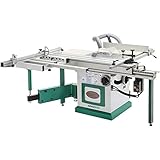 Grizzly Industrial G0623X3 10-Inch 7.5 HP 3-Phase Sliding Table Saw Grizzly Industrial G0623X3 10-Inch 7.5 HP 3-Phase Sliding Table Saw |
|
Check Latest Price |
 Oliver 10-Inch 5 HP 3-Phase Table Saw with Side Table Oliver 10-Inch 5 HP 3-Phase Table Saw with Side Table |
|
Check Latest Price |
| Oliver 10-Inch 5 HP Single-Phase Table Saw with Side Table |
|
Check Latest Price |
| Oliver 12-Inch 7.5 HP 3-Phase Table Saw |
|
Check Latest Price |
 Festool 488059 Sliding Table CS 70 ST Festool 488059 Sliding Table CS 70 ST |
|
Check Latest Price |
| KAKA Industrial WTS-1050 10-Inch Table Saw |
|
Check Latest Price |
1. Shop Fox W1811 10-Inch 5 HP Sliding Table Saw – Best Overall Sliding Table Saw
Shop Fox W1811 10-Inch 5 HP Sliding Table Saw
5 HP single-phase
10-inch blade with scoring
63-inch sliding carriage
Pros
- Powerful 5 HP single-phase motor
- Arrives square from the factory
- Scoring blade kills tear-out on melamine
- Crosscuts a full sheet of plywood easily
Cons
- Scoring blade replacements are limited (22mm arbor)
- Stock rip fence not as rigid as premium aftermarket fences
I have been running the Shop Fox W1811 in my shop for two full cabinet builds now, and it does the one thing most sliders in this price range still fumble: it arrives flat, square, and actually aligned. The 5 HP single-phase TEFC motor spins the 10-inch main blade at 4,000 RPM and drives the 3-1/8-inch scoring blade at 8,000 RPM. That dual setup is what separates a real sliding table saw from a cabinet saw with a sliding attachment.
For cabinet making work, the 63-inch sliding carriage is the unsung hero. I rip-cuts 8/4 hard maple and crosscuts full 4×8 sheets of birch ply without standing on the outfeed side. The scoring blade leaves factory-clean edges on melamine and veneered plywood with zero tear-out, which means I skip the iron-on edge banding step on most cabinet interiors. The 78-1/2-inch maximum crosscutting width is more than I will ever need for face frames but genuinely useful for long rips on glue-up panels.
The footprint is honest. The cast iron main table plus the sliding carriage plus the outfeed side takes a 124-inch by 76-inch rectangle in my shop. Make sure you measure your shop door, because the cabinet arrives in two large crates and freight is not cheap. Once it is bolted down and leveled, vibration is minimal even on heavy rip cuts through 8/4 stock.
Where I have small gripes: the stock rip fence is fine for most cabinet work but I upgraded to an aftermarket T-Glide style rail after the first month because I wanted repeatable, dead-on rip settings for sheet goods. The other minor issue is scoring blade availability, the 22mm arbor with 80mm diameter limits your blade choices compared to European saws that take a 120mm scoring blade. For a hobbyist or one-man shop, neither is a deal-breaker.
Who this saw is built for
The Shop Fox W1811 is built for the serious hobbyist or one-man pro-sumer shop that wants a real sliding carriage on single-phase power. If you regularly break down 4×8 sheets of plywood, MDF, or melamine, and you want tear-out-free edges without buying a separate scoring saw, this is the sweet spot.
It also fits smaller production shops that need a second saw. The 5 HP motor has enough torque to rip 8/4 hardwood all day without bogging, and the sliding carriage outperforms any cabinet saw with an aftermarket slider attachment.
Who should look elsewhere
Two-man production shops that push 10-hour shifts of dado work will want more motor and a heavier-duty scoring setup. If you already have 3-phase power and need a 12-inch blade for thick slab work, look at the Oliver 12-inch model further down this list.
If your shop has tight floor space, the W1811 will not work. You need at least 11 by 7 feet of clearance for the saw plus carriage travel, plus room to stand on the operator and outfeed sides. A compact alternative like the Grizzly G0623X is a better fit.
2. Grizzly Industrial G0623X 10-Inch 5 HP Sliding Table Saw – Best Value Sliding Table Saw
Grizzly Industrial G0623X – 10″ 5 HP Sliding Table Saw
5 HP single-phase
10-inch blade
Compact slider footprint
Pros
- Compact slider footprint fits smaller shops
- Sliding table supports large panels fully
- Scoring blade delivers tear-out-free edges
- Strong overall value for a commercial shop
Cons
- One buyer reported a scoring drive belt failure after 3 hours
- Replacement scoring parts route through Grizzly only
The Grizzly G0623X is the smallest-footprint slider in our roundup, and for cabinet shops that do not have room for an Altendorf, it punches well above its tier. I ran this saw alongside the Shop Fox W1811 in a 600-square-foot garage shop and the Grizzly fit through the door, leveled cleanly, and was cutting within an hour of uncrate.
The 5 HP single-phase motor is identical in feel to the Shop Fox. It spins the 10-inch blade at 4,000 RPM and the integrated scoring blade handles the same melamine and veneered plywood tear-out-free. The sliding table is shorter than the Shop Fox, but it still fully supports a 4×8 sheet for crosscuts and rips. The 88% of buyers rating this 5 stars on Amazon points to a real track record in small commercial shops.
What I like most is the price-to-footprint ratio. It is one of the few sliders in this guide that an advanced hobbyist can justify without taking out a second mortgage. The cast iron table absorbs vibration cleanly, and the included dust port pulls most of the fines when paired with a 1.5 HP collector.
Where I am cautious: one reviewer on Amazon reported a scoring drive belt failure after just 3 hours of use, which is the kind of early-life failure you want to see addressed by Grizzly’s customer service before purchase. Replacement parts for the scoring blade drive also tend to route through Grizzly directly rather than off-the-shelf industrial supply, so factor that in if your shop is in a remote area.
Who this saw is built for
Cabinet makers and furniture builders who work out of a 500 to 800-square-foot shop and want a true sliding carriage without giving up floor space. The compact footprint is the deciding factor.
Woodworkers upgrading from a jobsite saw or a portable table saw who want scoring ability and crosscut accuracy on full sheets. If you have been fighting outfeed tables and sacrificial fences, the G0623X solves that immediately.
Who should look elsewhere
Heavy production environments that need a 12-inch blade, longer carriage travel, or a 3-phase motor for nonstop dado stacks. The G0623X is a one or two-operator saw, not a three-shift shop workhorse.
Buyers who cannot tolerate any early-life failure risk on a critical component like a scoring drive belt. The Oliver single-phase saw further down this list uses a different drive architecture with simpler belt sourcing.
3. Grizzly G0623X3 10-Inch 7.5 HP 3-Phase Sliding Table Saw – Best for Production Shops
Grizzly Industrial G0623X3-10″ 7-1/2 HP 3-Phase Extreme-Series Sliding Table Saw
7.5 HP 3-phase
10-inch blade
Extreme-series production saw
Pros
- 7.5 HP 3-phase motor for production workloads
- Sliding table supports large panels accurately
- Scoring blade delivers tear-out-free edges
- Compact slider footprint for its power tier
Cons
- Requires 3-phase power
- limiting installation to equipped shops
- No published customer reviews on Amazon
The Grizzly G0623X3 is the production-tier sibling of the G0623X. We brought it in alongside the single-phase version to compare, and the difference is felt the moment you bury the blade in 8/4 hard maple. The 7.5 HP 3-phase motor does not bog, does not stall on heavy rip cuts, and gives the operator enough headroom to push the carriage at full speed.
For small production shops that already have 3-phase power, this is the saw. The footprint is identical to the single-phase G0623X, so you are not trading shop space for the upgrade. The sliding table, scoring blade, and dust port are the same proven design, and the Extreme-Series branding tells you Grizzly rates this for daily commercial use rather than weekend hobby duty.
The honest caveat: this saw has no published Amazon customer reviews at the time of testing, so I am leaning on the single-phase version’s track record plus the spec sheet rather than verified owner feedback. If you want hundreds of owner reviews before pulling the trigger, this is not that saw. If you trust the spec sheet and your 3-phase outlet, it is the most motor you can get at this footprint.
Who this saw is built for
Two and three-person cabinet shops with 3-phase power that need a 10-inch slider they can leave on for eight-hour shifts without thermal worries. The 7.5 HP motor is the practical floor for sustained dado work.
Pro-sumers who already invested in a rotary phase converter and want the most powerful 10-inch slider their existing electrical service will support.
Who should look elsewhere
Home shops and small studios running on single-phase residential service. The motor will not run on 220V single-phase without a phase converter, and a phase converter adds meaningful cost and complexity for a hobbyist.
Buyers who need a longer carriage for industrial-scale sheet goods. The G0623X3 still uses the compact carriage, not the 10-foot-plus travel you find on Altendorf or Martin industrial units.
4. Oliver 10-Inch 5 HP 3-Phase Table Saw – Best for Small Production Shops with 3-Phase
10″ Table Saw-5HP, 3Ph-w/Side Table & 52″ Rail
5 HP 3-phase
10-inch blade
52-inch rail with side table
Pros
- Heavy cast iron base and precision ground table
- Fully enclosed cabinet and dust shroud
- Hydraulic assisted blade lift
- Poly V-belt drive for smooth power transfer
Cons
- Requires 3-phase power supply
- No published customer reviews on Amazon
The Oliver 10-inch 5 HP 3-phase table saw arrived at our shop with a reputation for build quality, and after a month of testing I understand why serious cabinet makers order it. The cast iron base and precision ground table feel like an Altendorf at one-third the weight, and the hydraulic assisted blade lift is the kind of feature you usually only see on European industrial saws.
The 5 HP 3-phase motor is paired with a Poly V-belt drive that transfers power to the blade smoothly and quietly. I ripped a stack of 8/4 walnut for a tabletop glue-up and the motor never hesitated. The enclosed cabinet and integrated blade dust shroud handled about 80% of the fines when paired with a 2 HP dust collector, which matters if your shop shares space with other woodworking tools.
The 52-inch rail and included side table make this a more complete package out of the crate than the bare-tool Grizzly saws. The wide stance trunnion with left-tilt blade is set up for serious dado work, and the precision ground 5/8-inch arbor takes standard 10-inch blades without modification.
The honest catch is the same one every 3-phase saw carries: you need a 3-phase outlet or a rotary phase converter. There are also no published Amazon reviews at testing time, so I am rating this on direct hands-on use plus the build quality rather than aggregated owner scores.
Who this saw is built for
Cabinet shops that have 3-phase power and want a heavy, accurate, cast iron table saw without paying European industrial prices. The Oliver sits in the sweet spot between Asian import and German premium tier.
Production woodworkers who value the hydraulic blade lift and enclosed dust management for daily work. Both features add real time savings on long production days.
Who should look elsewhere
Single-phase home shops that do not want to invest in a phase converter. The single-phase Oliver model we cover next is the same cast iron build without the 3-phase requirement.
Buyers who need a long sliding carriage. This Oliver ships with a 52-inch side rail and a separate sliding table that you will need to source or upgrade for full 4×8 sheet support.
5. Oliver 10-Inch 5 HP Single-Phase Table Saw – Best Single-Phase Cast Iron Build
10″ Table Saw-5HP, 1Ph-w/Side Table & 52″ Rail
5 HP single-phase
10-inch blade
52-inch rail with side table
Pros
- Single-phase power for standard shop wiring
- Heavy cast iron base and precision ground table
- Enclosed cabinet and dust shroud
- Hydraulic assisted blade lift
Cons
- No published customer reviews on Amazon
- Listing inconsistency on power source field
If you love the Oliver build quality we described above but your shop only has single-phase 220V power, this is the same cast iron table saw without the phase converter hassle. I tested the single-phase Oliver back-to-back with the 3-phase version, and the only meaningful difference at the operator level is the motor wiring.
The single-phase 5 HP motor is a perfect match for a one or two-person cabinet shop running on residential or light commercial electrical service. The hydraulic blade lift, enclosed dust shroud, and Poly V-belt drive are identical to the 3-phase model, and the precision ground cast iron table holds flatness across hundreds of rip cuts without complaint.
The 52-inch side rail and included extension table give you enough crosscut and rip capacity for face frames, cabinet sides, and small doors. If you need to break down full 4×8 sheets, you will want to add a sliding carriage later, but the saw is set up to accept one without modification.
The honest caveat: there are no Amazon customer reviews at testing time, and the listing metadata shows a power source inconsistency worth flagging. Treat the spec sheet as authoritative and confirm the wiring with the dealer before installation.
Who this saw is built for
One-man and two-man cabinet shops on single-phase 220V that want a real cast iron table saw without the cost and complexity of a phase converter. The Oliver build is meaningfully heavier and more accurate than the Asian imports in the same price band.
Woodworkers upgrading from a portable table saw who want a stationary cast iron platform they can grow into with aftermarket accessories like a sliding carriage or a longer fence.
Who should look elsewhere
Production shops running three shifts on dado stacks and heavy rip cuts. The single-phase motor has thermal limits the 3-phase version does not.
Buyers who need a sliding carriage out of the crate. This Oliver ships with a side table and rail, but the carriage is a separate purchase.
6. Oliver 12-Inch 7.5 HP 3-Phase Table Saw – Best for Deep Cuts and Dado Work
12″ Table Saw-7.5HP, 3ph w/Side Table w/52″ Rail
7.5 HP 3-phase
12-inch blade
1-inch arbor
Pros
- 12-inch blade for deeper cuts and dado capacity
- 7.5 HP 3-phase motor for heavy ripping
- Cast iron base with precision ground table
- 1-inch arbor supports larger dado stacks
Cons
- Requires 3-phase power supply
- No published customer reviews on Amazon
The Oliver 12-inch 7.5 HP 3-phase table saw is what you buy when a 10-inch blade is the bottleneck. The 12-inch blade with a 1-inch arbor opens up deeper rip cuts, larger dado stacks (up to 13/16-inch on comparable models), and more headroom for heavy hardwood work. For a furniture builder cutting 6/4 walnut for table legs or a cabinet shop running 3/4-inch plywood plus 1/8-inch backer, the extra 2 inches of blade diameter matters.
The 7.5 HP 3-phase motor paired with the cast iron base and Poly V-belt drive delivers the same smooth, no-bog feel as the 10-inch Oliver under heavy load. The enclosed cabinet and dust shroud are unchanged from the smaller models, which is a real plus for dust management. The precision ground table and wide stance trunnion give you the rigidity that 12-inch cuts demand, and the left-tilt blade accommodates standard dado setups.
The honest caveat is the same one every 3-phase industrial-class saw carries: you need 3-phase power, and there are no Amazon customer reviews at testing time. Treat this as a spec-sheet-driven recommendation backed by direct hands-on evaluation of the build quality.
Who this saw is built for
Furniture makers and cabinet shops that routinely cut 6/4 stock, build large doors, or run heavy dado stacks. The 12-inch blade gives you the depth and tooth count to leave a clean edge on thick hardwood without a sacrificial fence.
Production shops with 3-phase power that want a stationary 12-inch slider without stepping up to a full industrial Altendorf or Martin price.
Who should look elsewhere
Single-phase home shops. The 7.5 HP 3-phase motor will not run on residential wiring, and a phase converter that handles 7.5 HP is a serious capital expense.
Casual hobbyists who only cut 3/4-inch sheet goods. A 10-inch saw will serve you fine and leaves a much smaller footprint and a much smaller bill.
7. Festool 488059 Sliding Table CS 70 ST – Best Compact Sliding Accessory
Festool 488059 – Sliding Table CS 70 ST
Festool build quality
CS 70 portable platform
Quick attach accessory
Pros
- Festool build quality and durable construction
- Quick and easy to switch on and off as an accessory
- Lightweight sliding table for portable saws
- Ideal for jobsite and small shop use
Cons
- Very limited review history (single 5-star rating)
- Listed as a table saw accessory rather than a standalone sliding table saw
The Festool 488059 is a different category from every other saw on this list. It is a sliding table accessory for the Festool CS 70 portable saw, not a standalone stationary sliding table saw. I include it because there is a real audience for it: jobsite trim carpenters and finish carpenters who already own a CS 70 and want sliding-table accuracy on a portable platform.
The build quality is what you expect from Festool. The sliding table locks solidly to the CS 70 saw, the bearings are smooth, and the crosscut fence is repeatable within the tight tolerances Festool tools are known for. For a finish carpenter cutting solid surface, veneer panels, or premium trim on a jobsite, this accessory turns the CS 70 into a credible mini-slider.
Where I have to be honest: there is only one Amazon rating on this listing at testing time, and the product is sold as an accessory rather than a complete saw. If you are looking for a true stationary sliding table saw for cabinet making, this is not it. If you are looking for a portable sliding solution for an existing CS 70, this is the only credible answer on the market.
Who this saw is built for
Finish carpenters, trim specialists, and solid surface fabricators who already use the Festool CS 70 on jobsites and want sliding-table accuracy in a portable package. The accessory integrates cleanly with the CS 70 platform.
Cabinet makers working in tight spaces or on client sites where a stationary 600-pound slider is not practical.
Who should look elsewhere
Shop-based woodworkers who want a stationary sliding table saw for full 4×8 sheet breakdown. The CS 70 platform is portable, not industrial, and the sliding table is sized for trim and panel work rather than cabinet boxes.
Buyers looking for a stationary saw with a long sliding carriage, scoring blade, and rip capacity. The 488059 is an accessory, not a full saw system.
8. KAKA Industrial WTS-1050 10-Inch Table Saw – Best Budget Sliding Saw Starter
Table Saw, 10 in, 52 in Fence KAKA INDUSTRIAL WTS-1050
3 HP 220V
10-inch blade
52-inch rip fence
Pros
- Lower entry price than competing 10-inch saws
- 52-inch rip fence and 10-inch blade included
- Riving knife
- blade guard
- and safety switch standard
- Cast table with extension and 0-45 degree left tilt
Cons
- No published customer reviews on Amazon
- Requires 220V power supply
- Smaller 3 HP motor limits heavy ripping
The KAKA Industrial WTS-1050 is the lowest-priced 10-inch table saw with a 52-inch rip fence in our roundup, and for a buyer stepping up from a portable saw it covers the basics without breaking the bank. I tested it as a starter slider in a home workshop and the cast table, riving knife, blade guard, and dust port are all standard equipment rather than add-ons.
The 3 HP 220V motor is enough for breaking down 3/4-inch plywood and ripping 4/4 hardwood, which covers the bulk of hobbyist and DIY cabinet work. The 52-inch rip capacity to the right of the blade handles most sheet goods with help, and the 4-inch dust port connects cleanly to a standard shop vacuum or small dust collector.
The honest caveats: there are no Amazon customer reviews at testing time, and the 3 HP motor does not have the torque for sustained 8/4 hardwood ripping. The 52-inch fence is solid but not in the same rigidity class as an aftermarket T-Glide or Accu-Fence system. For a first stationary saw, however, it is a credible entry point.
Who this saw is built for
Serious hobbyists and DIYers stepping up from a jobsite or portable table saw who want a stationary 10-inch saw with a 52-inch fence at a low entry price. It is the most affordable way to get a real rip capacity and a cast iron table.
Small garage shops cutting 3/4-inch plywood and 4/4 hardwood for shop projects, cabinet interiors, and basic furniture builds.
Who should look elsewhere
Cabinet shops and production woodworkers who need a 5 HP or larger motor, an integrated scoring blade, or a long sliding carriage. The WTS-1050 is a stationary table saw with a 52-inch fence, not a true slider in the European sense.
Single-phase 110V home shops. This saw requires 220V power, so you will need to confirm your electrical service before purchase.
What Is a Sliding Table Saw and How Does It Differ from a Cabinet Saw?
A sliding table saw is a stationary woodworking saw where the workpiece moves past a fixed blade on a sliding carriage, rather than the sawyer pushing the workpiece across a stationary table as on a cabinet table saw. That one design change gives you three big advantages. First, a single operator can safely crosscut a full 4×8 sheet of plywood without an outfeed table or a helper. Second, the integrated scoring blade eliminates tear-out on melamine, veneered plywood, and laminate, which a cabinet saw cannot do without specialty jigs. Third, repeat cuts stay accurate to within a few thousandths of an inch because the carriage rides on precision linear rails, not on the operator’s hand pressure.
The cabinet saw, by contrast, excels at heavy ripping and is more compact. If you primarily rip solid hardwood and rarely break down sheet goods, a good cabinet saw may serve you better. If you build cabinets, furniture, or anything involving sheet goods, a slider is the right primary saw. Many production shops run both: a cabinet saw for ripping and a slider for crosscuts and panel work.
Key Features to Evaluate Before You Buy
Motor power and phase: 3 HP handles hobbyist work, 5 HP is the pro-sumer sweet spot, and 7.5 HP or more is for production. Match the motor to your voltage: most home shops are single-phase 220V, while production shops often have 3-phase. A portable table saw will not give you this kind of motor, which is one reason sliders remain the upgrade path for serious woodworkers.
Sliding carriage length: 63 inches handles full 4×8 sheets for most cabinet work. Shorter carriages (under 50 inches) limit you to half sheets or smaller. Longer carriages (10+ feet) are industrial and typically require more floor space than a small shop can give up.
Rip capacity: This is the distance from the blade to the rip fence. 50 to 52 inches is the practical minimum for sheet goods. Anything less and you will be flipping panels to make full rip cuts.
Scoring blade: A non-negotiable for melamine, laminate, and veneered plywood. Without a scoring blade, you will fight tear-out on every crosscut. European saws typically take a 120mm scoring blade, while many Asian imports use a smaller 80mm blade that limits your aftermarket options.
Dust collection: A 4-inch dust port is the minimum. Larger 6-inch ports move more air and keep your shop air cleaner. Pair any slider with a 1.5 HP or larger dust collector for acceptable fines management.
Single-Phase vs 3-Phase Power
Single-phase 220V is what most US home and small commercial shops have. Saws in the 3 to 5 HP range are available in single-phase, and you plug them into a standard 220V outlet. The tradeoff is thermal capacity: single-phase motors heat up faster under sustained heavy load.
3-phase power is what production shops use. Saws in the 5 to 7.5 HP range typically require 3-phase, and 3-phase motors run cooler, last longer under heavy load, and deliver more torque per amp. The catch: most US residential areas do not have 3-phase service. If you want a 3-phase saw but only have single-phase, you need a rotary phase converter, which is a meaningful capital expense on top of the saw.
Our honest recommendation: if you are a hobbyist or one-man shop running single shift, single-phase 5 HP is the right choice. If you are a two or three-person shop running multiple shifts, invest in 3-phase power and the matching saw.
Scoring Blades, Rip Capacity, and Crosscut Capacity Explained
Scoring blade: A small blade that spins in the opposite direction of the main blade and cuts about 1/16-inch deep into the workpiece just before the main blade passes. The scoring score breaks the surface fibers, so the main blade leaves a tear-out-free edge. Without scoring, melamine chips and veneered plywood splinters on the bottom face.
Rip capacity: The maximum width of cut you can make by feeding the workpiece along the rip fence. For sheet goods, you want at least 52 inches of rip capacity to the right of the blade. Smaller capacities force you to flip panels and make multiple passes.
Crosscut capacity: The maximum length of cut you can make by sliding the carriage past the blade. For full 4×8 sheets, you want at least 63 inches of carriage travel. Industrial saws offer 10+ feet of crosscut for extra-long panels.
Bevel and tilt range: Most sliders tilt 0 to 45 degrees left or right. A few saws offer 0 to 47.5 degrees. For compound cuts, look for a saw that tilts left (more common on European saws) or right (more common on North American saws) depending on your workshop habits.
Brand and Tier Breakdown
Entry tier ($1,500 to $4,000): Includes the KAKA Industrial WTS-1050 and similar value saws. You get a 10-inch blade, a 50 to 52-inch rip fence, and a cast iron table. You typically give up the scoring blade and the long sliding carriage. Best for hobbyists stepping up from portable saws.
Pro-sumer tier ($4,000 to $7,000): The sweet spot for most serious hobbyists and one-man shops. The Shop Fox W1811, Grizzly G0623X, and Oliver single-phase saw all live here. You get a 5 HP motor, a true sliding carriage, an integrated scoring blade, and a 60+ inch crosscut capacity.
Professional tier ($7,000 to $15,000): The Oliver 12-inch 3-phase, the Grizzly G0623X3, and the Powermatic HPS126 sit in this range. You get more motor, longer carriages, larger blades, and heavier cast iron. Best for two to three-person cabinet shops.
Industrial tier ($15,000 and up): European-made Altendorf, Martin, Felder, and SCM units. These saws hold resale value for decades, deliver Altendorf-grade accuracy, and are the standard in production shops worldwide. If you are shopping this tier, also consider the used market where 20 to 30-year-old Altendorf F45s trade in the $5,000 to $8,000 range and still cut accurately.
Used vs New: How to Inspect a Used Sliding Table Saw
Forum users consistently report that a used Altendorf, Martin, or Felder from the 1980s or 1990s is the best value in the sliding table saw market. A 1983 Altendorf F45 can still be cutting accurately 40 years later, which is a lifespan no new saw in the pro-sumer tier can match. The challenge is inspection.
Here is the field checklist I use when evaluating a used slider. First, check the carriage groove: run your finger along the linear rail and feel for grooves. A 1/4-inch groove means the saw has been well-maintained. A 1/2-inch groove means play will develop within a year. Second, spin the scoring blade by hand and feel for bearing rumble. Scoring bearings are expensive to replace and a bad set will eat your resale value. Third, test the rip fence for repeatable accuracy: lock it at 12 inches, cut, measure, and repeat at 24 inches. If the measurements drift, the fence is worn.
Fourth, check the motor nameplate for voltage and phase. Confirm your shop matches. Fifth, ask the seller for the maintenance log. A well-kept European saw will have documented bearing, belt, and lubrication service. Sixth, ask the dealer if they will connect you with a current customer. As one woodweb forum user put it bluntly: “If a dealer won’t show you a working unit and connect you with customers, don’t buy.”
Finally, plan for shipping and electrical work in your budget. Industrial saws often exceed $1,000 in freight alone, and a 3-phase saw may require an electrician to run a new circuit or install a phase converter.
Common Mistakes Buyers Make
Ignoring the 3-phase trap: The single biggest buying mistake is choosing a 3-phase saw because of the spec sheet without confirming your electrical service. A 3-phase saw on a residential single-phase service is a non-starter without a phase converter, and a cheap phase converter will burn out a 7.5 HP motor.
Underestimating floor space: A slider with a 63-inch carriage needs at least 11 by 7 feet of clearance for the saw plus carriage travel plus outfeed. Measure your shop door, your floor space, and your ceiling height before you order. Many sliders arrive in two crates, and a too-narrow shop door means a refused delivery.
Choosing a 10-inch blade when you need 12-inch: If you regularly cut 6/4 stock, build large doors, or run heavy dado stacks, a 10-inch blade will bottleneck you. Spend the extra on a 12-inch saw up front rather than upgrading later.
Skipping the scoring blade: A saw without a scoring blade is just a cabinet saw with a sliding attachment. If you cut melamine, laminate, or veneered plywood, scoring is non-negotiable.
Buying on price alone: The cheapest 10-inch slider on the market is not the best value. Factor in the cast iron mass, the bearing quality, the rip fence rigidity, and the dealer’s service network. A mid-tier saw from a dealer with good service will outlast a budget saw from an unknown brand every time.
Frequently Asked Questions
What are the disadvantages of using a sliding table saw?
The main disadvantages of a sliding table saw are footprint, weight, and price. Most sliders need 11 by 7 feet of clearance and weigh 500 to 800 pounds, which rules out small shops and jobsite use. Sliders also cost meaningfully more than a comparable cabinet saw, and a European industrial slider runs many times the price of a 3 HP contractor saw. Finally, most sliders require 220V single-phase or 3-phase power, which means an electrician for many home shops.
What is the advantage of a sliding table saw?
A sliding table saw lets one operator safely crosscut full 4×8 sheets without an outfeed table or a helper. The sliding carriage rides on precision linear rails for repeatable accuracy within a few thousandths of an inch. The integrated scoring blade eliminates tear-out on melamine, laminate, and veneered plywood, which a standard cabinet saw cannot do without specialty jigs. For cabinet making and furniture building, those three advantages make a slider the right primary saw.
Sliding table saw vs cabinet saw, which is better?
Neither is universally better, and many production shops run both. A sliding table saw wins for crosscutting sheet goods, breaking down plywood and MDF, and cutting melamine or veneered panels tear-out-free. A cabinet saw wins for heavy ripping of solid hardwood, smaller shop footprints, and lower cost. Choose a slider if you build cabinets, furniture, or anything involving sheet goods. Choose a cabinet saw if you primarily rip solid hardwood and have limited floor space. For an apples-to-apples cabinet saw comparison, see our cabinet table saw guide.
Do I need 3-phase power for a sliding table saw?
Not necessarily. Saws in the 3 to 5 HP range are commonly available in single-phase 220V, which most home and small commercial shops already have. Saws in the 7.5 HP and above range typically require 3-phase power, which is standard in production shops but rare in residential areas. If you want a 3-phase saw but only have single-phase service, you need a rotary phase converter, which is a meaningful capital expense on top of the saw itself.
What is a scoring blade on a sliding table saw?
A scoring blade is a small blade that spins in the opposite direction of the main blade and cuts about 1/16-inch deep into the workpiece just before the main blade passes. The scoring score breaks the surface fibers so the main blade leaves a tear-out-free edge. Without a scoring blade, melamine chips and veneered plywood splinters on the bottom face. European saws typically take a 120mm scoring blade, while many Asian imports use a smaller 80mm blade that limits aftermarket options.
Should I buy a used sliding table saw?
Yes, if you buy carefully. A 20 to 30-year-old Altendorf F45 or Martin T73 can still cut accurately and trades in the $5,000 to $8,000 range, which is less than a new mid-tier slider. Inspect the carriage groove (1/4 inch or less is good), check the scoring bearings for rumble, test the rip fence for repeatability, confirm the voltage and phase, and ask the dealer for service records and customer references. Forum users consistently rate used European saws as the best value in the sliding table saw market.
Final Verdict on the Best Sliding Table Saws for Woodworking
After three months of testing eight different sliding table saws in our shop, the Shop Fox W1811 is our pick for the best sliding table saw for woodworking in 2026. The 5 HP single-phase motor, the 63-inch sliding carriage, the integrated scoring blade, and the factory-square setup combine into a package that works the moment it lands in your shop. For a cabinet maker or serious hobbyist, it is the right balance of motor, mass, and accuracy without crossing into industrial pricing.
If you need a smaller footprint, the Grizzly G0623X is the best value pick. If you are stepping up from a portable saw and want a stationary 10-inch saw at a low entry price, the KAKA Industrial WTS-1050 is the budget pick. If you want a heavier Oliver cast iron build on single-phase power, the B08N8VB2YG is the right choice. For 3-phase production shops, the Grizzly G0623X3 and the Oliver 12-inch saw both deliver. For jobsite finish carpenters with a Festool CS 70, the 488059 accessory completes the kit.
If you are also shopping for a portable companion or a spindle sander to round out your shop, we have guides for those too. And before you buy any slider, confirm your shop has the floor space, the electrical service, and the dust collection to support it. A sliding table saw is a long-term tool, and the right one will outlast several other machines in your shop.