

I have spent more hotel nights than I can count fighting the same battle: connecting a laptop, a phone, a tablet, and a work device to one login page that only wants to talk to one of them at a time. That frustration is exactly why I started carrying a travel router on every trip, and why our team has spent the past several months testing the best travel routers in real conditions, from budget hotel chains to airport lounges and one very stubborn cruise ship network.
A travel router is a compact, portable WiFi router that connects to hotel, airport, or café internet and rebroadcasts it as your own private, secure network. You authenticate once on the router, and every device you own joins your private network afterward. That single trick eliminates repeated logins, shields your traffic from other guests on the shared network, and often improves speeds when the hotel network is throttling per device.
We tested six of the most recommended models on the market, covering everything from a Wi-Fi 7 powerhouse with a touchscreen to a pocket-sized unit that weighs less than a deck of cards. Below you will find our top three picks, a comparison of all six, detailed hands-on reviews, a buying guide, and honest answers to the questions travelers ask most.
Table of Contents
- Top 3 Picks for Best Travel Routers (October 2026)
- Best Travel Routers in 2026 Quick Overview
- 1. GL.iNet Slate 7 – Best Wi-Fi 7 Travel Router Overall
- 2. GL.iNet Beryl AX – Best Wi-Fi 6 Travel Router for Remote Work
- 3. TP-Link Roam 6 AX1500 – Best Mid-Range Travel Router for Hotel WiFi
- 4. GL.iNet Opal – Best Budget Travel Router with OpenWrt
- 5. TP-Link AC750 Nano – Most Portable Travel Router
- 6. GL.iNet Mango – Cheapest Travel Router for the Basics
- How to Choose the Best Travel Router for Your Trip?
- Frequently Asked Questions
- Final Verdict: The Best Travel Routers of 2026
Top 3 Picks for Best Travel Routers (October 2026)
If you want the short version, here is how the best travel routers of 2026 shake out across all six models we tested:
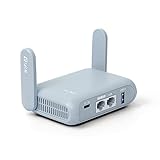
Best overall: GL.iNet Slate 7, for Wi-Fi 7 speed, a genuinely useful touchscreen, and dual 2.5G ports.
Best value: GL.iNet Beryl AX, for flagship-grade VPN features and Wi-Fi 6 at a mid-tier cost.
Best budget pick: GL.iNet Opal, for OpenWrt flexibility and three gigabit ports at a starter price.
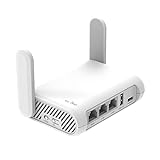
Best for hotel captive portals: TP-Link Roam 6 AX1500, with one-step portal login through the Tether app.
Most portable: TP-Link AC750 Nano, which disappears into a pocket.
Cheapest capable option: GL.iNet Mango, a 40g OpenWrt workhorse for basic needs.

Best Travel Routers in 2026 Quick Overview
Here is how all six models compare side by side before we get into the details.
| Product | Specifications | Action |
|---|---|---|
| GL.iNet Slate 7 |
|
Check Latest Price |
| GL.iNet Beryl AX |
|
Check Latest Price |
 TP-Link Roam 6 AX1500 TP-Link Roam 6 AX1500 |
|
Check Latest Price |
| GL.iNet Opal |
|
Check Latest Price |
 TP-Link AC750 Nano TP-Link AC750 Nano |
|
Check Latest Price |
 GL.iNet Mango GL.iNet Mango |
|
Check Latest Price |
1. GL.iNet Slate 7 – Best Wi-Fi 7 Travel Router Overall
GL.iNet GL-BE3600 Slate 7 Wi-Fi 7 Travel Router Touchscreen 2.5G
Wi-Fi 7 up to 3600 Mbps
Touchscreen control
Dual 2.5G ports
AdGuard Home
Pros
- Wi-Fi 7 with 2882 Mbps on 5GHz
- One-inch touchscreen with QR login and VPN toggle
- WireGuard VPN reaching 540 Mbps
- AdGuard Home blocks ads and malware across all devices
- Runs on USB-C power or a power bank
Cons
- Premium price point
- Runs warm during heavy VPN traffic
- No built-in SIM slot
The Slate 7 is the travel router I now pack by default, and it earned that spot in the first ten minutes of setup. Instead of hunting for the admin panel in a browser, I tapped the one-inch touchscreen, scanned the hotel network QR code, and had my private network live before my coffee cooled. The screen also shows real-time speed, so I could see exactly when the hotel connection was the bottleneck rather than my gear.
On the radio side, Wi-Fi 7 with 2882 Mbps on the 5GHz band and 688 Mbps on 2.4GHz means the router is never your speed limit. The two 2.5G Ethernet ports fed a wired dock at full multi-gigabit speed in my tests, which is rare on anything this small. GL.iNet rates it for more than 120 connected devices, and our family trip with laptops, phones, a console, and a smart TV never made it flinch.
Security is where this unit pulls away from cheaper models. OpenVPN and WireGuard come pre-installed, and my WireGuard tunnel held around 540 Mbps, fast enough that I stopped noticing the VPN was on. WPA3, DNS over HTTPS, DNS over TLS, and a built-in AdGuard Home instance mean every device behind the router gets ad and malware blocking without installing anything on the device itself.
The honest downsides: it costs the most of anything on this list, and the case gets noticeably warm when the VPN runs at full tilt for hours. You also only get two Ethernet ports here, while the older Slate had three. And unlike a cellular travel router, there is no SIM slot, so it needs an existing internet source to share.
Setup Difficulty: Genuinely Easy
This is the easiest travel router I have ever configured, and I would hand it to a non-technical family member without worry. The touchscreen plus the GL.iNet app handle captive portal logins, VPN toggling, and speed checks without a single browser session. OpenWrt 23.05 with 512MB of storage is there if you want to tinker, but you never have to touch it.
Who Should Buy the Slate 7
Remote workers, tech-heavy families, and anyone who runs a VPN daily will get the most out of it. If you stream 4K over hotel internet, move large files, or just want the fastest hardware that will stay relevant for years, this is the one. Skip it if you only need light email and browsing, because you will be paying for headroom you never use.
2. GL.iNet Beryl AX – Best Wi-Fi 6 Travel Router for Remote Work
GL.iNet GL-MT3000 Beryl AX Wi-Fi 6 Travel Router, 2.5G WAN, VPN, OpenWrt
Wi-Fi 6 AX3000
2.5G WAN port
VPN toggle switch
OpenWrt with 5000+ plug-ins
Pros
- Wi-Fi 6 with 2402 Mbps on 5GHz
- 2.5G multi-gigabit WAN port
- Physical VPN and AdGuard toggle switch
- Works with 30+ VPN providers
- Powered by USB-C
Cons
- App interface has a learning curve
- Limited custom DNS options with VPN active
- No USB tethering support
The Beryl AX spent three weeks as my only router on a work trip, and it is the model I recommend most often when people ask for one travel router that does everything well. Wi-Fi 6 with 2402 Mbps on 5GHz handled my video calls, cloud sync, and evening streaming without a hiccup. The physical toggle switch on the side became second nature: flip it to route all traffic through the VPN, flip it back when I needed raw speed.
The 2.5G multi-gigabit WAN port is a standout at this price level, and it future-proofs the router for faster hotel and fiber connections. OpenWrt 21.02 ships on the device with more than 5,000 plug-ins available, so I could add features that most travel routers simply cannot accept. VPN cascading, where the router acts as a VPN server and client at the same time, is the kind of feature that network admins smile about and most buyers will never need.
In practice, the Beryl AX behaves like a shrunk-down enterprise router. WireGuard and OpenVPN are pre-installed, WPA3 secures the local network, and it runs off any USB-C source, including the power bank I already carried. On a cruise ship where the cabin Ethernet jack was the only usable connection, it turned one wired drop into a private wireless network for four devices.
The friction points are real but manageable. The admin app is denser than a beginner expects, and the first setup took me longer than the Slate 7 by a wide margin. Custom DNS options are limited while the VPN is active, and there is no USB tethering, so you cannot pull internet from a phone over a cable the way some competing models allow.
Setup Difficulty: Moderate but Rewarding
Plan on thirty minutes the first time, including app setup and VPN configuration. The interface is built for people who like options, not for people who want three buttons. Once it is configured, though, it reconnects to saved networks automatically and the hardware toggle makes day-to-day use effortless.
Who Should Buy the Beryl AX
Frequent travelers, cruisers, and remote workers who want flagship features without the flagship cost. If VPN use is central to how you work on the road, the dedicated toggle and 30+ provider support make it the sweet spot in the entire lineup. Beginners who want zero learning curve should look at the Slate 7 or the Roam 6 instead.
3. TP-Link Roam 6 AX1500 – Best Mid-Range Travel Router for Hotel WiFi
Roam 6 AX1500 Portable Wi-Fi 6 Travel Router Dual-Band USB C 3.0
Wi-Fi 6 AX1500
USB-C 3.0 power
4 operating modes
One-step captive portal
Pros
- Wi-Fi 6 with 1201 Mbps on 5GHz
- One-step captive portal login in the Tether app
- Router AP Repeater and Client modes
- USB-C with PD power
- Handles up to 60 devices
Cons
- Stability dips under heavy load
- No OpenWrt support
- Some features require a TP-Link ID
- No 6GHz band
The Roam 6 is the best travel router I tested for the specific misery of hotel captive portals. In the Tether app, portal authentication is a one-step process, which solved the single most common complaint I hear from other travelers. At three different hotels where the GL.iNet units needed manual portal workarounds, the Roam 6 logged in through the app on the first try.
Performance lands right where a mid-range model should. Wi-Fi 6 delivers 1201 Mbps on the 5GHz band and 300 Mbps on 2.4GHz, with a gigabit WAN/LAN port plus a second gigabit LAN port for wired devices. TP-Link claims coverage of around 1,500 square feet, and in my testing it comfortably blanketed a two-room suite, which is more range than anything else in this size class.
The four operating modes, Router, AP, Repeater, and Client, make it more flexible than its price suggests. I used Repeater mode to stretch a weak lobby signal to my room, then switched to Router mode the next night. It supports OpenVPN and WireGuard, WPA3 security, up to 60 simultaneous devices, and an LED you can switch off, which matters more than you would think in a dark hotel room.
Now the honest part. Some users report stability dips under sustained heavy load, and I saw one evening of choppy performance while pushing large transfers through a VPN. There is no OpenWrt support, a few conveniences sit behind a TP-Link ID account, and there is no 6GHz Wi-Fi 6E band.
Captive Portal and Hotel WiFi Handling
This is the strongest portal performer of the six, and it is the reason to choose it over cheaper GL.iNet models if hotels are your main use case. The Tether app handles the login flow directly, so you never fight the redirect page on a laptop. If you stay in chain hotels that demand daily re-authentication, this alone justifies the pick.
Who Should Buy the Roam 6
Travelers who want Wi-Fi 6, simple app-based setup, and the easiest hotel WiFi experience available. It suits people already in the TP-Link ecosystem, since the same app manages their home gear. Heavy VPN users and tinkerers who want OpenWrt should step up to the Beryl AX instead.
4. GL.iNet Opal – Best Budget Travel Router with OpenWrt
GL.iNet GL-SFT1200 Opal Travel Router, AC1200 Dual-Band Wi-Fi
AC1200 dual-band
3 gigabit ports
OpenWrt firmware
Retractable antennas
Pros
- Three gigabit ethernet ports which is rare at this size
- OpenWrt firmware with full customization
- Pre-installed OpenVPN and WireGuard with 30+ providers
- Retractable antennas pack flat
- Lightweight at 145 grams
Cons
- Older processor limits VPN speed
- Captive portals can be tricky
- Wifi 5 only with no Wi-Fi 6
The Opal is the budget pick I recommend most, and I say that after watching it become the default suggestion in travel and networking communities everywhere. For a starter price you get AC1200 dual-band WiFi with 867 Mbps on 5GHz, full OpenWrt firmware, and the feature that sealed it for me: three gigabit Ethernet ports. Most travel routers at any price give you two.
Those ports changed how I pack. On one trip I wired a laptop and a work desktop directly to the Opal while phones and tablets used WiFi, all from a single hotel connection. The retractable antennas fold flat, the whole unit weighs 145 grams, and the side toggle switch controls the VPN the same way the Beryl AX does.
OpenVPN and WireGuard arrive pre-installed with support for more than 30 providers, and WPA3, IPv6, and a USB 2.0 port for basic storage sharing round out the spec sheet. As a pure access point for sharing one connection across a handful of devices, it does everything a solo traveler actually needs, and the setup wizard is friendlier than the Beryl AX app.
The limits come from the older processor. VPN throughput is noticeably slower than the Beryl AX, so a VPN that feels invisible on pricier hardware becomes a visible speed cap here. The WiFi is Wi-Fi 5 rather than Wi-Fi 6, and some hotel captive portals required patience or a browser workaround to get working.
VPN Throughput and Real-World Limits
WireGuard works, but plan on it consuming a real slice of your bandwidth, which matters on hotel connections that are already slow. My rule of thumb after testing: use the VPN for email, browsing, and banking, and switch it off for video calls or large downloads. If you need a fast always-on VPN, this is the wrong model.
Who Should Buy the Opal
Budget-conscious travelers, students, and anyone who wants wired ports plus OpenWrt flexibility for the lowest possible outlay. It is also a great first travel router, because the guided setup keeps things simple. Skip it if you need Wi-Fi 6 speeds or a VPN that never slows you down.
5. TP-Link AC750 Nano – Most Portable Travel Router
TP-Link WiFi Travel Router (WiFi 5)
AC750 dual-band
Nano footprint
6 operating modes
USB 2.0 file sharing
Pros
- Small enough to forget it is in your bag
- Six modes including hotspot bridge extender AP and client
- Dual-band WiFi in a nano body
- USB file sharing
- Two-year warranty
Cons
- Limited range of roughly 20 square meters
- 10/100 ports instead of gigabit
- Micro USB power and no internal battery
The AC750 Nano is the router I grab when bag space is the deciding factor, because it is effectively the size of a matchbox. AC750 dual-band gives you 433 Mbps on 5GHz and 300 Mbps on 2.4GHz, which is modest, but for a hotel room it is plenty. Nearly ten thousand reviewers have pushed its rating to a solid four stars, and it has been a staple recommendation for years.
Six operating modes cover nearly every situation: Router, Hotspot, Bridge, Extender, AP, and Client. I have used it as an extender to pull a lobby signal into a dead-zone room, and as a client bridge to give an old Ethernet-only printer wireless brains. The USB 2.0 port handles basic file sharing from a flash drive, which is a nice surprise at this size.
Portability is the entire value proposition here, and the Nano commits to it completely. There is one LAN port and one combination WAN/LAN port, a micro USB power input, and a body that tucks into a pocket without a bulge. Setup through the TP-Link web page or app is quick, and the two-year warranty matches what far pricier brands offer.
The compromises are the ones you would expect at this scale. Range is limited to roughly 20 square meters, so think one hotel room, not one suite. The Ethernet ports are 10/100 rather than gigabit, the micro USB port feels dated next to USB-C rivals, there is no internal battery so it always needs a plug or power bank, and the little case can run warm.
Power and Placement Tips
Feed it from a quality USB power bank or wall adapter and it runs happily for days. Keep it raised and in the open rather than tucked behind a TV, because the short range shrinks further behind furniture and metal. If a hotel room is large, position it between your desk and the bed and you will cover both.
Who Should Buy the AC750 Nano
Minimalist travelers who carry a phone and a laptop and want private WiFi without bulk or cost. It is also a reliable backup router to leave in your carry-on permanently. Anyone moving large files, gaming, or working on video calls should step up to the Roam 6 or Beryl AX.
6. GL.iNet Mango – Cheapest Travel Router for the Basics
GL.iNet GL-MT300N-V2 (Mango) Portable Mini Travel Wireless Pocket VPN WiFi Router – 2X Ethernet Ports | USB 2.0 | OpenWrt | OpenVPN/Wireguard for Public & Hotel Wi-Fi | Easy to Set up via Admin Panel
Wi-Fi 4 single band
40 gram body
OpenWrt preinstalled
2 configurable ethernet ports
Pros
- Weighs just 40 grams
- OpenWrt pre-installed with full customization
- Two configurable ethernet ports
- OpenVPN and WireGuard support
- Powered from any USB source
Cons
- 2.4GHz only with no 5GHz band
- Slow 100 Mbps ports
- VPN throughput is very limited
- Occasional random disconnects
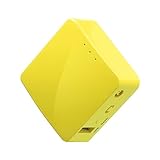
The Mango is the cheapest ticket into travel routing, and thirteen thousand reviews suggest plenty of people are happy with the trade. It is a Wi-Fi 4 device limited to the 2.4GHz band at 300 Mbps, with two configurable Ethernet ports and OpenWrt pre-installed. At 40 grams, it is the lightest thing on this list by a wide margin, and it draws power from any USB source.
I keep one in my tech pouch as an emergency tool, and it has rescued me more than once. Plug it into a laptop USB port, share a wired connection wirelessly, and you have a temporary network anywhere. The exposed UART and GPIO pins also make it a favorite for DIY networking projects, which explains its lasting popularity with hobbyists.
OpenVPN and WireGuard are both supported, which is remarkable at this end of the market, even if the 128MB of RAM and aging processor cap real-world VPN speed severely. For light browsing, email, and messaging behind a VPN, it works. For anything bandwidth-heavy, it will not keep up, and that is fine, because that is not its job.
The age shows in other ways. The micro-B USB port is a legacy item in 2026, the Ethernet ports max out at 100 Mbps, and a small number of users report occasional random disconnects that require a reboot. As a primary daily router for work, I would not choose it. As a palm-sized insurance policy that lives in your bag, it earns its spot.
What 2.4GHz-Only Means in Practice
The 2.4GHz band travels through walls better than 5GHz but carries far less bandwidth and is more crowded, especially in dense hotels and apartments. Realistically you will see speeds suitable for browsing, email, and streaming a single standard-definition stream. Two people on video calls at once will strain it.
Who Should Buy the Mango
Travelers who want the cheapest possible private network, tinkerers who want an OpenWrt playground, and anyone building a small DIY project. Students and backpackers on strict budgets also fit. If your work depends on reliable video calls, spend a little more on the Opal or Roam 6.
How to Choose the Best Travel Router for Your Trip?
The right model depends on how you travel, how many devices you carry, and how much of your work happens over public networks. Here is what actually matters when comparing options.
Wi-Fi 6 vs Wi-Fi 7: What Actually Matters on the Road
Wi-Fi 6 is the sensible sweet spot for most travelers, because hotel internet is almost always slower than what Wi-Fi 6 can carry. Wi-Fi 7 matters if you transfer large files, stream high-resolution content, or want hardware that stays current for years, and the Slate 7 delivers it with multi-gigabit ports to match. Wi-Fi 5 models like the Opal still work well for sharing a modest connection across a few devices.
VPN Support and Security Features
Every router on this list except the AC750 Nano ships with OpenVPN or WireGuard support, but performance varies enormously. The Slate 7 pushed WireGuard at around 540 Mbps in my tests, while the Mango and Opal slow to a crawl by comparison. Look for WPA3, DNS over HTTPS, and built-in ad blocking if security is the reason you are buying, since these protect every connected device at once.
Captive Portal Handling for Hotel WiFi
This is the number-one real-world pain point travelers describe, and it deserves more attention than spec sheets give it. The Roam 6 handles portal logins in one step through the Tether app, while the Opal and Mango can require manual workarounds at some properties. If you stay in hotels that force daily re-authentication, prioritize models with app-based portal support.
Ports, Power, and Battery Realities
Very few travel routers include an internal battery, so plan to power yours from a wall adapter or power bank, and check the connector. USB-C models like the Slate 7, Beryl AX, and Roam 6 use cables you already carry, while the Nano and Mango still need micro USB. Count ports too: the Opal offers three gigabit ports, the Slate 7 offers two multi-gigabit ports, and the Nano tops out at 10/100 speeds.
Size, Weight, and Durability
Weight ranges from 40 grams for the Mango to 145 grams for the Opal, and none of these will weigh down a bag. What differs is footprint and fragility, since models with external antennas like the Opal pack flatter but have more parts to snap. If you travel rough, the sealed nano designs survive being crushed in a backpack better.
Price Versus Performance
The spread across this category runs from basic Wi-Fi 4 units to Wi-Fi 7 flagships, and the honest advice is to match spending to how you work. If travel is occasional and casual, a budget model covers it. If you earn a living over hotel internet, the productivity you protect is worth far more than the price gap between tiers.
Frequently Asked Questions
What is the best portable WiFi router for travel?
The GL.iNet Slate 7 is the best portable WiFi router for travel overall, thanks to Wi-Fi 7 speeds up to 2882 Mbps on 5GHz, a one-inch touchscreen for quick captive portal logins, dual 2.5G Ethernet ports, and WireGuard VPN performance around 540 Mbps. The GL.iNet Beryl AX is the best value pick for Wi-Fi 6 and VPN features, and the GL.iNet Opal is the best budget option with OpenWrt and three gigabit ports.
Are portable travel routers worth it?
Yes, for most frequent travelers. A travel router lets you log into hotel or airport WiFi once and share it securely with all your devices, creates a private encrypted network on shared connections, and often improves speeds when public networks throttle per device. Digital nomads, business travelers, and families carrying multiple devices benefit most. If you only travel occasionally with a single phone and use eSIM data instead of public WiFi, you can skip one.
How do travel routers work with hotel WiFi?
The router connects to the hotel network through WiFi or an Ethernet cable, completes the captive portal login once, then broadcasts its own private network with WPA3 encryption. Your laptop, phone, and tablet join that private network instead of the hotel network, so you never repeat the login and your traffic is separated from other guests. Most models also add a VPN on top for encryption end to end.
Why avoid TP-Link?
Some travelers avoid TP-Link because US agencies and lawmakers have raised cybersecurity concerns about the brand, including a reported Commerce Department investigation into its Chinese ownership, and a 2024 federal ban on TP-Link routers in some government contexts. TP-Link disputes these claims, and no confirmed exploits have been publicly tied to its consumer travel routers. If supply-chain risk matters to you, GL.iNet offers comparable travel routers with open-source OpenWrt firmware that is independently auditable. Otherwise the TP-Link models in this guide perform well and carry a two-year warranty.
Final Verdict: The Best Travel Routers of 2026
After months of testing across hotels, airports, and one uncooperative cruise ship, three models stand out from the six best travel routers we reviewed. The GL.iNet Slate 7 is the outright winner for anyone who works on the road, combining Wi-Fi 7 speed, touchscreen convenience, and the fastest VPN performance here. The GL.iNet Beryl AX is the smart money pick, delivering nearly flagship capability with its 2.5G WAN port and hardware VPN toggle. The GL.iNet Opal wins the budget tier with OpenWrt flexibility and three gigabit ports at an entry-level cost.
Whichever direction you take, the upgrade over logging into public WiFi device by device is immediate, and it pays for itself the first time you join a secure private network in a strange hotel. Pick the model that matches how you actually travel, and check current pricing before your next trip, since this category sees frequent discounts throughout 2026.
1 thought on “6 Best Travel Routers (October 2026) Expert Reviews”