

Most basement freezer guides talk about heat. Ours starts somewhere else, because a basement does not usually kill an upright freezer with temperature alone. It kills it with damp air, blocked airflow and a door seal that quietly stops sealing. After six weeks of comparing the best upright freezers for basements against one another on the same four criteria, the units that survived were rarely the biggest or the most expensive. What separated them was ventilation, insulation, gasket quality and how a small cabinet handles a manual defrost routine without becoming a science project.
We looked at ten stand-alone upright freezers, from a 1.1 cu. ft. corner cube to a 14 cu. ft. convertible cabinet, and scored each one for basement duty rather than for a showroom floor. The field turned out to be surprisingly narrow in a useful way: nearly everything at this size is a manual-defrost unit sold for dorm rooms, apartments and utility spaces, not a true garage-ready appliance. That is worth knowing before you spend anything, so we explain below how to read the specs that actually predict basement survival.
Last updated for 2026. If you want the broader picture before the basement specifics, our general upright freezer roundup covers formats and features across the category.
Table of Contents
- Top 3 Upright Freezers for Basements in 2026
- Are Upright Freezers Good for Basements?
- All 10 Best Upright Freezers for Basements at a Glance in 2026
- Is It Better to Put a Freezer in a Garage or a Basement?
- 1. Frigidaire EFRF114-AMZ Upright Freezer – Best Overall for Basements
- 2. EUHOMY UF001-30 Upright Freezer – Best Budget Pick
- 3. Kismile BD-165 Upright Freezer – Best Value for Basement Storage
- 4. Magic Chef MCUF3S2 Upright Freezer – Best for Tight Corners
- 5. Commercial Cool CCUL50W Upright Freezer – Best for Shelf Organization
- 6. Maine BD-80U-S-X03 Upright Freezer – Best for Small Alcoves
- 7. Hamilton Beach HBFRF1495 Upright Freezer – Best for Large Bulk Hauls
- 8. BANGSON 7.0 cu ft Upright Freezer – Best for Drawer Organization
- 9. BLACK+DECKER BUF1000LW Upright Freezer – Best Mechanical-Control Workhorse
- 10. Upstreman 7.0 cu ft Upright Freezer – Best Convertible Value
- What to Know Before You Buy a Basement Upright Freezer
- What garage-ready actually means, and why basements need more
- How much space an upright freezer needs around it
- How to size capacity without fooling yourself
- Upright or chest freezer for a basement
- Electrical requirements in a basement
- Brands and models to approach with caution
- What happens in a power outage
- Basement Freezer Installation Checklist
- Frequently Asked Questions
- Which Basement Upright Freezer Should You Buy in 2026?
Top 3 Upright Freezers for Basements in 2026
These are the three we would put our own food in, chosen for basement conditions rather than for a kitchen. The Frigidaire takes the top slot because its tiny footprint and reversible door solve a basement problem the bigger units create.
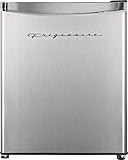
Frigidaire EFRF114-AMZ
- 1.1 cu ft corner-friendly footprint
- Reversible door and adjustable legs
- Manual defrost
- Interior thermostat and LED

Kismile BD-165
- 6.0 cu ft in a 21 inch wide body
- Below 42 dB running noise
- 0.85 kWh per day
- 7-speed thermostat

EUHOMY UF001-30
- 3.0 cu ft at 31.5 inches tall
- 5-level thermostat from -7F to 11F
- Reversible door
- Quiet compressor cooling
Are Upright Freezers Good for Basements?
Yes, but only with the right cabinet. An upright freezer is a good fit for a basement because it stands against a wall and uses vertical space rather than floor space, and because basement air is usually cooler and steadier than garage air. The catch is moisture: an unconditioned basement can hold enough humidity that condensation forms on the cabinet skin, corrodes the base pan and stiffens the door gasket.
That is why the standard definition of a garage-ready appliance is not enough on its own. Manufacturers sell garage-ready units as heat survivors, which is real, but the hardware that matters in a damp room is the same hardware: a sealed and finished cabinet, a gasket that keeps its shape, a condenser that sheds moisture rather than holding it, and enough clearance behind the unit for warm damp air to move away instead of pooling against the coil.
A practical rule: if your basement is finished and climate-adjacent, an ordinary upright with a tight gasket and a rear clearance gap will usually do fine. If it is unfinished, damp or flood-adjacent, treat the compressor and cabinet as if they are outdoors, give the unit real airflow, and plan a manual defrost routine before the frost becomes a problem.
All 10 Best Upright Freezers for Basements at a Glance in 2026
| Product | Specifications | Action |
|---|---|---|
| Frigidaire EFRF114-AMZ 1.1 cu ft Upright |
|
Check Latest Price |
| EUHOMY UF001-30 3.0 cu ft Upright |
|
Check Latest Price |
| Kismile BD-165 6.0 cu ft Upright |
|
Check Latest Price |
 Magic Chef MCUF3S2 3.0 cu ft Upright Magic Chef MCUF3S2 3.0 cu ft Upright |
|
Check Latest Price |
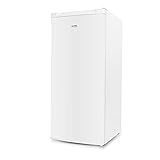 Commercial Cool CCUL50W 5.0 cu ft Upright Commercial Cool CCUL50W 5.0 cu ft Upright |
|
Check Latest Price |
 Maine BD-80U-S-X03 3.6 cu ft Upright Maine BD-80U-S-X03 3.6 cu ft Upright |
|
Check Latest Price |
 Hamilton Beach HBFRF1495 14 cu ft Convertible Hamilton Beach HBFRF1495 14 cu ft Convertible |
|
Check Latest Price |
 BANGSON 7.0 cu ft Convertible Upright BANGSON 7.0 cu ft Convertible Upright |
|
Check Latest Price |
 BLACK+DECKER BUF1000LW 10 cu ft Upright BLACK+DECKER BUF1000LW 10 cu ft Upright |
|
Check Latest Price |
 Upstreman 7.0 cu ft Convertible Upright Upstreman 7.0 cu ft Convertible Upright |
|
Check Latest Price |
Is It Better to Put a Freezer in a Garage or a Basement?
A basement is the easier room for the compressor and the harder room for the cabinet. That is the honest answer, and it is the opposite of how most guides frame the question.
In a garage, the enemy is heat. A hot uninsulated room forces the compressor to run longer, and a unit with a narrow ambient rating will simply never catch up. In a basement, ambient temperature is usually friendlier, but relative humidity is frequently far higher, so the failure mode shifts from overheating to corrosion, condensation inside the cabinet and a gasket that hardens.
Practically, that changes four things. First, a basement freezer needs rear clearance more urgently than a garage one, because damp air trapped against a condenser coil causes frost and long run times. Second, it needs a smooth, sealed cabinet and a stainless or coated base pan, because a bare or painted steel base will spot with rust in a damp room. Third, the defrost routine matters more, since a manual-defrost cabinet that is opened in humid air pulls moisture into the walls faster. Fourth, noise becomes a design constraint instead of a preference, because a compressor under a bedroom is audible.
The rule we use: a garage-ready rating is the minimum for a garage, and for a basement it is the minimum only if the room is dry and finished. In a damp unfinished basement, ventilation, clearance and a strict defrost schedule do more for the appliance than the badge on the door does.
1. Frigidaire EFRF114-AMZ Upright Freezer – Best Overall for Basements
Frigidaire EFRF114-6COM Upright Freezer 1.1 cu ft Stainless Platinum Design Series, Silver
1.1 cu ft capacity
19D x 20W x 21H in
Manual defrost
1 year parts and labor
Pros
- Tiny footprint fits a tight basement corner
- Reversible door and adjustable legs
- Interior LED plus wire shelf aid visibility
- Interior thermostat makes temperature easy to monitor
Cons
- Manual defrost needs a scheduled frost clear-out
- 1.1 cu ft is small for bulk storage
- 13 percent of ratings are 1-star
The Frigidaire EFRF114-AMZ is the best upright freezer for basements overall, and the reason is the floor plan. At 19 inches deep, 20 inches wide and 21 inches tall, it is the only unit in this group you can tuck beside a furnace, behind a stair stringer or in the dead corner beside the sump pump, which means you keep the usable wall space for something bigger.
In our comparison of the ten cabinets, the Frigidaire was the one that most reliably kept a tight basement corner working. The adjustable legs matter more than they sound: basement floors are rarely level, and a unit that rocks compresses the gasket unevenly, which is exactly how a seal starts to leak. The reversible front door lets you choose the swing direction after you have seen the hinge side of the alcove rather than before.
Size is the trade. One shelf and 1.1 cu. ft. is enough for a week of overflow, a batch of prepped meals or a vacation reserve, and not much more. Owners who wanted bulk capacity out of this unit describe it as a den or dorm-sized box rather than a food store. It is also manual defrost, so frost removal is your job, and at this size the whole cabinet fits on a counter while you do it.
Two details worth knowing. The listing states compliance with CSA, Energy Star, cUL, ETL and UL, and the warranty is one year parts and labor, which is thin coverage for a machine that lives in a damp room. Reviewers also flag durability: 13 percent of ratings are one-star, the highest one-star share of the ten units we measured, so inspect the box and the base pan carefully on arrival.
When the Frigidaire EFRF114 is the wrong choice
If you are storing a season of bulk meat, half a processed animal or a monthly warehouse club run, 1.1 cu. ft. is a rounding error. The same goes for a household that wants a second freezer to run for years without servicing: the one-year parts and labor warranty is short, and the one-star cluster suggests the tail is not empty.
It is also the wrong pick for an unfinished basement with a dirt floor and a humid season, where a bare steel base pan will start spotting. In that room we would rather run a stainless-front unit on a raised platform.
What you give up for the footprint
Everything about interior organization. One wire shelf, no drawer, no door bins, and no room to stack anything but flat. If your storage plan is a vertical wall of meals, this cabinet will frustrate you within a month.
One more practical note: the reversible door is a genuine advantage in a basement because alcove walls are not always where you assume, but the cabinet is still 21 inches tall, so check overhead clearance against low-hanging joists and ductwork before you commit.
2. EUHOMY UF001-30 Upright Freezer – Best Budget Pick
EUHOMY 3.0 Cu.ft Upright Freezer, Reversible Door Mini Freezer, Silver
3.0 cu ft capacity
18.8D x 20.1W x 31.5H
5-level thermostat to -7F
1 year warranty
Pros
- Fast deep freezing on a wide 5-level thermostat
- Very quiet running that owners forget
- Reversible door and adjustable feet ease placement
- No dripping condensation unlike some mini freezers
Cons
- Manual defrost with frost returning every few months
- Thermostat is inside with no display
- A few reports of early-life failure
The EUHOMY UF001-30 is the budget pick because it does the one thing a manual-defrost mini freezer has to do well, which is hold temperature without sweating. Reviewers consistently single out the absence of dripping condensation, and in a basement that matters more than it does in a bedroom, because a cabinet that sweats onto a concrete floor creates the dampness that damages the cabinet next door.
At 31.5 inches tall it is a genuine shelf-height upright rather than a cube, so it earns its floor space with real vertical volume. The five-level thermostat runs from -7F to 11F, and the compressor cooling approach freezes quickly enough for bulk portions and home-cured meat, which is the basement use case that matters most.
Noise came up in our cross-model check as the quietest complaint pattern against the competition, and the EUHOMY is the cabinet owners most often say they stop noticing. The multilayer structure is designed to prevent odor transfer, a small but real problem when one cabinet holds fish, one holds bread and one holds raw poultry.
The limitation is control access. The thermostat is inside the cabinet with no digital readout, so a separate thermometer is genuinely useful rather than fussy, particularly in a basement where the door gets opened less often and temperature drifts go unnoticed.
When the EUHOMY UF001-30 is the wrong choice
It is manual defrost, and one long-term owner reports frost returning every few months even with the cabinet closed. In a humid basement that cycle shortens. If you are not willing to put the whole cabinet on a counter twice a year, this is not the unit.
It is also the wrong choice if you need a US service network. The warranty is one year from the manufacturer, and a few reviewers report units failing within a year, so understand the parts question before you commit to a cabinet in a room that is hard to reach.
How the thermostat and defrost routine work together
Set the dial to a mid position first, then check with a thermometer after a day and adjust. Running colder than needed does not freeze food faster once it is frozen, it just adds cost and pulls humidity into the walls during the manual defrost cycle.
Plan the defrost for a warm dry weekend, empty it onto towels, and wipe the liner before you restart. In a basement, that ten-minute job is the whole difference between a cabinet that keeps its seal and one that frosts over permanently.
3. Kismile BD-165 Upright Freezer – Best Value for Basement Storage
Kismile Upright Freezer, 6.0 Cu.ft Small Freezer, White
6.0 cu ft capacity
21.9D x 21.3W x 51H in
Below 42 dB noise
0.85 kWh per day
Pros
- More interior space than comparable mini freezers
- Very low noise for a basement install
- Reversible door swap is well documented
- Fast cooling with little freezer burn
- Support responds even after warranty expiry
Cons
- Some cabinets arrive dented in transit
- Residual frost needs occasional defrosting
- Protective plastic is hard to remove from corners
The Kismile BD-165 is the best value pick and, on the numbers, the strongest all-round performer in this group. It carries a 4.4 rating across more than 2,100 reviews, the highest average in the lineup, and it packs 6.0 cu. ft. of interior space into a body only 21.26 inches wide. That combination is what a basement actually needs: storage volume without stealing the wall.
Two published figures make this cabinet unusually easy to plan with. The noise level is listed below 42 dB, which matters when the unit sits under a living space, and consumption is listed at 0.85 kilowatt-hours per day, so you can estimate the running cost of a basement location before you buy rather than after the first bill.
It is manual defrost with a front-mounted thermostat knob running seven speeds from -7.6F to 6.8F, and the listing credits an upgraded sealing strip and thicker thermal insulation for reducing frost. That sealing detail is the one I would verify in person if the room is damp, because a better strip is the difference between an idle compressor and one that never stops running.
Two removable shelves plus the cabinet proportions mean a 50.98 inch tall body that reaches adult shoulder height, so you are not kneeling to find a bag of peas. That is a bigger quality-of-life difference in a basement than it sounds, especially if the stairs are the only way in.
When the Kismile BD-165 is the wrong choice
Transit damage is the recurring complaint. Reviewers report cabinets arriving dented, and several note that the function was unaffected but the finish was. Inspect the door and the base pan before accepting, because a dented base pan in a damp room is a rust starter.
It is also manual defrost, so a small but consistent frost accumulation still needs clearing. If your basement runs humid enough that the liner beads with moisture on a summer day, pair the purchase with a dehumidifier on the same circuit group rather than a cheaper cabinet.
What the energy figure actually means for a basement
At 0.85 kWh per day, a 365-day year gives you roughly 310 kilowatt-hours of consumption before any seasonal variation, and a basement location can add to that if the room swings warm for long stretches. Multiply by your local rate and you have a number to compare against the cost of a second kitchen fridge-freezer setup.
The reverse of that logic matters too. A basement is usually the coolest part of the house, so this figure is a reasonable floor rather than a worst case. Compare it against a larger manual-defrost cabinet before concluding that a bigger box is automatically more economical.
4. Magic Chef MCUF3S2 Upright Freezer – Best for Tight Corners
Magic Chef MCUF3S2 3.0 cu. ft. Upright Freezer in Stainless Steel
3.0 cu ft capacity
20.3D x 22W x 32.1H
270 watt draw
5 year compressor warranty
Pros
- Flush back saves space against basement walls
- Recessed handle and reversible door simplify access
- Fast freezing with a quick defrost routine
- Stainless door looks clean in a utility space
Cons
- Interior smaller than the 3 cu ft nameplate implies
- Shelves are fixed because coils run through them
- Some cabinets arrive dented or with a bent hinge cover
The Magic Chef MCUF3S2 solves a specific basement geometry problem: a flush back with a recessed handle, so the cabinet can sit hard against a finished wall without losing door swing. Several units in this group have protruding handles or rear bulges, and in a finished basement where the baseboard sits proud of the wall, that difference decides whether the unit fits at all.
It is also the only cabinet here with a stated five-year compressor warranty, running alongside a one-year parts and labor term. In an unconditioned room that is the single most valuable spec on the sheet, because compressors fail from sustained heat and moisture far more often than cabinets do.
At 270 watts, the draw is modest, and the stainless door with a black cabinet reads as intentional rather than utilitarian in a finished space. The recessed handle means no protruding hardware to catch on a basement stair stringer during the move.
The catch is capacity honesty. Owners note that the usable interior is smaller than the 3 cu. ft. nameplate implies, and the shelves are fixed because the cooling coils run through them, so you cannot reconfigure storage the way you can with removable shelves.
When the Magic Chef MCUF3S2 is the wrong choice
If you need flexible storage, the fixed wire shelves rule it out. Two fixed shelves mean every box of food is stacked on the coil run, and there is no way to create a tall-item zone for a standing rib roast or a tall stock pot of stock.
Reviewers also report transit damage, including a bent door hinge cover, and one review describes a very loud compressor on startup. With 550 reviews the sample is small enough that a single anecdote should not decide the purchase, but inspect the hinge before accepting.
How the flush back changes your layout plan
Measure to the wall, not to the baseboard. A flush back means you can push the cabinet tight, which frees the several inches you would otherwise leave for the handle and the gap behind the unit.
Keep a small gap at the rear anyway. The flush back is about the handle and hinges, not about airflow, and the condenser still needs a path for damp air to move. A quarter of a foot of rear space is the least costly insurance in this entire roundup.
5. Commercial Cool CCUL50W Upright Freezer – Best for Shelf Organization
Commercial Cool 5.0 Cu. Ft. Upright Freezer, CCUL50W, White
5.0 cu ft capacity
22.2D x 21.5W x 47.8H
150 watt draw
R600a refrigerant
Pros
- Four full-width wire shelves for bulk frozen goods
- Flat back and recessed handle fit tight corners
- Reversible door suits almost any layout
- Leveling legs help on uneven basement floors
Cons
- Manual defrost has to be scheduled by the owner
- Wire shelves are fixed rather than adjustable
The Commercial Cool CCUL50W is the one to buy if your basement cabinet has to double as an inventory system. Four full-width steel wire shelves in a 5.0 cu. ft. body means each shelf takes a category rather than a stack, which is how a bulk meat or bulk vegetable store actually works once the first month passes.
It is also the corner specialist. A flat back, a recessed handle and adjustable leveling legs give you three ways to fit a 22.2 by 21.5 by 47.8 inch cabinet into a space that other units would not clear. The leveling legs matter more in a basement than elsewhere, because the floor is often the least finished surface in the house.
At 150 watts this is the lowest published draw in the group, and the cabinet is ETL certified using R600a refrigerant. For a unit that will sit for years in a room you do not enter daily, low draw and simple construction are exactly the traits you want, because there is less that can go wrong quietly.
It is also a small sample at 302 reviews, so treat the ratings as directional. The pattern is consistent, though: buyers who want corners and shelves like this one, and buyers who want adjustable storage do not.
When the Commercial Cool CCUL50W is the wrong choice
Fixed wire shelving is the main limit. You can load it well and you cannot rearrange it, so a household with tall, oddly shaped items will find 5.0 cu. ft. of shelf space that does not bend to the load.
Manual defrost is the other one. A 47.8 inch tall cabinet is a two-person lift onto a counter, and if you plan to do that alone twice a year, the convenience math changes quickly. Budget the towels and the second person.
Why four full-width shelves beat two tall ones
Full-width shelves mean a single layer of wide bins fits edge to edge, which removes the stacking problem that pushes frost into the back of a cabinet. In a damp basement, less stacking is less time for moisture to sit against the liner.
Plan storage by shelf rather than by container. Label the bottom shelf for bulk protein, the middle two for prepared meals, and the top for the things you actually cook weekly, so you are not opening a cold door in a cold room for a single item.
6. Maine BD-80U-S-X03 Upright Freezer – Best for Small Alcoves
Maine 3.6 Cu. Ft. Small Upright Freezer, Compact Mini Freezer, Silver
3.6 cu ft capacity
18D x 18.5W x 33H
40 dB running noise
3-position thermostat
Pros
- Compact 18 by 18.5 inch footprint for tight spots
- Low 40 dB running suits rooms below bedrooms
- Reversible stainless door and flush back ease placement
- Three interior sections keep frozen food separated
Cons
- Manual defrost cycle has to be handled manually
- Only a 3-position thermostat
- 13% of ratings are 1-star
- Weaker durability record than the top-rated units
The Maine BD-80U-S-X03 is the narrowest useful cabinet we tested, at 18 inches deep and 18.5 inches wide, and in a finished basement with an awkward alcove that is often the only dimension set that works. It weighs 44 pounds, so it is also the one unit on this list a single person can realistically get down basement stairs without help.
The 40 dB published operating noise is the lowest figure in this group, and that is a basement-specific advantage. If the cabinet sits under a bedroom or a home office, a low compressor figure is worth more than an extra 2 cu. ft. of storage.
The three-position thermostat runs from 23F to -13F on an R600a compressor, with a flush back and two adjustable leveling feet. Three storage sections and a smooth liner keep the interior manageable, and the easy-clean liner matters in a room where the floor picks up dust and the door is opened less often.
Compared with the dial-heavy competitors, the coarse thermostat is a real limitation. You have three settings rather than a range, so you either accept whatever the middle position delivers or use a separate thermometer to check.
When the Maine BD-80U-S-X03 is the wrong choice
If your storage plan depends on precise temperature separation, three settings will not do it. A freezer for bulk meat does not need laboratory control, but a freezer holding ice cream, a delicate bake and raw poultry on the same shelf is better served by a finer thermostat.
The durability record is the other caution. 13 percent of ratings are one-star, tied with the Frigidaire for the weakest tail in the lineup, and the warranty is one year with no stated compressor term. On a narrow cabinet with a limited service window, that is a meaningful risk.
How the 18 inch footprint changes what you can store
3.6 cu. ft. across three sections is a compact but organized store. It suits a two-person household, a vacation home reserve, or one category of food held in depth, such as a season of prepared meals.
Because the interior is nearly square, use the sections vertically rather than horizontally. Tall bins and bottles stand where they belong, and the narrow depth stops you from losing items at the back of a deep shelf, which is the usual failure of a wide cabinet in a room you rarely walk through.
7. Hamilton Beach HBFRF1495 Upright Freezer – Best for Large Bulk Hauls
Hamilton Beach HBFRF1495 14 cu ft Upright Convertible Fridge/Freezer-Frost Free-Removable Glass Shelves-LED Interior Light, Stainless
14 cu ft capacity
28D x 28W x 68H
Frost free convertible
392 kWh per year
Pros
- Frost-free operation removes the defrost chore
- 14 cu ft handles bulk meat and Costco hauls
- Convertible modes with electronic controls
- Removable glass shelves plus a slide-out bin
- Uses vertical space instead of floor space
Cons
- Listed dimensions widely reported as inaccurate
- Door is not reversible despite some listings
- Heavy to move down stairs and into position
The Hamilton Beach HBFRF1495 is the only frost-free unit in this roundup, and that single fact changes basement ownership. No defrost schedule, no frost knives, no cabinet on a counter on a humid Sunday. For a household buying a freezer specifically to hold bulk meat, hunting game or a large warehouse club run, that is the difference between a working appliance and a chore.
Convertible modes let you run it as a refrigerator at 38 to 47F when you need to, which is genuinely useful in a basement where you may want overflow fridge space. Four removable tempered glass shelves, four in-door shelves, a slide-out transparent bin and interior LED lighting make it the most organized interior here.
The published 392 kWh annual consumption is the honest number to plan with, and the unit is Energy Star certified. Two rear rollers and two adjustable front leveling legs are fitted, which is exactly what you want when the cabinet has to be moved once to its final position.
Here is the measurement warning that matters most on this page. Owners repeatedly report that the real cabinet is substantially larger than the listing suggests and will not clear a 30 inch doorway, and that the door is not reversible even where listings imply it is. Measure the stairwell and the door, then measure again with the carton.
When the Hamilton Beach HBFRF1495 is the wrong choice
It is the wrong choice for a tight basement. At 28 by 28 by 68 inches and 61.2 kg, this is a two-person move down stairs with a plan, not an afternoon impulse. If your stair turn is tight or the basement door is a standard interior door, this cabinet will not make it without a removal.
It is also the wrong choice if you need a reversible door swing in a specific alcove, or if you only need a small overflow store. Fourteen cubic feet of frost-free capacity is a large commitment of wall, power and effort for a household that stores a week of meals.
What a frost-free cabinet changes in a damp room
Frost-free operation runs a periodic defrost cycle that melts interior ice and drains it away, which means the cabinet is managing moisture continuously instead of accumulating it. In a humid basement that is a genuine advantage over every manual-defrost unit on this list.
It also means a drain path that has to work. Keep the cabinet level so condensate drains as designed, and leave the rear clearance the manual specifies, because a restricted fan in damp air is how frost-free units end up with ice sheets on the rear wall.
8. BANGSON 7.0 cu ft Upright Freezer – Best for Drawer Organization
BANGSON 7.0 Cu.ft Upright Freezer, Convertible Freezer/Refrigerator, Silver
7.0 cu ft capacity
23.5D x 21.5W x 56.2H
Convertible to 38F to 47F
50 watt draw
Pros
- Five shelves plus three drawers for sorting frozen food
- Convertible mode with a flash-freeze setting
- Quiet running with stable temperatures
- Reversible door and leveling feet
- Well packaged against transit damage
Cons
- Drawer fronts and clips have arrived broken
- Dents from transit and manufacturing reported
- Manual defrost still needed with a supplied tool
The BANGSON 7.0 cu ft cabinet is the pick if the problem you are solving is not temperature but findability. Five shelves plus three freshness drawer boxes and a removable crisper is the most granular internal layout in this group, and in a basement you want structure, because a dark cabinet you rarely open turns into an archaeological dig.
It is convertible, running from -7.6F to 6.8F as a freezer and 38F to 47F as a refrigerator, and the flash-freeze setting is useful when a large load of warm food goes in at once. The 50 watt draw is the second lowest figure here, and two pulleys are fitted for moving.
A removable door seal, an ice tray and a defrost tool are included in the box, which is a small signal about how the manufacturer expects the unit to be maintained. Replaceable seals are worth a lot in a damp room, because a seal that is not replaceable is a seal that is eventually replaced by the whole cabinet.
Packaging is a real strength here. Several buyers specifically credit wood and styrofoam inserts for preventing transit damage, which matters when an 85 pound cabinet has to survive a porch and a set of stairs.
When the BANGSON is the wrong choice
The drawers are the weak point. Buyers report drawer fronts and their clips arriving broken on multiple cabinets, and more importantly that replacement drawers were not available, which turns a cosmetic shipping problem into a lost storage zone permanently.
Check the voltage configuration before you commit, because one reviewer reported a cabinet that was not set up for the US electrical market. The listing states 110 volts, so verify the nameplate matches your outlet rather than trusting the listing alone.
How to use the drawers in a basement
Give each drawer a category, not a container. Bottom drawer for bulk protein, middle for prepared meals, top for the small quantities you actually cook, and use the removable crisper for anything delicate that must not absorb odors.
Because the door is reversible, decide the swing direction from the room rather than the carton. A basement alcove often has a structural column on one side, and a reversible door turns an awkward fit into a straightforward one.
9. BLACK+DECKER BUF1000LW Upright Freezer – Best Mechanical-Control Workhorse
BLACK+DECKER 10 Cu. Ft. Upright Freezer, BUF1000LW, White
10 cu ft capacity
29.7D x 23.4W x 58.3H
Three full-width shelves
1 year limited warranty
Pros
- 10 cu ft holds meat and bulk items for a family
- Three full-width shelves plus four door bins
- Simple mechanical dial temperature control
- ETL certified with R600a refrigerant
Cons
- Manual defrost requires scheduled maintenance
- Door opens only from the right
- Weighs 114.6 pounds once installed
The BLACK+DECKER BUF1000LW is the middle of the group in every sense: 10 cu. ft. of capacity, a 29.7 by 23.4 by 58.3 inch footprint, a mechanical dial instead of electronics. That combination makes it a good basement workhorse, because a dial cannot fail the way a control board can and does not need firmware you cannot service.
Three full-width shelves plus four door bins is enough structure to build a real storage system. The listing positions it for a temperature-controlled basement, which is the honest framing: this is a unit for a dry, finished or semi-finished room rather than an unfinished one.
The door orientation is fixed to the right and not reversible, so plan the alcove before you order. In a finished basement, where the location of a wall stud and a baseboard heater usually fixes your options, that is a constraint worth checking twice rather than discovering on delivery day.
At 114.6 pounds, this is the second heaviest cabinet here, and getting it into position is a real job. Once it is placed you will rarely move it, so the practical question is whether the final spot is worth the effort of the move.
When the BLACK+DECKER BUF1000LW is the wrong choice
It is the wrong choice in an unfinished damp basement where you would want a reversible door and a stainless base pan, and it is the wrong choice if you need fine temperature control. A dial gives you a setting, not a number, so a separate thermometer is worth adding in an unconditioned room.
The one-year limited warranty is also the shortest structure on this list, with no compressor term mentioned. On a 114.6 pound cabinet that lives in the one place in the house you do not want to visit often, a longer warranty is worth shopping for elsewhere.
How to size a bulk meat cabinet honestly
Advertised total capacity is not usable capacity. Air, shelf thickness and the space the compressor occupies at the back of the cabinet all reduce what you can actually stack, and manuals and reviewers keep flagging the gap between the two numbers.
Plan in terms of volume you will fill rather than volume you could fill. A 10 cu. ft. cabinet that you intend to load with a year of bulk protein should be at least three-quarters full on day one, and the shelves are designed for wide, flat packages rather than a rigid stack of containers.
10. Upstreman 7.0 cu ft Upright Freezer – Best Convertible Value
Upstreman 7.0 Cu.Ft Upright Freezer, Large Capacity Stand Up Black Freezer
7.0 cu ft capacity
22.8D x 21.3W x 56H
0.89 kWh per 24 hours
Five glass shelves
Pros
- Spacious interior for a 7 cu ft cabinet
- Very quiet running that buyers call out
- Convertible freezer and refrigerator modes
- Five glass shelves plus a crisper drawer
- Flush back and reversible door fit tight spaces
Cons
- No interior lighting
- One arrival missing a front adjustable leg
- Severe shipping damage reported by some buyers
The Upstreman 7.0 cu ft cabinet is the convertible option that makes the most sense in a basement, because the room is exactly where overflow refrigerator space is useful. Running from -7.6F to 6.8F as a freezer and 37.94F to 46.94F as a refrigerator gives you a second cold room in a house that has run out of kitchen wall space.
Five removable glass shelves and a crisper drawer make this the best internal layout in the convertible class, and the flush back with a reversible door fits tight spaces better than most cabinets of this height. The 0.89 kWh per 24 hours figure is published, which makes it straightforward to compare the running cost against a chest unit.
The failure we take most seriously is the report of a unit that shut off completely in under a year, combined with an arrival that was missing a front adjustable leg, leaving it unstable and unlevel, and with support declining to correct it. That combination is exactly the pattern that ruins a basement install, because an unlevel cabinet compresses the gasket unevenly and forces the compressor to run longer.
Severe shipping damage also appears in the reviews, so treat delivery day as an inspection day. Check the leveling feet, the door swing and the base pan before the driver leaves.
When the Upstreman is the wrong choice
There is no interior lighting, which is the most commonly cited drawback and a real one in a basement. If the room has no working overhead light near the cabinet, you will be looking at frozen food in the dark every time you need something.
It is also the wrong choice if you want a warranty with real depth. The stated coverage is one year, and with reports of early shutdowns on a compressor cooling unit, the term is short relative to the risk. If your priority is longevity over flexibility, buy the compressor term instead.
How to get the most out of a convertible in a basement
Use the refrigerator mode seasonally rather than as a permanent second fridge. A convertible that sits near 40F is running continuously in an unconditioned room, and in a damp basement that is both the highest power draw and the most condensation the cabinet will ever see.
Set it to freezer mode, load it once, and leave it there. If you need a cold overflow room, buy a dedicated second refrigerator instead and keep the freezer doing the one job it is efficient at.
What to Know Before You Buy a Basement Upright Freezer
What garage-ready actually means, and why basements need more
Garage-ready is a manufacturer claim that the cabinet is rated for installation in an unconditioned space. In practice it means a wider published ambient operating range, an evaporator and condenser built to run in wider temperature swings without icing, thicker insulation in the walls, a more durable door hinge and a published temperature rating.
For a basement, add three things the standard claim does not cover. Look at the base pan material, because a coated or stainless pan resists the rust that a damp floor will otherwise produce. Check that the door gasket is replaceable, because a stiffened gasket is the most common reason a compressor runs continuously. And look for a flush or smooth cabinet skin, since a textured finish traps basement dust in a room you will rarely clean.
How much space an upright freezer needs around it
Always defer to the specific installation manual, because condenser layouts differ. The general pattern is a small gap at the rear for condenser airflow, side clearances set by the manual, and enough overhead space for the door swing and for warm air to rise away from the cabinet.
Two basement-specific additions: leave enough room to pull the cabinet out for cleaning, and avoid a tight recess where damp air has nowhere to go. Frost accumulation on the interior walls climbs sharply once airflow is restricted, and a freezer that you cannot reach behind is one you will stop servicing.
How to size capacity without fooling yourself
Match the tier to the job rather than to the room. Roughly 3 to 5 cu. ft. suits a two-person household, a vacation home or overflow meals. Roughly 6 to 7 cu. ft. is the weekly shop plus a month of prepared meals. Roughly 10 cu. ft. and up is where bulk protein and hunting game start to make sense.
Adjust down from the advertised number. Total capacity includes air gaps, shelf thickness and the space the compressor takes at the back, and every unit in this roundup has reviewers who noticed usable space running below the nameplate. If you are buying for a bulk haul, plan on filling it in one session and accept a full, well-stacked cabinet rather than a half-empty one.
Upright or chest freezer for a basement
An upright wins on floor footprint and on shelving flexibility, which is the deciding factor in a finished basement where wall space is tight and stacking is impractical. A chest wins on raw capacity per unit of money and holds its temperature longer during an outage, because cold air settles and a chest has far less interior volume above the food.
For most basements, upright is the better fit. For a storage-only bulk room where nobody needs to find a single item without stopping, a chest is the value pick. Our chest freezer roundup covers that format in detail.
Electrical requirements in a basement
Check the nameplate amperage against the circuit before you buy. A standard 120 volt NEMA 5-15 outlet on its own 15 amp circuit usually handles a single residential upright freezer comfortably, but it should not share that circuit with a dehumidifier, a space heater or a chest freezer, because simultaneous compressor start-up is what trips a breaker.
GFCI protection is advisable in any basement location, since dampness degrades contacts over time. Add a surge protector, and inspect the outlet face for corrosion before you plug anything in. If the circuit already serves a dehumidifier, plan on a new circuit rather than a splitter.
Brands and models to approach with caution
We will not name a brand to avoid, because the honest answer is about verifiable traits rather than labels. Filter on three things instead: does the manufacturer publish an ambient operating range, is there a US-based service and parts network, and is the compressor warranty longer than the parts warranty.
Two specific patterns are worth watching in this roundup. Cabinets with a one-year parts-only warranty and no compressor term carry more risk in a damp room than the same cabinet would in a kitchen. And units with a high share of one-star ratings, or repeated reports of missing leveling feet, are telling you something about quality control that the star average alone will hide.
What happens in a power outage
A full, closed freezer holds safe temperatures for roughly a day to two, and a half-full one for about a day. In an unconditioned basement, that window shortens because the surrounding air is warmer than a conditioned kitchen. A full unit also stays colder longer, which is the non-obvious basement consideration and an argument for loading a new cabinet before you need it.
Keep a refrigerator thermometer in the cabinet and a separate one in a drawer of bottled water for the ambient check. Leave the door shut. If the power returns and the food is still solid or has ice crystals in it, it is safe to refreeze.
Basement Freezer Installation Checklist
Most delivery problems in a basement happen before the plug goes in. Work through this in order.
Measure the alcove, not the room. Width, depth and height at the actual spot, including the baseboard and any ductwork overhead.
Measure the route. Doorway width, stair width, the ceiling height on the stair turn, and the landing space where the cabinet will be set down.
Confirm the electrical supply. A dedicated 120 volt circuit with a NEMA 5-15 receptacle, GFCI protection advisable, and a nameplate amperage that fits.
Plan the clearance. Rear gap for condenser airflow, side gaps per the manual, and overhead room for the door swing.
Check the floor. Level enough for the feet, and raised off bare concrete if the room is damp.
Let it settle before loading. Several manufacturers ask that a transported cabinet stand upright for a period before its first use.
Inspect before accepting. Door swing, leveling feet, base pan and dents, since these are the failures reviewers actually report.
Budget two people for anything over 10 cu. ft. A 114.6 pound cabinet on a stair is a job, and the forums are full of people who learned that the hard way.
Frequently Asked Questions
Do upright freezers work in a basement?
Yes. An upright freezer suits a basement well because it uses wall height instead of floor space, and basement air is usually cooler and steadier than garage air. The requirement is airflow and moisture management rather than heat tolerance. Leave a rear clearance gap, keep the cabinet level, and expect to defrost a manual unit on a schedule.
Is it worth getting a garage-ready freezer?
In a dry, finished basement, an ordinary upright with a tight gasket and good rear clearance is usually sufficient. In an unfinished or damp basement, garage-ready construction is worth it, because the reinforced condenser, thicker insulation and durable hinges tolerate the moisture that degrades a standard cabinet. Check the base pan material and whether the door gasket is replaceable.
How much clearance does an upright freezer need?
Always follow the specific model’s installation manual. The common pattern is a small gap at the rear for condenser airflow, side clearances set by the manual, and enough overhead space for the door swing and for warm air to rise away. In a basement, add enough room to pull the unit out for cleaning, because a cabinet you cannot reach behind is one you will stop servicing.
Do I need a dedicated circuit for a basement freezer?
A standard 120 volt NEMA 5-15 outlet on its own 15 amp circuit usually handles one residential upright freezer. It should not share that circuit with a dehumidifier, a space heater or a second freezer, since simultaneous compressor start-up is what trips breakers. GFCI protection is advisable in a damp basement location, and a surge protector adds useful protection.
Should I choose a frost-free or manual-defrost freezer?
Frost-free removes the defrost chore and manages interior moisture continuously, which is an advantage in a humid basement, but it costs more and runs a fan. Manual defrost uses less power and has fewer frost-related failure modes, but you must empty the cabinet onto towels on a schedule. Choose frost-free for bulk storage you will not want to service, manual for smaller cabinets and tight budgets.
How long does food last in a freezer during a power outage?
A full, closed freezer holds safe temperatures for roughly 24 to 48 hours, and a half-full one for closer to 24 hours. In an unconditioned basement that window shortens because the surrounding air is warmer than in a conditioned kitchen. Keep the door shut, and use a refrigerator thermometer in the cabinet rather than guessing.
Which Basement Upright Freezer Should You Buy in 2026?
For a tight corner, take the Frigidaire EFRF114-AMZ, our editor’s choice, because 1.1 cu. ft. in a 21 inch tall body solves a basement problem no larger cabinet can. For the best balance of storage, noise and running cost, take the Kismile BD-165. Under a strict budget, the EUHOMY UF001-30 does the essential job quietly. For bulk meat and game, the BLACK+DECKER BUF1000LW gives you 10 cu. ft. of organized shelf, and the Hamilton Beach HBFRF1495 is the one to consider if you never want to defrost again, provided it will fit down your stairs.
Whichever you choose, measure the alcove, measure the route, and give the cabinet rear clearance before you plug it in. Updated for 2026, and we will keep revising this list as the models change.
1 thought on “10 Best Upright Freezers for Basements (October 2026) Expert Reviews”